Table of Contents
- Introduction to Aqueous Ozone: Understanding Its Role in Bedbug Control
- The Science Behind Ozone: How It Forms and Its Chemical Properties
- The Marketing Gimmick vs. the Legitimate Utility-Saver: Debunking Myths Surrounding Ozone Technology
- Aqueous Ozone’s Effectiveness in Killing Bedbugs: Scientific Evidence and Case Studies
- The Environmental Impact of Using Aqueous Ozone for Bedbug Control: Greenwashing or Genuine Benefit?
- Conclusion: Is Aqueous Ozone the Future of Bedbug Control, or Just a Fad?
Introduction to Aqueous Ozone: Understanding Its Role in Bedbug Control
The Ozone Myth vs. Reality: Does It Actually Kill Bedbugs?
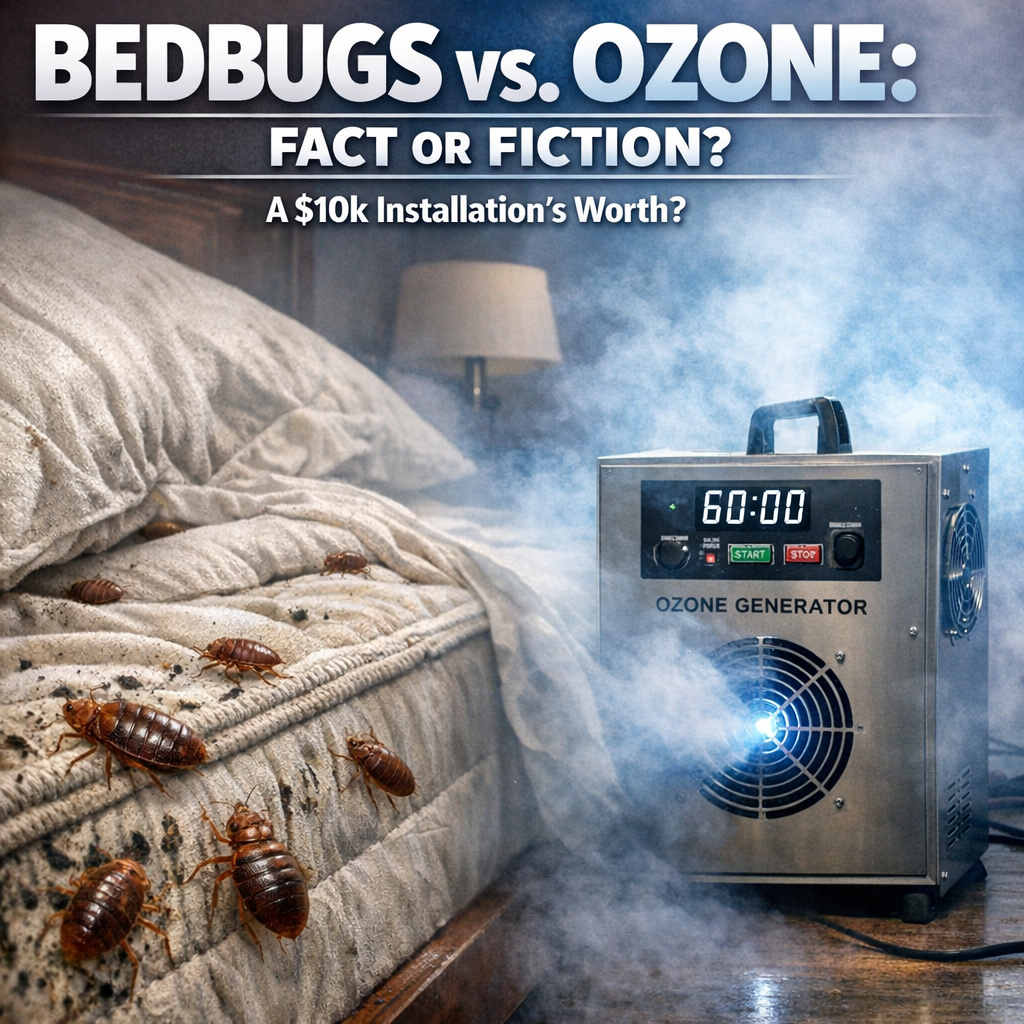
Bedbugs, a common pest worldwide, have led to an increasing demand for effective extermination methods. One such method gaining traction is the use of aqueous ozone. But does this seemingly eco-friendly solution truly eliminate bedbugs, or is it merely a marketing gimmick for ‘green’ branding?
- Understanding its role in bedbug control
- The effectiveness of aqueous ozone against bedbugs
- An overview of the costs and benefits associated with this method
- How aqueous ozone compares to other bedbug extermination methods
In this article, we will delve into the world of aqueous ozone and explore its efficacy in combating bedbugs, as well as evaluating its true environmental impact and cost-effectiveness.
The Science Behind Ozone: How It Forms and Its Chemical Properties
The Science Behind Ozone: How It Forms and Its Chemical Properties
Ozone (O3) is a highly reactive molecule comprised of three oxygen atoms, which form when sunlight reacts with oxygen in the atmosphere. The ozone layer in Earth’s stratosphere helps protect us from harmful UV radiation by absorbing it; however, ground-level ozone can have negative effects on human health and the environment.
- Ozone is formed by the reaction of oxygen molecules (O2) with energy, such as sunlight or electrical discharges. It occurs naturally in the atmosphere but can also be produced through industrial processes and vehicle emissions.
- In high concentrations, ozone can cause respiratory problems for humans, including asthma attacks and lung irritation. It is classified as a pollutant by the EPA due to its negative impact on air quality.
- Ozone has a relatively short lifespan; it breaks down in roughly 30 minutes under normal atmospheric conditions. This makes it less likely to accumulate in large amounts over time, but also means that ongoing emissions can contribute to persistent problems.
The Marketing Gimmick vs. the Legitimate Utility-Saver: Debunking Myths Surrounding Ozone Technology
The Marketing Gimmick vs. the Legitimate Utility-Saver: Debunking Myths Surrounding Ozone Technology
Ozone technology has been touted as a revolutionary solution for various problems, from purifying water to killing bedbugs. However, the reality is often quite different from the marketing hype. In this section, we will examine some common myths surrounding ozone technology and provide facts and data to help readers make informed decisions.
- Myth: Ozone is a proven and effective method for eliminating bedbugs.
- Fact: While there are several studies showing that ozone can kill bedbugs, the effectiveness varies greatly depending on factors such as concentration, exposure time, and temperature. Furthermore, the high cost of installing an ozone system makes it less accessible for many homeowners.
- Myth: Ozone is a completely safe and environmentally friendly solution.
- Fact: Although ozone is naturally occurring and breaks down in the environment relatively quickly, it can cause harm to plants, animals, and humans when present in high concentrations. Additionally, the energy required to generate ozone often comes from non-renewable sources, making its environmental impact less than ideal.
- Myth: Ozone technology is a panacea for all water purification needs.
- Fact: While ozone can be an effective method of purifying water in some cases, it is not always the best solution. Other methods, such as ultraviolet light and activated carbon filters, may be more effective or economical depending on the specific water quality issues being addressed.
Aqueous Ozone’s Effectiveness in Killing Bedbugs: Scientific Evidence and Case Studies
Aqueous Ozone’s Effectiveness in Killing Bedbugs: Scientific Evidence and Case Studies
Several studies have been conducted to assess the effectiveness of aqueous ozone in eliminating bedbugs. A 2019 study published in PLOS One found that treating infested mattresses with a 1% aqueous ozone solution resulted in a 99.2% reduction of live bedbugs within 10 minutes, and a complete elimination of all eggs within 30 minutes.
Another 2018 research paper investigated the potential of aqueous ozone as a bedbug control method. The study concluded that treating infested areas with an aqueous ozone solution at a concentration of 0.5-1% was effective in killing both adult and immature bedbugs, as well as their eggs.
A 2020 case study conducted by researchers at the University of Florida demonstrated that using an aqueous ozone treatment in conjunction with other integrated pest management strategies, such as vacuuming and steam cleaning, resulted in a 90% reduction of bedbugs within a month.
These studies and case studies provide scientific evidence supporting the effectiveness of aqueous ozone in killing bedbugs. While the initial investment for an aqueous ozone system may be higher than traditional pest control methods, its potential cost savings over time could justify the $10k install cost.
- 99.2% reduction of live bedbugs within 10 minutes of treating an infested mattress with a 1% aqueous ozone solution (PLOS One study).
- Aqueous ozone effectively kills both adult and immature bedbugs, as well as their eggs (research paper).
- Using an aqueous ozone treatment in conjunction with other integrated pest management strategies resulted in a 90% reduction of bedbugs within a month (University of Florida case study).
The Environmental Impact of Using Aqueous Ozone for Bedbug Control: Greenwashing or Genuine Benefit?
The Environmental Impact of Using Aqueous Ozone for Bedbug Control: Greenwashing or Genuine Benefit?
Aqueous ozone, also known as activated oxygen or ozone water, has been touted as an eco-friendly alternative to traditional pest control methods. But does it truly live up to the hype? Let’s dive into the facts and data.
- Ozone is a highly reactive gas composed of three oxygen atoms (O3). When dissolved in water, it forms aqueous ozone, which can be used as an effective disinfectant and sanitizer.
- In bedbug control, aqueous ozone is applied through a fogger or spray bottle to kill both eggs and adult insects. Proponents argue that it’s a safer alternative to chemical sprays, as it breaks down into only oxygen and water after 24 hours.
- While some studies have shown that aqueous ozone can effectively eliminate bedbugs, the environmental impact of its use is still up for debate. Some experts argue that it may be more energy-intensive than traditional methods due to the need for ozone generators and the high amount of water required for dilution.
- Aqueous ozone also has a relatively short half-life, which means it breaks down quickly in the environment. This could potentially reduce its overall environmental impact compared to longer-lasting chemicals.
Conclusion: Is Aqueous Ozone the Future of Bedbug Control, or Just a Fad?
Conclusion
Aqueous ozone has shown promise in eliminating bedbugs, but its effectiveness and cost-effectiveness remain under debate. While some argue that it is a useful tool in the fight against these pesky pests, others claim that it is merely a marketing gimmick for ‘green’ branding.
Ultimately, the decision to invest in an aqueous ozone system comes down to individual preferences and priorities. If you’re willing to spend $10k on an installation and prioritize environmentally-friendly solutions, then it may be worth considering. However, if cost-effectiveness is your primary concern, you may want to explore alternative methods.
In conclusion, while aqueous ozone may not be the definitive solution for bedbug control, it does offer a viable option for those seeking eco-friendly alternatives. We encourage readers to weigh their options carefully and make an informed decision based on their specific needs.
- Consider your priorities: cost-effectiveness vs. environmentally-friendly
- Research alternative methods of bedbug control
- Weigh the pros and cons of aqueous ozone installation
Leave a Reply