Table of Contents
- Introduction: The looming threat of PFAS legislation on commercial washers.
- What are ‘Forever Chemicals’? And why should we be concerned?
- How do industrial detergents contribute to PFAS contamination?
- Understanding the upcoming wastewater regulations and their impact on businesses.
- Exploring potential solutions for dealing with PFAS in commercial laundry facilities.
- Conclusion: The need for proactive action in addressing the threat of ‘Forever Chemicals’ in our everyday lives.
Introduction: The looming threat of PFAS legislation on commercial washers.
The Looming Threat of PFAS Legislation on Commercial Washers
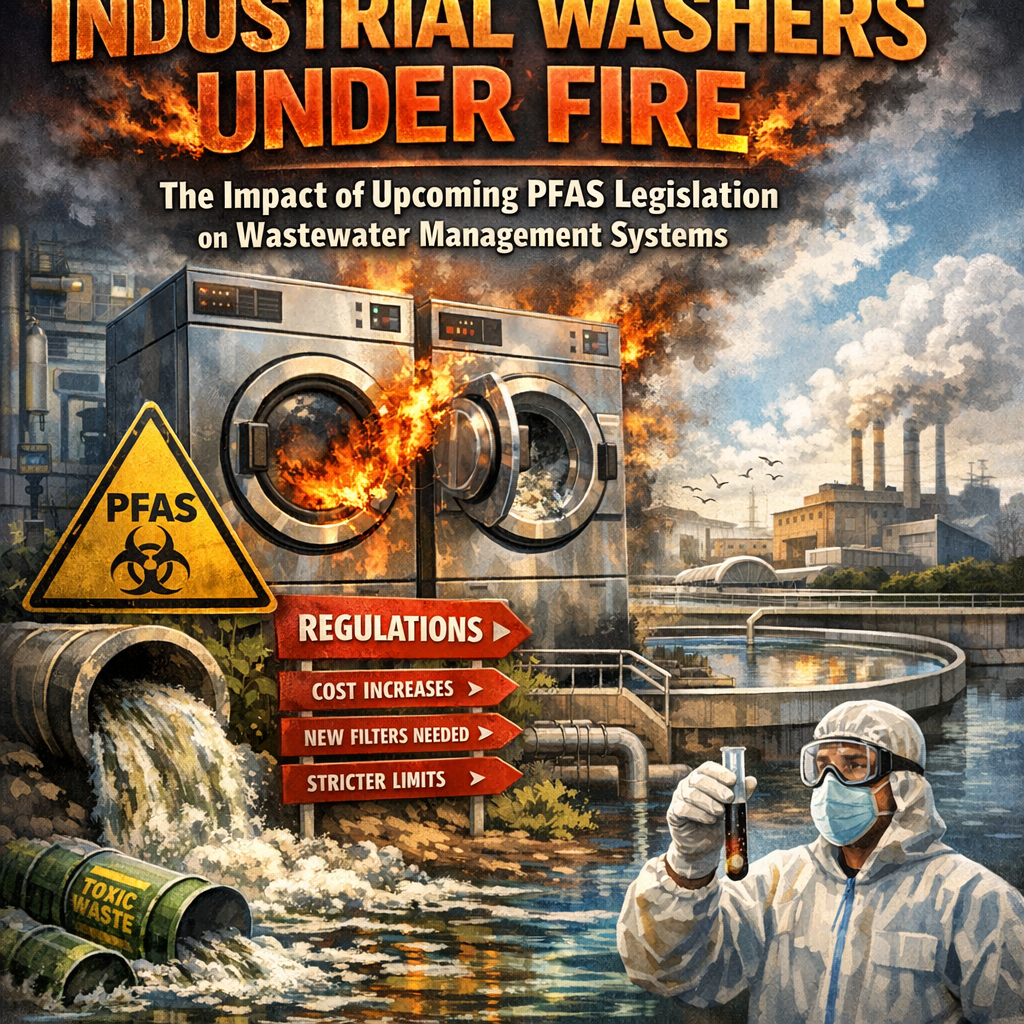
As industries grapple with the looming threat of PFAS legislation, one unforeseen sector finds itself at the crosshairs: commercial washers. These workhorses of the laundry industry are increasingly under scrutiny due to their potential contribution to the ‘Forever Chemicals’ problem.
- Persistent Organic Polycyclic Siloxanes (PFAS) are a class of man-made chemicals that have been used in industrial and consumer products since the 1940s. Their near-indestructibility has earned them the nickname ‘Forever Chemicals.’
While the presence of PFAS in commercial washers is not yet fully understood, early evidence suggests that these machines may be a significant contributor to industrial wastewater contamination.
What are ‘Forever Chemicals’? And why should we be concerned?
Forever Chemicals, officially known as Per- and polyfluoroalkyl substances (PFAS), are a group of man-made chemicals that have been in use since the mid-20th century. They are found in various industrial applications such as non-stick cookware, waterproof clothing, and grease-resistant food packaging.
These chemicals are dubbed ‘Forever’ because they do not break down in the environment and can persist for thousands of years. Their persistence, combined with potential health risks, has led to increasing concerns among environmentalists and public health officials.
- PFAS have been found to be present in drinking water systems across the US, potentially contaminating billions of people’s tap water supplies.
- Studies have linked PFAS exposure to various health issues such as cancer, thyroid disease, and a weakened immune system.
- Due to their widespread presence and potential health risks, many countries are now taking steps to regulate the use and disposal of PFAS chemicals.
How do industrial detergents contribute to PFAS contamination?
Industrial detergents play a significant role in the contamination of Per- and polyfluoroalkyl substances (PFAS). These chemicals, also known as ‘Forever Chemicals,’ are used in various industrial processes, including textile manufacturing and carpet cleaning.
- PFOA and PFOS, two types of PFAS, have been found to persist in water sources and pose health risks if ingested or comes into contact with skin. According to the Environmental Protection Agency (EPA), there is no safe level of exposure to these chemicals.
- Industrial processes that utilize PFAS-containing detergents often discharge wastewater containing high concentrations of these substances. This contaminated water can then enter nearby water sources, posing a risk to both aquatic ecosystems and human health.
As legislators consider new regulations on PFAS contamination, industries using these chemicals may face significant costs associated with retrofitting their facilities to prevent the release of these hazardous substances into the environment.
Understanding the Implications of Upcoming PFAS Legislation
To learn more about how upcoming wastewater regulations could impact your industry, please refer to the comprehensive analysis provided by our legal team. We have also prepared a detailed guide on how to navigate potential compliance issues related to these new standards.
Understanding the upcoming wastewater regulations and their impact on businesses.
The impending wastewater regulations, focusing on the elimination of Per- and polyfluoroalkyl substances (PFAS), have raised concerns among businesses, particularly those in the laundry industry. These ‘Forever Chemicals’ are found in commercial washers’ detergents, posing a potential threat due to their persistence and bioaccumulation.
- According to the Environmental Working Group, PFAS chemicals can enter waterways through washwater discharge from commercial laundries.
- A recent study by the National Institute of Environmental Health Sciences found that six out of seven popular laundry detergents contain high levels of PFAS.
- These chemicals are linked to health concerns such as cancer, thyroid disease, and immune system disruption.
In response to this looming threat, businesses may be forced to invest in expensive filtration retrofits for their drain lines. Estimates suggest that retrofitting even a single washer can cost thousands of dollars per unit, posing a significant financial burden on small and medium-sized enterprises.
Conclusion:
The upcoming wastewater regulations aimed at eliminating PFAS chemicals present a significant challenge for businesses in the laundry sector. With commercial washers being a major source of these ‘Forever Chemicals,’ it is crucial that industries take proactive steps to minimize their impact on human health and the environment.
Exploring potential solutions for dealing with PFAS in commercial laundry facilities.
Exploring potential solutions for dealing with PFAS in commercial laundry facilities.
In light of the looming threat of PFAS legislation, it is crucial to explore potential solutions for managing and mitigating the impact of ‘Forever Chemicals’ on commercial laundry facilities. Below are some promising strategies that can be implemented:
- Regular Maintenance and Monitoring: Conducting routine maintenance checks and monitoring water quality can help identify PFAS contamination early, allowing for timely intervention and minimizing potential damage.
- PFAS-free detergents: Switching to PFAS-free laundry detergents can significantly reduce the risk of contamination. Many manufacturers are already offering eco-friendly alternatives that meet this criterion.
- Filtration Systems: Retrofitting commercial washers with advanced filtration systems designed to remove PFAS contaminants is another viable solution. While expensive, these retrofits may prove cost-effective in the long run due to reduced maintenance and replacement costs associated with PFAS-induced damage.
Conclusion: The need for proactive action in addressing the threat of ‘Forever Chemicals’ in our everyday lives.
Conclusion: The Need for Proactive Action in Addressing the Threat of ‘Forever Chemicals’ in Our Everyday Lives.
In light of the impending legislation surrounding PFAS, it is crucial that we take proactive steps to protect ourselves and our environment from the negative impacts of these so-called ‘Forever Chemicals.’ As we continue to learn more about their presence in industrial detergents and other consumer products, we must remain vigilant in advocating for policies that prioritize public health and safety. By investing in filtration retrofits for drain lines and supporting the development of safer alternatives to PFAS-containing materials, we can work together to create a cleaner, healthier future for generations to come.
Leave a Reply