Table of Contents
- Introduction to Psychological Warfare and Customer Flow
- The Racetrack Method: Origins and Evolution in Retail
- Applying the Racetrack Method to Laundromats: A Case Study
- Benefits of Implementing the Racetrack Method in Vending Machines
- Potential Drawbacks and Alternatives to the Racetrack Method
- Conclusion: The Future of Customer Interaction through Layout Design
Introduction to Psychological Warfare and Customer Flow
Psychological Warfare and Customer Flow: The Unseen Battle for Retail Supremacy
In the world of retail, where every square inch of space counts, understanding customer flow is key to maximizing profits and creating an enjoyable shopping experience. This article delves into the science behind ‘flooring’ techniques used in big-box stores and explores how these principles can be applied to laundromats, forcing high-margin vending machine interaction without irritating the customer.
The Racetrack Method: Origins and Evolution in Retail
The Racetrack Method: Origins and Evolution in Retail
The Racetrack Method, a retail floor layout strategy popularized by Walmart and other big-box stores, has been around since the early days of department store shopping. Its origins can be traced back to the late 1800s, when retailers began experimenting with more efficient ways to move customers through their stores.
Initially, these layouts were designed to accommodate the needs of a predominantly female customer base. Women were responsible for most of the household shopping and needed an easy-to-navigate space where they could efficiently gather all their necessary items. The racetrack layout was born out of this need, with wide aisles and clear pathways that encouraged customers to move quickly through the store.
As competition among retailers increased in the 20th century, the racetrack method evolved to include additional elements designed to boost sales. These included strategically placed end caps (displays at the end of aisles), which highlighted high-margin items such as electronics and clothing, and the use of cross-aisling, where product categories were intentionally interspersed to increase impulse buys.
This strategic approach to customer flow was further refined in the 1990s with the introduction of the ‘racetrack’ method’s modern incarnation. Walmart, then at the height of its growth, implemented a floor layout that prioritized easy navigation and efficient use of space. This new design featured clear sightlines from the entrance to the back of the store, with products arranged in a circular pattern around a central checkout area.
Since then, the racetrack method has become ubiquitous among large retailers, serving as both a means of controlling customer flow and maximizing sales potential. Its success has even prompted smaller businesses, such as laundromats, to consider adopting similar strategies to force high-margin vending machine interactions without irritating their customers.
In conclusion, the origins and evolution of the racetrack method can be attributed to the need for efficient customer flow and increased sales in a competitive retail environment. As this strategy continues to evolve, it remains an important consideration for businesses looking to optimize their floor layouts and boost revenue.
Applying the Racetrack Method to Laundromats: A Case Study
Applying the Racetrack Method to Laundromats: A Case Study
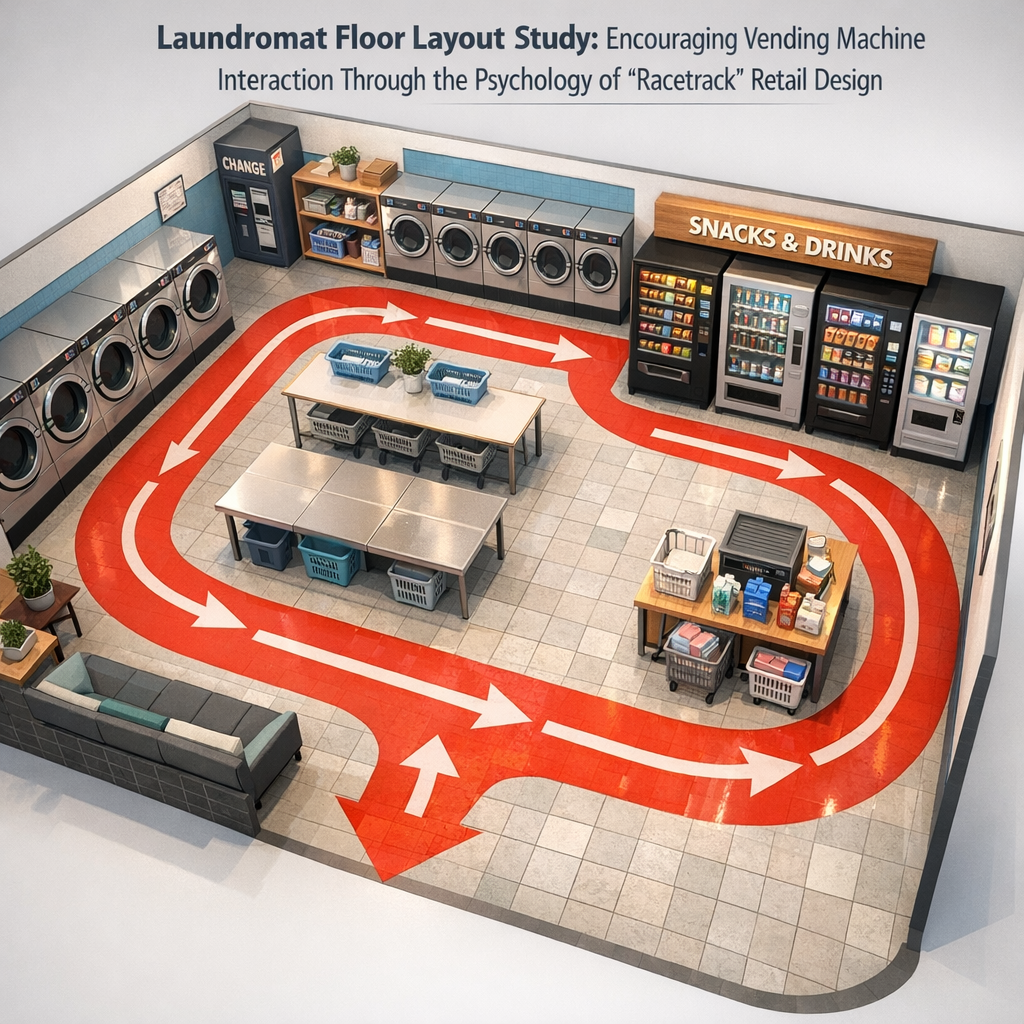
The racetrack method, initially employed by big-box retailers to optimize customer flow and increase sales, can be effectively applied to laundromats as well. In this case study, we will explore how implementing a strategic floor layout can force high-margin vending machine interaction while minimizing customer irritation.
- Firstly, the racetrack method involves designing a layout that directs customers through a series of predetermined paths, ensuring they encounter desired products or services at specific points along their journey.
- In the context of laundromats, this means strategically placing vending machines for detergent, fabric softener, and other high-margin items along these predetermined paths.
- By doing so, customers are more likely to make additional purchases before completing their laundry experience, ultimately increasing revenue for the business.
- Moreover, studies have shown that customers are less likely to feel irritated by such strategic placements, as they have already committed to using the laundromat and understand the need for additional services or products.
Overall, applying the racetrack method to laundromats can lead to improved customer satisfaction and increased sales. By carefully designing floor layouts that guide customers through high-margin product encounters, businesses can capitalize on customer flow while maintaining a positive experience for their patrons.
Benefits of Implementing the Racetrack Method in Vending Machines
Benefits of Implementing the Racetrack Method in Vending Machines
The racetrack method has proven to be highly effective in managing customer flow and maximizing sales in big-box retail stores. When applied to vending machines, this approach can yield similar benefits without irritating customers.
- Increased Sales: By strategically placing high-margin items along the ‘racetrack’ route, customers are more likely to encounter and purchase these products, resulting in increased revenue for the business.
- Efficient Customer Flow: The racetrack method ensures that customers move through the vending area in a logical sequence, reducing congestion and minimizing customer frustration.
- Enhanced Customer Experience: A well-designed vending layout can create an enjoyable shopping experience, leading to increased customer loyalty and repeat visits.
Implementing the racetrack method in vending machines requires careful planning and consideration of factors such as customer preferences, product availability, and space constraints. However, when executed correctly, this approach has the potential to significantly boost sales and enhance the overall customer experience.
Potential Drawbacks and Alternatives to the Racetrack Method
Potential Drawbacks and Alternatives to the Racetrack Method
The racetrack method, while effective in guiding customer flow and increasing interaction with high-margin vending machines, does have its drawbacks. Some potential issues include:
- Increased foot traffic: The continuous loop design can lead to higher pedestrian traffic in certain areas, potentially causing congestion or frustration for customers.
- Space limitations: Implementing the racetrack method may require significant space, which might not be feasible for smaller laundromats.
- Maintenance challenges: Keeping the floor layout organized and well-maintained can be time-consuming and costly.
In light of these potential drawbacks, alternative strategies can be considered:
- Zoned approach: Similar to racetrack method, but with designated zones for specific activities, such as washing, drying, and folding. This allows customers to choose their preferred tasks and reduces overall foot traffic.
- Single-file linear layout: Customers move in a straight line through the laundromat, with vending machines strategically placed along the way. This method minimizes congestion and space requirements while still encouraging high-margin interactions.
By considering these alternatives, businesses can adapt the racetrack method to suit their specific needs and create an optimal customer experience that balances efficiency and comfort.
Conclusion: The Future of Customer Interaction through Layout Design
Conclusion: The Future of Customer Interaction through Layout Design
In this article, we have explored the concept of ‘flooring’ customers in retail settings and how that can be applied to laundromats to encourage high-margin vending machine interaction. By designing layouts that encourage customer flow, businesses can not only increase revenue but also provide a more enjoyable experience for their patrons.
- Implementing the ‘racetrack’ method in laundromats could lead to increased sales from vending machines and a more efficient use of space.
- Further research into customer behavior and preferences can help refine these layout designs, leading to even more effective results.
We encourage businesses to consider the potential benefits of incorporating psychological principles into their store layouts. By doing so, they may find that customers are not only more willing to spend money but also enjoy their overall experience at the establishment.
Leave a Reply