Table of Contents
- Introduction: The Hidden Cost of Inefficient Dryers
- Understanding Gas Pressure Regulation and Orifice Sizing
- Why High-Altitude Shops Face Additional Challenges
- Sea-Level Shops: Ignoring the Issue at Their Peril
- Strategies for Improving Efficiency in Your Shop’s Dryer
- Conclusion: Embracing Change to Save on Energy Costs
Introduction: The Hidden Cost of Inefficient Dryers
The Hidden Cost of Inefficient Dryers
Have you ever noticed that your laundry just isn’t drying as quickly or efficiently as it used to? Or perhaps you’ve been hit with unexpectedly high gas bills lately, leaving you questioning where all the extra cost is coming from. It’s time we shed light on the hidden costs of inefficient dryers and how gas orifice calibration can be the key to saving both money and energy.
- Discover why your once efficient dryer may now be costing you more than it’s worth.
- Learn about the impact of gas pressure regulation on dryer performance at high-altitude vs. sea-level shops.
- Uncover how proper orifice sizing can help improve efficiency and reduce costs in your home.
Understanding Gas Pressure Regulation and Orifice Sizing
Understanding Gas Pressure Regulation and Orifice Sizing
A key factor contributing to the ‘Death Spiral’ of inefficient dryers is the improper regulation of gas pressure and incorrect orifice sizing. In this section, we will delve into these two critical aspects and explain how they impact the efficiency of your dryer.
- Gas Pressure Regulation: The efficiency of a gas-powered dryer depends on maintaining optimal gas pressure to ensure proper combustion. If the pressure is too low, the burner cannot maintain the required temperature, leading to longer drying times and increased energy consumption. Conversely, if the pressure is too high, it can result in incomplete combustion and wasted heat, further reducing efficiency.
- Orifice Sizing: The size of the orifice through which gas flows plays a vital role in maintaining efficient combustion. A smaller orifice increases the gas flow rate, resulting in better mixing with air and more complete combustion. However, if the orifice is too small, it can cause excessive pressure drop and reduced airflow, leading to inadequate drying capacity.
Why High-Altitude Shops Face Additional Challenges
Why High-Altitude Shops Face Additional Challenges
High-altitude shops face additional challenges due to the unique effects of altitude on dryer efficiency. At higher altitudes, air pressure is lower, which can lead to reduced gas flow and combustion efficiency in dryers.
- The reduction in air pressure at high altitudes leads to a decrease in the volumetric flow rate of natural gas, resulting in less fuel reaching the dryer’s combustion chamber.
- Lower air pressure also affects the performance of the orifice sizing, which plays a crucial role in regulating gas pressure for optimal combustion. Inefficiently sized orifices can cause either too much or too little fuel to be delivered, leading to reduced drying capacity and increased energy waste.
To overcome these challenges, high-altitude shops should consider investing in gas meter calibration services to ensure accurate gas pressure regulation. Additionally, proper orifice sizing can help optimize fuel consumption and improve dryer efficiency at high altitudes.
Sea-Level Shops: Ignoring the Issue at Their Peril
Sea-Level Shops: Ignoring the Issue at Their Peril
At sea-level shops, owners often overlook the importance of gas orifice calibration in maintaining the efficiency of their dryers. This oversight can lead to significant financial losses and reduced productivity over time.
- Increased Energy Consumption: Inefficient dryers consume more energy due to the inconsistent flow of natural gas, leading to higher operating costs for owners.
- Reduced Drying Capacity: Poorly calibrated orifices can cause uneven heating, resulting in reduced drying capacity and potentially damaging the clothes being dried.
- Shortened Equipment Lifespan: Continuously operating an inefficient dryer puts unnecessary strain on the system, shortening its lifespan and requiring premature replacements or costly repairs.
To avoid these pitfalls, sea-level shop owners should prioritize regular gas orifice calibration to ensure optimal efficiency in their dryers. By doing so, they can significantly reduce energy consumption, maintain proper drying capacity, and extend the lifespan of their equipment – ultimately saving them time and money in the long run.
Strategies for Improving Efficiency in Your Shop’s Dryer
Strategies for Improving Efficiency in Your Shop’s Dryer
Inefficient dryers can lead to increased operating costs, as well as reduced productivity and customer satisfaction. To improve the efficiency of your shop’s dryer, consider implementing the following strategies:
- Regular maintenance: Schedule routine maintenance for your dryer to ensure that it is running at peak performance. This includes cleaning the lint filter, checking for gas leaks, and inspecting the burner assembly.
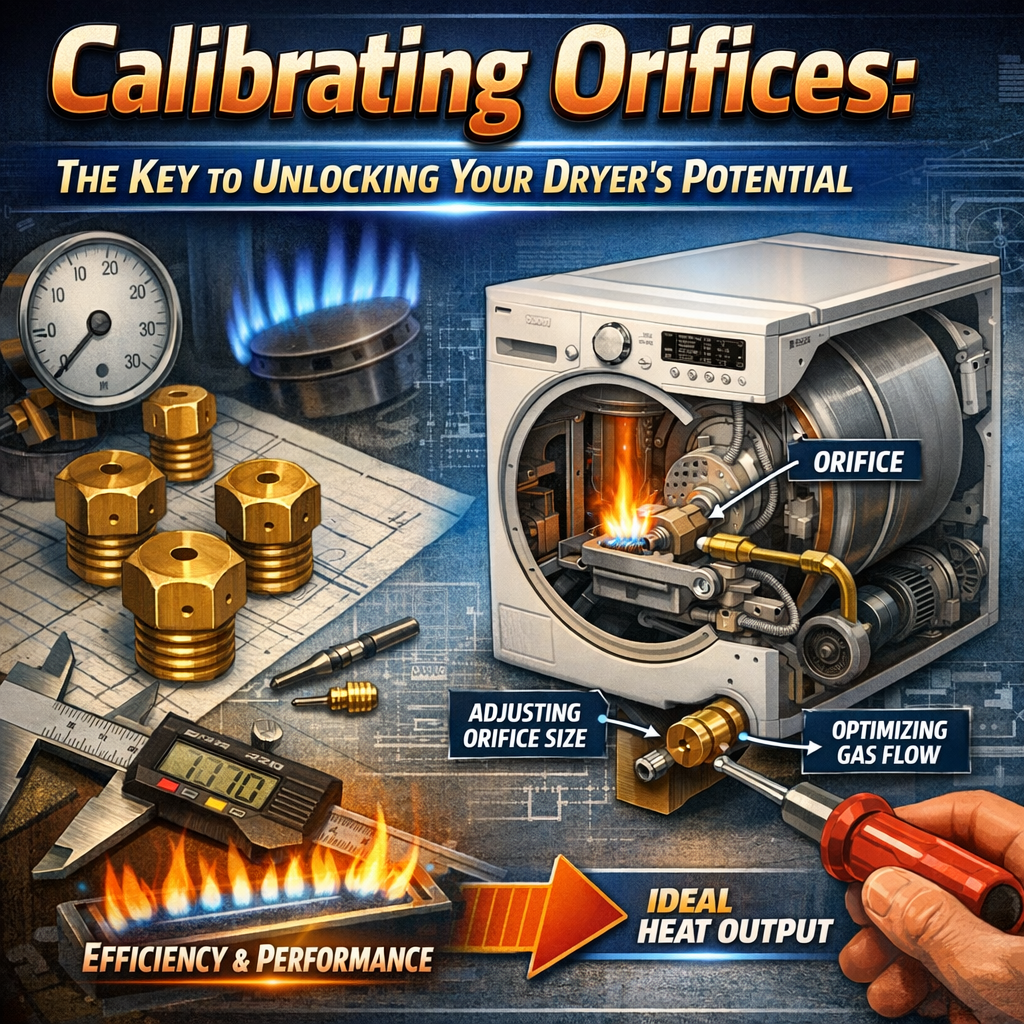
- Orifice calibration: Adjusting the orifice size can help optimize the gas pressure regulation in your dryer, resulting in a more efficient drying process. Consult with a professional to determine the ideal orifice size for your specific dryer model and operating conditions.
- High-altitude adjustments: If your shop is located at a high altitude, you may need to adjust the gas pressure settings on your dryer to compensate for lower air density and reduced drying efficiency. Consult with a professional to determine the appropriate adjustments for your specific dryer model and location.
- Innovative drying cycles: Utilize advanced drying cycles that are designed to maximize energy efficiency, such as adaptive temperature control or variable speed cycling.
Conclusion: Embracing Change to Save on Energy Costs
Conclusion: Embracing Change to Save on Energy Costs
In this article, we’ve explored the impact of inefficient dryers on energy consumption and costs, focusing specifically on gas orifice calibration. As we’ve seen, ignoring proper orifice sizing and pressure regulation can lead to a ‘death spiral’ of escalating energy bills.
- By optimizing your dryer’s gas pressure regulation and selecting the appropriate orifice size for your altitude, you can significantly reduce energy waste and save on utility expenses.
- In addition, regular maintenance and proper care of your dryer can extend its lifespan and further contribute to cost savings over time.
Embracing these changes may require an initial investment in new equipment or adjustments to your current setup. However, the long-term benefits are clear: reduced energy costs, a more efficient drying process, and a smaller environmental impact.
We encourage all dryer owners to consider upgrading their gas pressure regulation systems and selecting the appropriate orifice sizes for their specific locations. By doing so, you’ll not only save on utility bills but also contribute to a more sustainable future.
Leave a Reply