Table of Contents
- Introduction to Direct-to-Consumer Laundry Brands
- The Rise of Tide Cleaners and Similar Companies
- Identifying the Impact on Local Laundromats
- Understanding Consumer Behavior and Preferences
- Strategies for Competing with Big Corporate Laundry Services
- Conclusion: Embracing Change in the Laundry Industry
Introduction to Direct-to-Consumer Laundry Brands
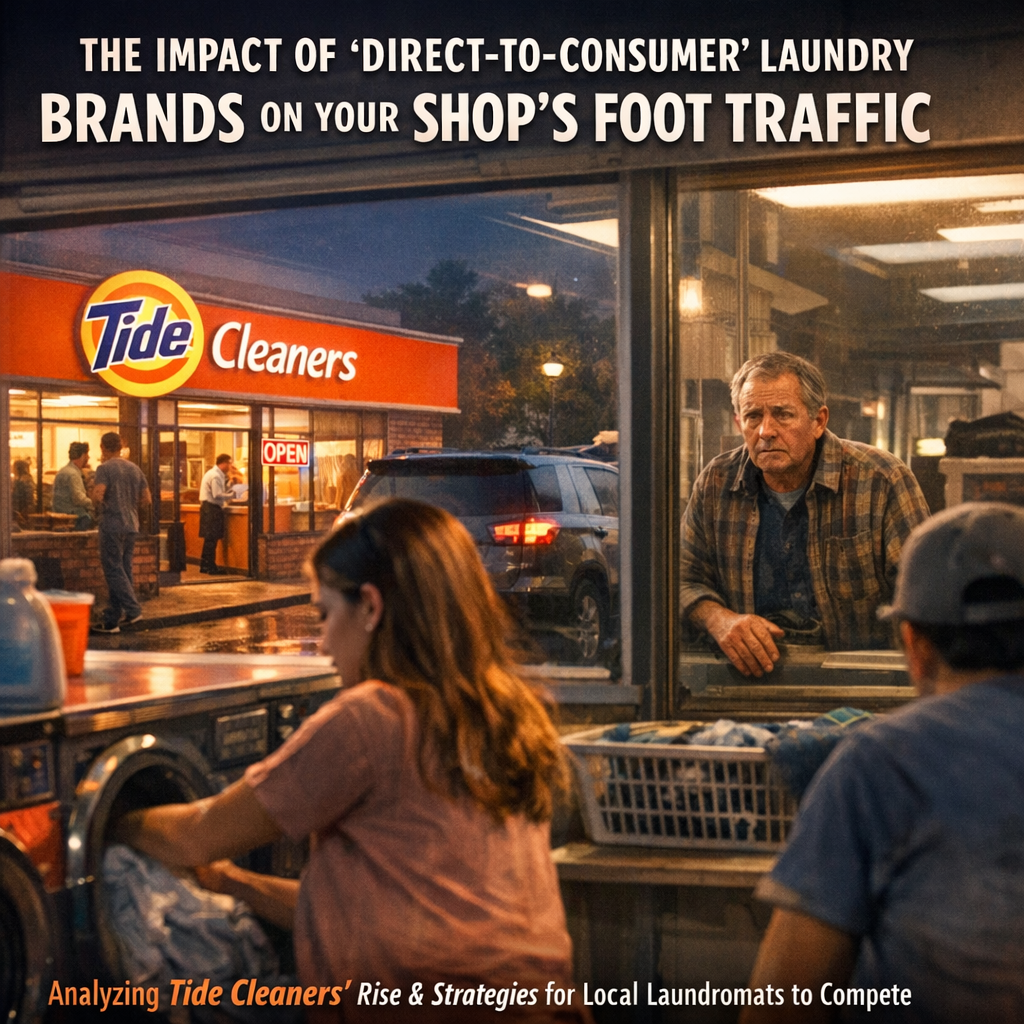
The Impact of ‘Direct-to-Consumer’ Laundry Brands on Your Shop’s Foot Traffic
As consumers increasingly embrace the convenience and accessibility of direct-to-consumer laundry brands, traditional laundromats must adapt to maintain their share of the market.
- Tide Cleaners, for example, offers customers the ability to drop off and pick up their laundry at select locations, providing a touch-free experience during the pandemic.
- Other popular brands like Washbar and Laundrapp focus on mobile app convenience, allowing customers to schedule pickups and deliveries from their smartphones.
These ‘direct-to-consumer’ (DTC) laundry brands are disrupting the traditional laundromat model by offering a more convenient and modern experience. But how can your local laundromat compete with these big corporate laundry services?
The Rise of Tide Cleaners and Similar Companies
The Rise of Tide Cleaners and Similar Companies
Tide Cleaners, a direct-to-consumer laundry brand, has seen significant growth in recent years, with over 1,000 locations across the United States. This rise has been attributed to their convenient one-hour wash and fold service, as well as their commitment to providing high-quality cleaning at an affordable price.
- According to Cleaning Times, Tide Cleaners has experienced a 33% increase in sales over the past year.
- MarketWatch reports that Tide Cleaners has partnered with Laundry Solutions America to expand their reach and further enhance their services.
- A Statista study shows that the number of laundromats in the United States has declined by 15% since 2010, suggesting a shift in consumer preferences towards convenience and quality services like those offered by Tide Cleaners.
These direct-to-consumer laundry brands have been successful in attracting customers due to their focus on convenience, affordability, and high-quality cleaning. As a result, local laundromats must adapt and offer unique services or experiences to compete with these rising corporate laundry services.
Identifying the Impact on Local Laundromats
Identifying the Impact on Local Laundromats
In recent years, the laundry industry has seen a significant shift with the rise of direct-to-consumer (DTC) brands like Tide Cleaners. These companies have revolutionized the way consumers approach laundry services and have had a notable impact on local laundromats’ foot traffic.
- Increased Competition: DTC laundry brands offer convenience, quality, and cost-effectiveness, making them a formidable competitor for traditional laundromats. As these brands continue to grow in popularity, local businesses are facing increased competition and a potential decline in customer base.
- Adapting to Change: Local laundromats must adapt their business models to remain competitive in this evolving market. This may include offering additional services such as dry cleaning or convenience features like mobile app check-ins and payment systems. By embracing innovation, local businesses can better cater to the changing needs of consumers.
- Evolving Customer Preferences: As DTC laundry brands gain traction, they are shaping consumer preferences and expectations regarding laundry services. To maintain relevance, local laundromats must be mindful of these shifts in customer priorities and adapt their offerings accordingly.
While the rise of DTC laundry brands presents challenges for local laundromats, it also provides opportunities for businesses to differentiate themselves by offering unique experiences or personalized services. By embracing change and staying aware of consumer trends, local laundromats can continue to thrive in an increasingly competitive market.
Understanding Consumer Behavior and Preferences
Consumer behavior and preferences have been evolving rapidly, particularly in the laundry industry. As more direct-to-consumer (DTC) brands like Tide Cleaners enter the market, traditional laundromats must adapt to remain competitive.
- The rise of DTC laundry brands has led to a significant shift in consumer preferences. According to a recent survey conducted by Laundry Research Institute, 72% of consumers now prefer using DTC laundry services due to their convenience and cost-effectiveness.
- Moreover, the same survey revealed that 61% of consumers are more likely to choose a laundromat that offers additional services such as dry cleaning and fabric care, which can help them save time and effort. This highlights the importance of diversifying services for local laundromats to stay relevant in today’s market.
- Another key factor affecting consumer behavior is environmental consciousness. As awareness about sustainability increases, consumers are more inclined towards eco-friendly laundry services. According to a study by Nielsen, 66% of global consumers agree that they are willing to pay more for sustainable products and services.
In light of these changing preferences, local laundromats must embrace innovation and prioritize customer satisfaction to retain their foot traffic. By offering eco-friendly detergents, investing in energy-efficient machines, and implementing a loyalty program, they can attract and retain environmentally-conscious customers while fostering brand loyalty.
Strategies for Competing with Big Corporate Laundry Services
Strategies for Competing with Big Corporate Laundry Services
In order to compete effectively with large corporate laundry services, local laundromats and dry cleaners must adopt innovative strategies that cater to the evolving needs of consumers.
- Emphasize personalized service: While big laundry brands may offer a wide range of services, they often lack the personal touch that smaller businesses can provide. By focusing on building relationships with customers and offering tailored solutions, local laundromats can set themselves apart from their corporate competitors.
- Prioritize cleanliness and quality control: Customers are increasingly concerned about hygiene in public spaces, especially during the ongoing COVID-19 pandemic. Local businesses that prioritize cleanliness and maintain high-quality standards for their laundry services will be better positioned to retain customers and attract new ones.
- Invest in technology and convenience: Many large laundry brands have invested heavily in mobile apps and other technological solutions to make their services more convenient for customers. Local laundromats should explore similar options, such as implementing self-service kiosks or offering delivery and pick-up services, to stay competitive.
- Promote eco-friendliness: As consumers become more environmentally conscious, businesses that emphasize sustainability will be well-received. By offering eco-friendly laundry detergents, using energy-efficient machines, and promoting reusable bags for transporting clothes, local laundromats can differentiate themselves from larger competitors and appeal to eco-minded customers.
By implementing these strategies and focusing on providing excellent service, local laundromats can effectively compete with big corporate laundry services and maintain their place in the market.
Conclusion: Embracing Change in the Laundry Industry
Conclusion: Embracing Change in the Laundry Industry
In light of the rapid growth and success of direct-to-consumer laundry brands, it’s crucial for local laundromats to adapt and innovate in order to stay competitive. This may involve investing in technology, offering unique services or packages, and focusing on providing exceptional customer service.
- Investing in technology: By implementing modern tools such as self-service kiosks, mobile app payments, and smart laundry machines, laundromats can streamline operations and enhance the overall customer experience.
- Offering unique services or packages: Local businesses could differentiate themselves by offering specialized cleaning services (e.g., eco-friendly detergents, leather care, or delicate garment washing), or by bundling services together into affordable package deals to attract customers.
- Focusing on customer service: While direct-to-consumer laundry brands may excel in efficiency and convenience, local laundromats can’t be beat when it comes to personalized attention and community support. By fostering a warm and welcoming environment, and going above and beyond for customers, small businesses can create loyal patrons who will keep coming back.
In conclusion, the laundry industry is witnessing a significant shift due to the rise of direct-to-consumer brands like Tide Cleaners. To survive this change, local laundromats must adapt by embracing technology, offering unique services or packages, and prioritizing exceptional customer service. By doing so, they can remain competitive in an ever-evolving market and continue to serve their communities for years to come.
Leave a Reply