Table of Contents
Introduction
Laundromat Water Softener Maintenance: The ‘Salt-Bridge’ Problem and How to Fix It
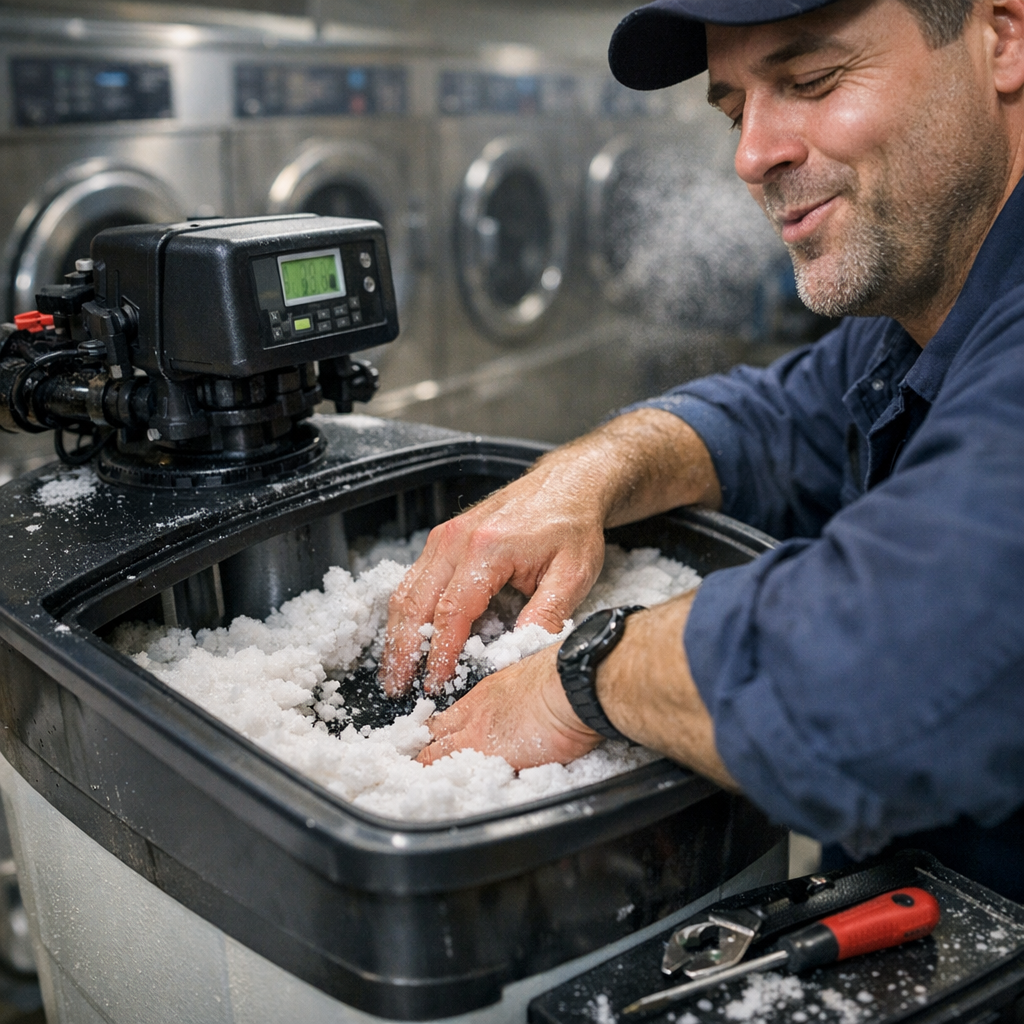
Your water softener is an essential piece of equipment for keeping your laundry clean and soft, but it requires regular maintenance to keep working at its best. One common issue that owners face is the ‘salt-bridge’ problem, which can cause your softener to stop working altogether. In this article, we’ll explore what causes the salt bridge, how to identify if your softener has this issue, and how you can fix it to ensure maximum efficiency for your laundromat.
- Understanding the ‘salt-bridge’ problem
- Identifying if your softener has a salt bridge
- Fixing the salt bridge in 3 easy steps
Understanding the ‘Salt-Bridge’ Problem
The ‘Salt-Bridge’ problem is a common issue that can arise in laundromat water softener maintenance. This problem occurs when the salt bridge, a solid mass of sodium chloride crystals, forms within the brine tank. The salt bridge can interfere with the softener’s ability to produce softened water, leading to reduced efficiency and potentially causing the system to malfunction entirely.
There are several factors that contribute to the formation of a salt bridge, including high temperatures, low humidity, and inadequate water flow through the system. To prevent the formation of a salt bridge, it is essential for laundromat owners to regularly maintain their softener by checking the brine tank at least once per week during peak usage hours.
To fix a salt bridge that has already formed, follow these steps:
1. First, turn off the power supply to the water softener.
2. Next, empty the brine tank of any remaining water and sodium chloride solution.
3. Carefully remove the salt from the brine tank, ensuring not to create additional debris or contamination.
4. Rinse the brine tank thoroughly with clean water, removing any remaining salt residue.
5. Refill the brine tank with fresh sodium chloride solution, following the manufacturer’s recommendations for the correct amount and concentration.
6. Finally, turn on the power supply and allow the system to recondition itself according to the manufacturer’s guidelines.
By understanding the ‘Salt-Bridge’ problem and taking proactive steps to maintain their water softener, laundromat owners can ensure a consistent supply of softened water while maximizing efficiency and minimizing potential repair costs.
Troubleshooting a Non-Working Softener
Troubleshooting a Non-Working Softener
If your water softener has stopped working, it’s crucial to identify the issue and address it promptly. One common problem is the ‘salt-bridge’ formation in the brine tank. This section will guide you through diagnosing this issue and resolving it effectively.
- First, inspect the brine tank for any visible signs of a salt bridge. A salt bridge is formed when hard water salts accumulate and create a resistance to the flow of water, thus inhibiting the softener’s ability to regenerate.
- If you find a salt bridge present, follow these steps to break it up:
- Turn off the water softener and unplug it from the power source.
- Locate the brine tank and carefully remove the lid or cover. Be cautious of any residual heat generated within the tank, as this could be dangerous.
- Using a stiff brush or a specialized descaling tool, gently scrape off the salt bridge. Make sure to apply even pressure and avoid applying too much force, which could result in damage to the brine tank or injury to yourself.
- Once the salt bridge has been removed, rinse the brine tank thoroughly with clean water to ensure no residual salt remains.
- Reassemble the brine tank and turn on your water softener. Monitor its performance closely to confirm if the issue has been resolved.
- If the problem persists, consider consulting a professional plumber or contacting the manufacturer for further assistance.
Maintaining the Brine Tank
Maintaining the Brine Tank
To ensure maximum efficiency and prevent issues like the ‘salt-bridge’ problem, regular maintenance of your water softener’s brine tank is crucial. Here are some essential steps to follow:
1. **Monitor salt levels:** Keep an eye on your system’s salt level and refill it as needed. Most water softeners have a sight glass or clear compartment for easy visual monitoring.
2. **Scrape the salt bridge:** If you notice a ‘salt-bridge’ forming at the bottom of the brine tank, use a rubber mallet or wooden dowel to gently break up the solidified salt crystals. This will prevent them from clogging your system’s workings and ensure smooth operation.
3. **Clean the brine tank:** Periodically clean your brine tank to remove any buildup or residue that may hinder its performance. To do this, simply mix equal parts water and white vinegar in the tank, let it sit for a few hours, then drain and rinse thoroughly with water.
4. **Check the overflow tube:** The overflow tube is an important component of your water softener. Ensure it’s functioning correctly by periodically checking its position and adjusting if necessary.
5. **Inspect the distribution lines:** Examine the distribution lines leading to your laundry room or other areas where softened water is needed. Ensure they are free of blockages, such as mineral deposits, that could impede water flow.
Preventing Future Salt-Bridge Issues
Preventing Future Salt-Bridge Issues
To prevent future salt-bridge issues, it is essential to maintain your water softener regularly. Here are some steps you can take:
- Inspect the brine tank: Periodically check the level of salt in the brine tank and ensure that it’s not too low or too high. A low salt level could lead to a salt bridge, while an excess amount might damage your softener.
- Clean the brine tank: Over time, minerals may accumulate on the sides of the brine tank, making it difficult for the salt to dissolve properly. Cleaning the tank at least once every six months can help prevent this problem.
- Monitor water hardness: Keep an eye on your home’s water hardness levels, as increased mineral content can contribute to salt-bridge formation. If you notice a change in water hardness, consult with a professional to determine if your softener needs adjusting or servicing.
Conclusion
Laundromat Water Softener Maintenance: The ‘Salt-Bridge’ Problem and How to Fix It – Conclusion
In conclusion, regular maintenance of your water softener is crucial for its efficient functioning and longevity. By understanding the ‘salt-bridge’ problem and following the steps outlined in this article, you can prevent costly repairs and ensure that your laundromat’s water softener continues to operate at peak performance.
- Regularly inspect and clean the brine tank to avoid clogged nozzles and poor flow rate.
- Maintain proper salt levels to prevent the formation of ‘salt bridges’ that can hinder the softener’s ability to produce softened water.
We hope this troubleshooting guide has provided valuable insight into addressing common issues with laundromat water softeners. Remember, proactive maintenance is key to maximizing your investment and providing customers with clean, soft laundry water. Happy laundering!
Leave a Reply