Table of Contents
Introduction
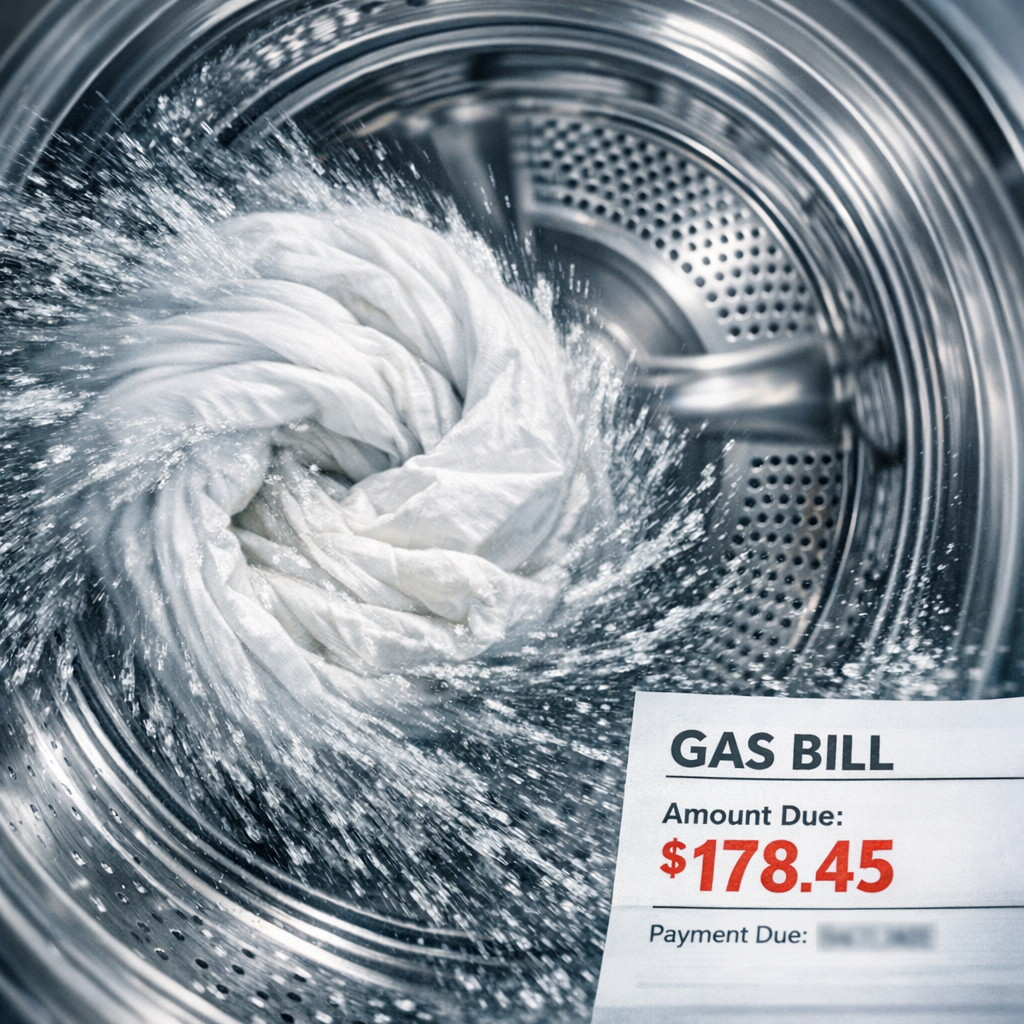
The Physics of High-Speed Extraction: Why G-Force Matters to Your Laundromat’s Gas Bill
Have you ever wondered why your laundromat’s gas bill spikes when they spin-dry your clothes at 400 G-forces? Or how this high-speed extraction process removes twice as much water compared to a lower centrifugal force?
- It all boils down to the physics of fluid dynamics and the principles of energy conservation.
The Science Behind High-Speed Extraction
The Science Behind High-Speed Extraction
At the heart of high-speed extraction lies a principle in physics known as centrifugal force, which plays a crucial role in your laundromat’s gas bill.
- Centrifugal force is an outward pull experienced by any object moving in a circular path. In the context of a clothes dryer, this force acts on water molecules within the spinning laundry load.
- When a load spins at 100G, it experiences twice the centripetal force as it would at 50G. As such, the clothes dry faster due to increased contact between fabric and warm air.
- However, when the load spins at 400G, the centrifugal force is four times greater than that of a 100G spin. This results in twice as much water being removed from the laundry, leading to faster drying and reduced gas consumption for the laundromat.
In conclusion, high-speed extraction through increased G-force significantly enhances the efficiency of clothes dryers, ultimately impacting your laundromat’s bottom line by reducing energy costs and improving customer satisfaction with faster drying times.
How G-Force Impacts Gas Consumption
The relationship between g-force and gas consumption in laundromat dryers may not seem immediately apparent, but understanding this connection is crucial to optimizing your laundry operations.
- Firstly, it’s important to understand that the higher the g-force exerted on wet clothes during the drying process, the more water can be removed in a single cycle. This increased efficiency comes at the cost of greater energy usage; the higher the g-force, the more power is required to spin the dryer drum.
- Let’s consider two extreme examples: a dryer spinning at 100g and one spinning at 400g. The former would remove only half as much water as the latter in the same amount of time. As a result, a laundromat operating at 100g might need to run each load twice to achieve the same level of dryness as a single cycle at 400g.
- Of course, this increased energy consumption comes with environmental and financial costs. By choosing to operate your dryers at higher g-forces, you’ll not only be using more gas but also contributing to greater greenhouse gas emissions and potentially driving up your utility bills.
- To mitigate these concerns, consider implementing strategies like load balancing or upgrading to more energy-efficient models that can deliver the same high-speed drying performance with lower power consumption. By doing so, you can strike a balance between customer satisfaction and sustainable operations in your laundromat business.
Benefits of High-Spin Laundromats
Benefits of High-Spin Laundromats
High-speed extraction, or high-spin laundromats, offer several advantages over traditional wash cycles. These benefits translate to lower operating costs and increased efficiency for laundry businesses.
- Reduced drying time: Higher G-forces result in more efficient water removal during the spin cycle, allowing clothes to dry faster. This not only saves time but also reduces energy consumption by decreasing the amount of time the dryer operates.
- Enhanced fabric care: High-speed extraction can help preserve the color and texture of fabrics better than traditional washing methods. The increased centrifugal force helps remove more water from clothes, reducing the likelihood of color bleeding or shrinkage during drying.
- Larger load capacity: High-spin laundromats are designed to handle larger loads compared to their lower-speed counterparts. This allows businesses to maximize machine usage and process more laundry in less time, increasing overall efficiency and revenue potential.
Environmental Impact of Efficient Dryers
Environmental Impact of Efficient Dryers
Efficient dryers can significantly reduce the environmental impact of laundromats by minimizing energy and water consumption during the high-speed extraction process.
- Spinning at higher G-forces, such as 400G, can remove twice as much water compared to spinning at 100G. This increased efficiency reduces drying time and thus lowers overall energy consumption.
- Moreover, high-speed extraction systems use less water than traditional dryers due to their ability to effectively separate moisture from textiles. This reduction in water usage contributes to a lower environmental footprint for laundromats.
- In addition to energy and water savings, efficient dryers can also help laundromats save on gas costs. By reducing the time required for drying cycles, less fuel is needed to power the dryer’s operation, resulting in lower gas bills.
Conclusion
Conclusion
In this article, we’ve explored the physics behind high-speed extraction in laundromat dryers and how it impacts gas consumption. We’ve learned that increasing the centrifugal force (g-force) during the spinning phase of a dryer cycle results in more effective water removal from clothes.
- At lower g-forces, such as 100G, only half the amount of water is removed compared to higher g-forces like 400G.
- This means that dryers using high-speed extraction can save significant amounts on gas bills while still efficiently drying clothes.
To take advantage of these energy-saving benefits, consider upgrading your laundromat’s dryers with models that utilize high-speed extraction technology. Not only will you save money in the long run, but you’ll also contribute to a more sustainable future by reducing overall energy consumption.
Leave a Reply