Table of Contents
- Introduction
- Understanding ADA Compliance Standards for Laundromat Restrooms
- Measuring and Installing Properly Placed Grab Bars
- Ensuring Adequate Space for Wheelchair Maneuverability
- Checking Door Width and Hardware Accessibility
- Conclusion: Protecting Your Business with a Compliant Laundromat Bathroom
Introduction
Laundromat ADA Benchmarking: Is Your Restroom Truly Wheelchair Accessible?
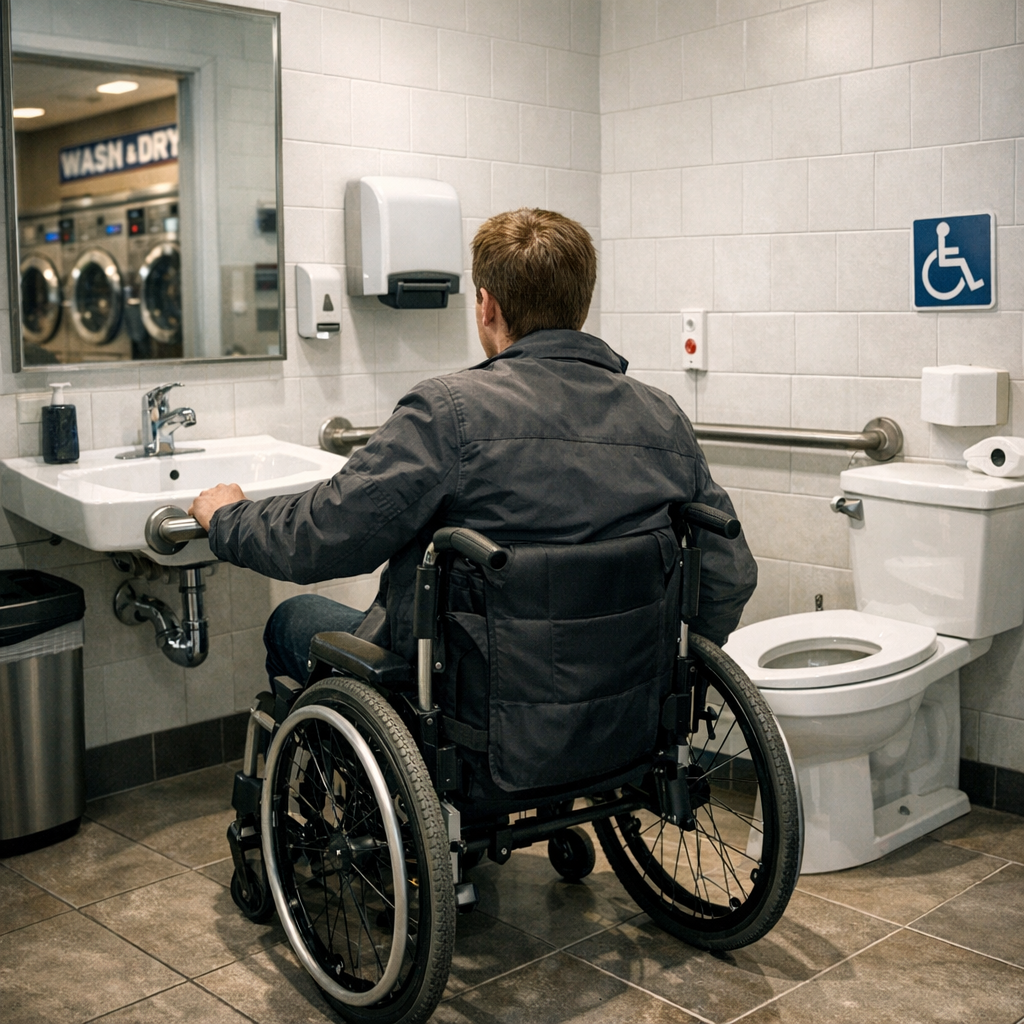
The American with Disabilities Act (ADA) has been a cornerstone of civil rights for the disabled community since its inception in 1990. As part of this legislation, businesses are required to ensure that their facilities meet specific accessibility standards. One such space is the public restroom, which can present unique challenges when it comes to accommodating individuals with mobility impairments. In this article, we will delve into the intricacies of laundromat ADA benchmarking and explore the measurements and grab-bar placements necessary to make your establishment 100% compliant and lawsuit-proof.
- Understanding the ADA requirements for public restrooms
- An overview of the importance of proper restroom design in laundromats
- A step-by-step guide to measuring and installing grab bars effectively
Understanding ADA Compliance Standards for Laundromat Restrooms
Understanding ADA Compliance Standards for Laundromat Restrooms
The Americans with Disabilities Act (ADA) establishes a set of guidelines and requirements to ensure equal access and opportunity for individuals with disabilities in public spaces, such as laundromats. In order to achieve 100% compliance, it is crucial to understand the specific measurements and grab-bar placements required for your laundromat’s restroom.
- The minimum width of a restroom door should be 36 inches (91 cm).
- Clearances for entry and exit must be at least 36 inches (91 cm) wide, allowing wheelchair users to maneuver without obstruction.
- Wheelchair-accessible toilets should have a minimum clearance of 60 inches (152 cm) around the side and rear, with a 36-inch (91 cm) wide door opening for access.
- The toilet paper dispenser should be no higher than 48 inches (122 cm) from the floor, ensuring easy reach for all users.
- Grab bars must be installed within easy reach of the toilet, typically around 18-24 inches (46-61 cm) above the floor, and positioned so they do not obstruct the entrance or exit door.
Measuring and Installing Properly Placed Grab Bars
Measuring and Installing Properly Placed Grab Bars
In order to achieve full ADA compliance, it is crucial that laundromats install grab bars in the restroom at the correct height, angle, and spacing. The following guidelines should be followed when installing grab bars:
- The bottom of the grab bar should be installed at a height between 34 inches and 38 inches (86 cm and 96 cm) above the floor.
- Grab bars should be angled to prevent any sharp corners from facing towards the user, increasing the risk of injury. A slight bend of approximately 1 inch (2.5 cm) is recommended at each end of the bar.
- The distance between grab bars should not exceed 24 inches (61 cm). Ideally, they should be spaced no more than 4 inches (10 cm) apart along a wall or around the toilet.
Ensuring Adequate Space for Wheelchair Maneuverability
Ensuring Adequate Space for Wheelchair Maneuverability
In order to ensure that your laundromat’s public bathroom is truly wheelchair accessible, it is crucial to provide adequate space for wheelchair maneuverability. According to the Americans with Disabilities Act (ADA) guidelines, a clear floor space of at least 36 inches by 48 inches is required for wheelchairs to navigate freely.
Here are some essential considerations when designing this space:
- Ensure that there is enough room for a wheelchair to rotate 180 degrees without having to back up more than six inches from the path of travel.
- The width of doors and gateways must be at least 32 inches, allowing a wheelchair user to pass through comfortably.
- A clear floor space should have a minimum depth of 30 inches to accommodate a wheelchair’s turning radius without encroaching on adjacent spaces.
- It is essential to provide ample space between the toilet and the nearest entrance so that a wheelchair user can enter and exit the bathroom without interference. The ADA recommends a minimum distance of 12 feet for this purpose.
Checking Door Width and Hardware Accessibility
Checking Door Width and Hardware Accessibility
To ensure that your laundromat’s public bathroom is ADA-compliant, it is crucial to check the door width and hardware accessibility.
- The minimum door width required for a wheelchair to pass through must be at least 36 inches (91 cm).
- Doors should have no more than a quarter-inch gap when closed to prevent water or clothing from getting trapped between the door and its frame.
- Hinges on doors should be mounted with continuous, concealed bolts that are at least 9 inches apart vertically, ensuring easy access for those using wheelchairs or mobility devices.
Conclusion: Protecting Your Business with a Compliant Laundromat Bathroom
Conclusion: Protecting Your Business with a Compliant Laundromat Bathroom
In today’s world, providing an accessible and safe environment for all customers is not only a moral obligation but also a legal requirement. By ensuring your laundromat bathroom meets ADA compliance standards, you can protect your business from potential lawsuits and provide a welcoming space for everyone.
- Measure the clear floor space in front of the toilet to ensure it’s at least 48 inches wide and centered on the toilet’s centerline.
- Make sure there is enough space (at least 36 inches wide) for a wheelchair to maneuver in front of the toilet, with room for the user to face the door while seated.
- Check that the toilet’s height and width allow for easy transfer by someone using a wheelchair or other mobility aid, and that there is enough space beneath it for such devices’ wheels to operate smoothly.
In conclusion, investing in renovations to make your laundromat bathroom ADA-compliant is a wise business decision. Not only will it protect you from legal action, but it also demonstrates your commitment to inclusivity and accessibility, which can attract more customers and foster positive word-of-mouth advertising.
Leave a Reply