Table of Contents
- Introduction: Introducing ‘Detergent on Tap’ and its benefits
- The cost-saving potential of refillable detergent stations
- Environmental impact: Reducing packaging waste and pollution
- Attracting eco-conscious customers: Marketing the zero-waste laundromat
- Implementing refillable detergent stations: Step-by-step guide
- Conclusion: The future of laundry services and sustainable living
Introduction: Introducing ‘Detergent on Tap’ and its benefits
The ‘Zero-Waste’ Laundromat: Implementing Refillable Detergent Stations
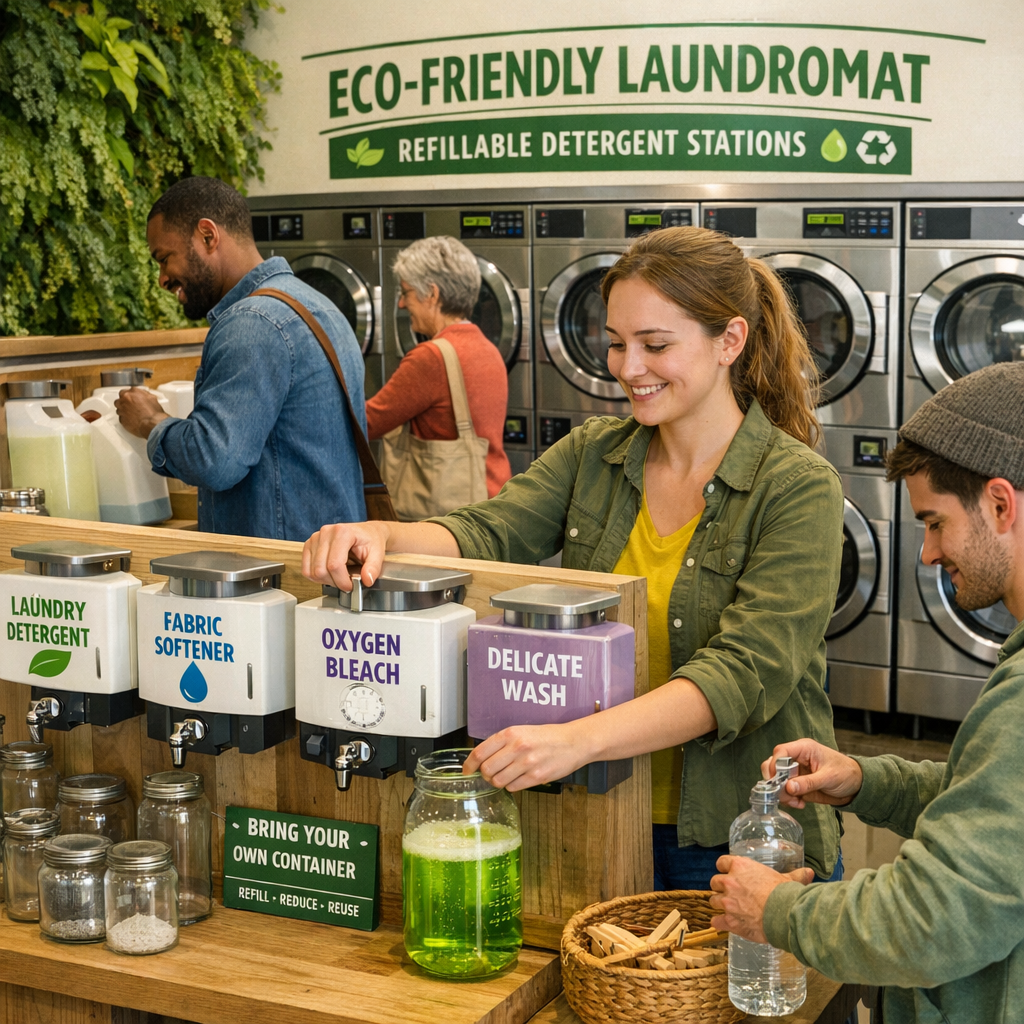
Are you tired of spending money on single-use detergent packets, only to throw them away after a single use? What if there was a way to save money on packaging and trash removal while attracting eco-conscious customers? Enter ‘Detergent on Tap,’ the innovative solution that’s transforming laundromats into zero-waste havens.
- Introducing ‘Detergent on Tap’
‘Detergent on Tap’ is a refillable detergent station designed to replace single-use packets. By refilling your own container with the appropriate amount of detergent, you can save money on packaging and contribute to a more sustainable future. But that’s not all – this eco-friendly solution also helps businesses save on trash removal costs.
The cost-saving potential of refillable detergent stations
The Cost-Saving Potential of Refillable Detergent Stations
Implementing refillable detergent stations in laundromats can lead to significant cost savings for both businesses and customers, while simultaneously reducing waste and promoting eco-consciousness.
- Economies of Scale: By purchasing large quantities of eco-friendly detergents at a wholesale level, laundromat owners can significantly lower their detergent procurement costs. This translates to reduced operating expenses and increased profit margins.
- Reduced Packaging Waste: Traditional single-use detergent packets generate a considerable amount of plastic waste. By offering refillable stations, laundromats can drastically reduce the volume of packaging waste generated on their premises, contributing to a cleaner environment and potentially attracting eco-conscious customers who prefer sustainable options.
- Savings for Customers: Refillable detergent stations allow customers to bring their own reusable containers, reducing the cost per load compared to purchasing pre-packaged detergent. This can lead to increased customer satisfaction and loyalty, as well as additional revenue opportunities for laundromats through increased patronage.
Environmental impact: Reducing packaging waste and pollution
Reducing Packaging Waste and Pollution
The implementation of refillable detergent stations in laundromats can significantly reduce packaging waste and pollution. Traditional single-use containers contribute to a growing amount of plastic waste in the environment, much of which ends up in landfills or polluting our oceans.
- According to the Environmental Protection Agency, approximately 8.3 billion metric tons of plastic have been produced since the material’s invention, with less than 60% being in use today. This means that a significant portion is discarded as waste.
- By offering refillable detergent stations, laundromats can reduce the need for single-use containers, potentially saving millions of plastic bottles from entering landfills or waterways each year.
- A study by McGill University found that a single laundry detergent bottle takes up to 500 years to decompose in a landfill. Refillable stations can help alleviate this issue and promote more sustainable practices.
- Moreover, the European Commission estimates that Europeans generate about 25 million tons of municipal waste annually. By promoting refillable options, laundromats can help reduce this figure and contribute to a cleaner environment.
- Furthermore, McGill University’s research also revealed that plastic waste in the ocean kills an estimated 100,000 marine animals per year. By offering refillable stations, laundromats can help prevent these tragic consequences and protect marine life.
Attracting eco-conscious customers: Marketing the zero-waste laundromat
Attracting Eco-Conscious Customers: Marketing the Zero-Waste Laundromat
Implementing refillable detergent stations at your laundromat not only helps save money on packaging and trash removal, but also attracts eco-conscious customers who are looking to reduce their environmental impact. Here are some ways you can market this zero-waste initiative:
- 1. Promote the Refillable Detergent Stations: Place eye-catching signs around the laundromat that advertise your new refillable detergent stations, highlighting the eco-friendly benefits of using them.
- 2. Engage on Social Media: Share photos and posts on social media platforms like Facebook, Instagram, and Twitter showcasing your zero-waste initiative. Encourage customers to share their experience using #ZeroWasteLaundromat or a similar hashtag.
- 3. Collaborate with Local Environmental Groups: Partner with local environmental organizations to host events, workshops, or presentations about the importance of reducing waste in everyday life. This will not only help spread awareness but also attract eco-conscious customers who share the same values.
- 4. Offer Discounts and Incentives: Provide discounts or rewards for customers who use refillable detergent stations, encouraging them to make the switch from single-use plastic containers.
- 5. Educate Your Staff: Train your employees on the benefits of zero-waste initiatives and how they can communicate this to customers. Encourage staff members to share their knowledge with customers and answer any questions they may have about refillable detergent stations.
Implementing refillable detergent stations: Step-by-step guide
Implementing Refillable Detergent Stations: Step-by-Step Guide
To successfully implement refillable detergent stations in your laundromat, follow these essential steps:
- Research and select a suitable refillable detergent system. Choose a system that is easy to use, eco-friendly, and cost-effective for both you and your customers. Some popular options include Detergent on Tap and Eco-Box.
- Allocate space for the refillable detergent stations. Designate an area in your laundromat where customers can easily access and utilize the refillable detergent stations. Ensure this location is well-lit, visible, and convenient for users.
- Create a clear signage system. Develop simple, understandable signs that inform customers about the benefits of using refillable detergents, as well as any associated costs or limitations. This will help promote eco-conscious behavior and increase awareness of your ‘Zero-Waste’ initiative.
- Train staff on the proper use and maintenance of the refillable detergent stations. Educate your employees about how to operate and maintain the systems, ensuring a smooth experience for customers and minimizing potential issues. Regularly check the stations for any necessary repairs or updates.
- Monitor usage and adjust pricing accordingly. Keep track of the refillable detergent station’s usage patterns and consider adjusting prices based on demand. This will help you optimize costs and maximize profit while still offering an eco-friendly option to your customers.
Conclusion: The future of laundry services and sustainable living
Conclusion:
The ‘Zero-Waste’ Laundromat is not just an innovative solution to the ever-growing problem of waste and plastic pollution; it’s a blueprint for sustainable living in the 21st century. By implementing refillable detergent stations, laundromats can save money on packaging and trash removal while attracting eco-conscious customers who are increasingly concerned about their environmental footprint.
- Offering ‘Detergent on Tap’ not only reduces plastic waste but also encourages patrons to adopt more sustainable habits at home. This, in turn, could lead to a domino effect of eco-friendly practices spreading across communities and beyond.
In conclusion, the adoption of refillable detergent stations is a small step that can make a big difference for our planet. Let’s join hands to transform laundromats into green havens where clothes are cleaned and conservation is celebrated.
Leave a Reply