Table of Contents
Introduction
Blockchain in the Laundry: Using Smart Contracts for Commercial B2B Billing
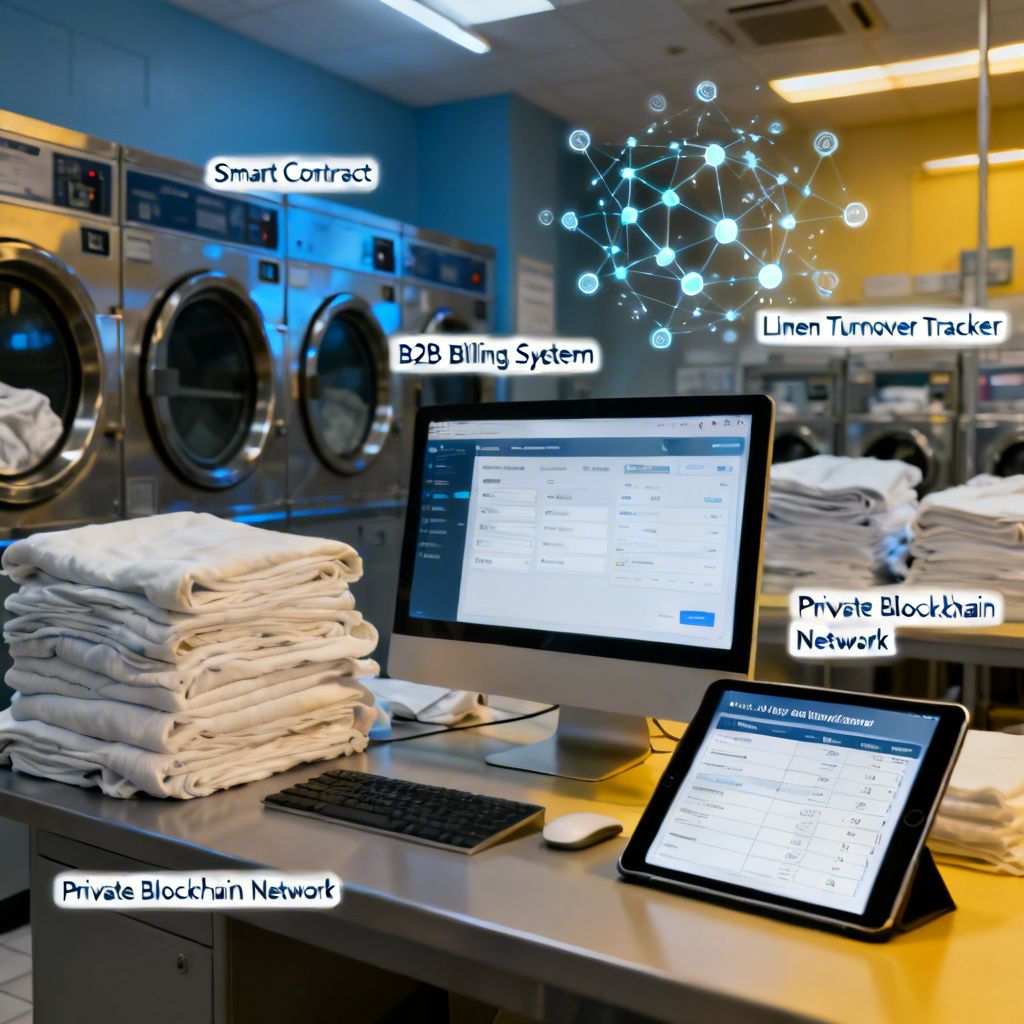
Could a laundromat use a private blockchain to track linen turnover for a hotel and automate the invoicing process? The answer is yes, and this innovative solution could revolutionize commercial laundry services. In today’s fast-paced world, businesses need efficient and secure ways to manage their operations, and blockchain technology offers just that.
- By implementing a private blockchain network with smart contracts, laundromats can streamline their processes and improve security.
- This innovative system can help reduce costs and increase efficiency in commercial laundry services, benefiting both hotels and laundries.
- The use of blockchain technology in the laundry industry could serve as a blueprint for other businesses looking to automate and secure their operations.
The Laundry Dilemma: Manual Billing in Commercial Laundries
The Laundry Dilemma: Manual Billing in Commercial Laundries
Commercial laundries, such as those servicing hotels and resorts, face a significant challenge when it comes to billing their clients. The current manual process involves laborious record-keeping, with employees manually tracking linen turnover and generating invoices based on the quantity of linens washed and ironed.
- Lack of transparency: Manual billing systems make it difficult for both parties to have a clear understanding of the exact number of items being processed and the corresponding cost.
- Errors and delays: Human errors, such as miscalculations or missed entries, can lead to delayed invoices and unhappy clients.
As a result, commercial laundries are seeking more efficient ways to manage their billing processes. This is where blockchain technology comes in – offering a solution that could revolutionize the industry.
Blockchain Technology: A Solution for Automated Billing
Blockchain Technology: A Solution for Automated Billing
In the ever-evolving world of business, the integration of blockchain technology has emerged as a game-changer in streamlining processes and enhancing data security. One such application lies in commercial laundry services that cater to businesses such as hotels, resorts, and hospitals. By employing smart contracts on a private blockchain network, these laundromats can effectively track linen turnover and automate the invoicing process, leading to increased efficiency and cost savings.
A key advantage of using blockchain technology for automated billing is its decentralized nature, which eliminates the need for intermediaries or third-party service providers. This direct communication between the laundromat and the hotel ensures a seamless flow of information, enabling real-time tracking of linen turnover and instant generation of invoices based on the quantity of linens used.
Moreover, the immutable and transparent nature of blockchain transactions guarantees data integrity and security. By recording each linen exchange as a transaction on the blockchain ledger, any attempt to tamper with or manipulate the data becomes virtually impossible. This feature not only safeguards against fraud but also provides an auditable trail for regulatory compliance.
Furthermore, smart contracts facilitate the automation of billing processes by executing pre-defined terms and conditions of the agreement when specific criteria are met. For instance, upon the completion of a linen exchange, the smart contract can automatically generate an invoice based on the agreed pricing structure. This eliminates the need for manual data entry or human intervention in generating invoices, thus reducing errors and improving overall efficiency.
In conclusion, the adoption of blockchain technology in commercial laundry services offers a promising solution for automating billing processes and enhancing data security. By leveraging smart contracts on a private blockchain network, laundromats can streamline their operations, reduce costs, and provide an added layer of transparency and trust to their business dealings with clients like hotels and resorts. As the hospitality industry continues to demand more efficient and secure laundry services, the integration of blockchain technology is set to become an indispensable tool for success in this competitive landscape.
Implementing Smart Contracts: Streamlining the Process
Blockchain technology has the potential to revolutionize various industries, including laundry services for hotels and commercial businesses. By implementing smart contracts on a private blockchain, laundromats can streamline their processes and automate invoicing, leading to increased efficiency and cost savings.
One of the key benefits of using smart contracts is that they allow for automatic execution of predefined terms and conditions within the contract itself. This eliminates the need for intermediaries and reduces the potential for human error. For example, when a hotel sends its laundry to a laundromat, the smart contract can automatically calculate the linen turnover based on pre-established rates, ensuring accurate billing without manual intervention.
Another advantage of using blockchain technology is the enhanced security it provides. By storing data on a distributed ledger that cannot be altered or deleted, smart contracts create an immutable record of all transactions. This makes it virtually impossible for fraudulent activities to occur within the system and provides peace of mind for both laundromats and their clients.
Additionally, integrating blockchain with existing laundry management software can further improve efficiency. For instance, by using RFID tags on linen items, the system can track the movement of each piece throughout the entire process, from the hotel room to the laundromat and back again. This real-time tracking allows for better inventory management and reduces the likelihood of lost or misplaced items.
In conclusion, implementing smart contracts on a private blockchain has numerous benefits for commercial laundry services. By automating invoicing processes, enhancing security, and improving overall efficiency, businesses can save time and money while ensuring accurate and transparent billing. With the continued growth of the hospitality industry, it’s likely that more laundromats will adopt this innovative technology in the near future.
Implementing Smart Contracts: Streamlining the Process
- Automatic execution of predefined terms and conditions
- Enhanced security through immutable transaction records
- Integration with existing laundry management software for improved efficiency
Benefits of Using Blockchain and Smart Contracts in B2B Billing
Benefits of Using Blockchain and Smart Contracts in B2B Billing
Implementing blockchain technology and smart contracts for commercial B2B billing can bring a multitude of benefits to businesses, including increased efficiency, enhanced security, reduced costs, and improved transparency.
- Efficiency: By utilizing blockchain and smart contracts, the entire invoicing process becomes automated. This eliminates the need for manual data entry and reduces the likelihood of human error, thus speeding up the overall process.
- Security: Blockchain technology provides a secure platform for storing and sharing data. Each transaction on the network is encrypted and recorded across multiple nodes, making it nearly impossible to alter or tamper with information.
- Cost Reduction: Automating the invoicing process using blockchain and smart contracts can lead to significant cost savings for businesses. By eliminating manual labor and reducing human error, companies can save on expenses related to employee salaries, training, and errors in data entry.
- Transparency: Blockchain technology allows for complete transparency in transactions, as every participant has access to the same information. This ensures that all parties involved have a clear understanding of the billing process and any associated fees or charges.
In the case of a laundromat providing linen turnover services for a hotel, implementing blockchain and smart contracts can help streamline the entire process. The hotel would be able to track their linen inventory more efficiently, while the laundromat could automatically generate invoices based on the quantity of linens provided and the agreed-upon rates.
Conclusion
In this article, we explored the potential of blockchain technology in revolutionizing commercial laundry services by automating and streamlining the billing process for businesses.
- We discussed how a private blockchain could be used to track linen turnover between a laundromat and its hotel clients,
- And how smart contracts could eliminate the need for manual invoicing, reducing errors and improving efficiency.
Given these benefits, it is clear that implementing blockchain technology in commercial laundry services is a promising avenue for innovation. We encourage businesses in this industry to consider adopting such solutions to streamline their operations and reduce costs.
As the demand for more efficient and transparent business processes continues to grow, we can expect to see even more creative applications of blockchain technology in various industries. The potential is truly limitless!
Leave a Reply