Table of Contents
- Introduction: The Importance of Accurate Water Hardness Testing in Laundromats
- The Inaccuracy of City Water Reports and Its Impact on Laundromat Operations
- Understanding Water Hardness and its Effects on Laundry Equipment and ROI
- Steps to Manually Test Water Hardness at Your Laundromat
- Implementing a Weekly Protocol for Consistent Monitoring and Maintenance
- Conclusion: The Benefits of Proactive Water Testing for Improved Laundromat Performance
Introduction: The Importance of Accurate Water Hardness Testing in Laundromats
Laundromat Water Hardness Testing: A Weekly Protocol for Owner-Operators
Why you can’t trust the city water report and how to manually test for calcium spikes that destroy your laundromat’s ROI.
- The importance of accurate water hardness testing in laundromats
- The dangers of relying on city water reports
- A step-by-step guide to implementing a weekly water hardness testing protocol
- How calcium spikes impact your laundromat’s ROI and how to prevent them
The Inaccuracy of City Water Reports and Its Impact on Laundromat Operations
The Inaccuracy of City Water Reports and Its Impact on Laundromat Operations
City water reports may not accurately reflect the true water hardness levels in your area, which can have severe consequences for laundromat owners/operators. High calcium content in water can cause mineral buildup in washing machines, reducing their efficiency and ultimately harming your business’s return on investment (ROI).
- According to a study by the National Water Research Center, over 75% of American cities have water hardness levels exceeding the recommended limit for optimal appliance performance.
- Calcium spikes can lead to costly repairs or replacements of washing machines, as well as reduced laundry quality, negatively impacting customer satisfaction and repeat business.
It is crucial for laundromat owner-operators to manually test water hardness levels regularly to ensure the continued efficiency of their equipment and maintain a high level of customer satisfaction. By implementing a weekly protocol for water hardness testing, you can protect your business’s ROI and provide a consistent laundry experience for your customers.
Understanding Water Hardness and its Effects on Laundry Equipment and ROI
Understanding Water Hardness and its Effects on Laundry Equipment and ROI
Water hardness is a critical factor affecting laundry equipment performance and return on investment (ROI). It’s caused by the presence of calcium, magnesium, and other minerals in water that form deposits over time. These deposits can clog washing machines and dryers, reducing efficiency and increasing maintenance costs.
- Corrosion: Hard water deposits accelerate corrosion of metal parts within laundry equipment, leading to quicker wear and tear.
- Energy Loss: The mineral buildup in heating elements reduces the appliances’ ability to maintain optimal temperature and pressure, causing energy waste and higher utility bills.
- Laundering Efficiency: Clogged pipes and filters impair water flow, prolonging wash cycles and reducing productivity. This can result in lower revenue per cycle and increased water usage.
In contrast, cities’ water reports often underestimate the actual water hardness levels due to variations within their testing methods. Thus, relying solely on these reports may lead to inadequate maintenance practices and premature equipment failure.
Steps to Manually Test Water Hardness at Your Laundromat
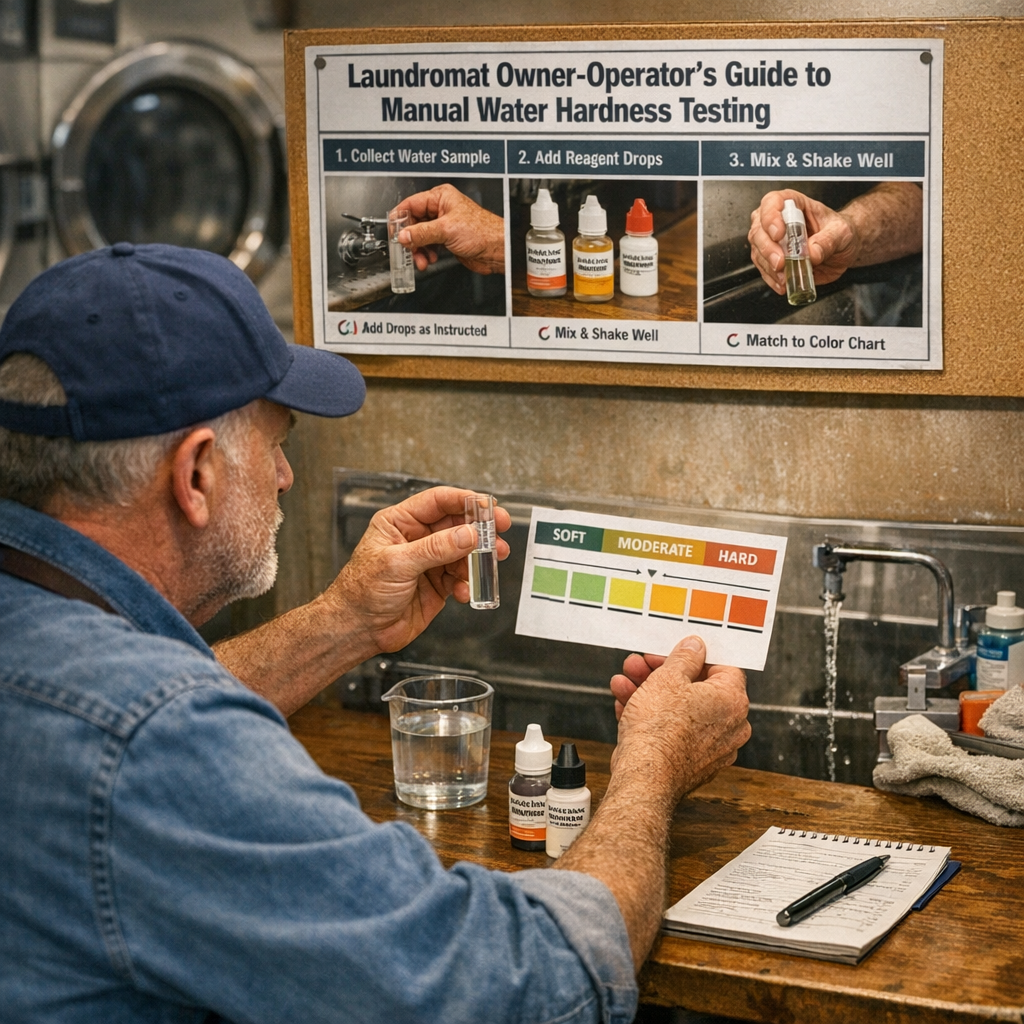
To manually test water hardness at your laundromat, follow these steps:
- Acquire a water hardness test kit: Purchase a reliable water hardness testing kit from a reputable supplier. These kits typically include testing strips that will help you determine the calcium and magnesium content in your water.
- Collect a sample: Take a representative water sample from your laundromat’s washing machines or from the main water supply line. Make sure to use a clean, sterilized container for collecting the sample.
- Prepare the testing strips: Follow the instructions provided with the test kit to prepare the testing strips according to the manufacturer’s recommendations.
- Add the sample: Carefully add the water sample to the testing strip, ensuring that you cover the entire area indicated by the manufacturer. Allow the mixture to sit for the recommended amount of time specified in the instructions.
- Compare results: After the waiting period has passed, compare your test results against the chart provided with the testing kit. This will help you determine the water hardness level and identify any potential issues that may affect your laundromat’s equipment or ROI.
By following this weekly protocol for manually testing water hardness at your laundromat, you can ensure that you are maintaining optimal conditions for efficient laundry operations and protecting your business from costly damage caused by calcium spikes.
Implementing a Weekly Protocol for Consistent Monitoring and Maintenance
Implementing a Weekly Protocol for Consistent Monitoring and Maintenance
To maintain the efficiency of your laundromat’s washing machines and protect your business’s return on investment (ROI), it is crucial to monitor water hardness levels regularly. While relying solely on city water reports might seem convenient, these reports often fail to provide accurate information about calcium and magnesium content in the water. As a result, you may not be able to identify potential issues before they start causing severe damage to your machines.
- Begin by purchasing a reliable water hardness test kit from a reputable supplier. These kits typically include testing strips that allow you to measure the water’s calcium and magnesium levels in parts per million (ppm).
- Create a weekly schedule for conducting these tests at different times throughout the day, as water hardness can vary depending on usage patterns.
- Record your test results in a logbook or spreadsheet, noting the date, time, and ppm values for each test. This data will help you identify trends over time and detect any sudden spikes in calcium and magnesium levels that could indicate an underlying issue with your water supply.
- Use the collected data to inform your maintenance routine. For example, if you notice consistently high calcium levels, consider installing a water softener to reduce mineral buildup in your machines’ components. Additionally, share this information with your water supplier to advocate for improvements in their reporting methods and ensure that they are aware of any issues impacting your business.
Conclusion: The Benefits of Proactive Water Testing for Improved Laundromat Performance
Conclusion: The Benefits of Proactive Water Testing for Improved Laundromat Performance
In conclusion, relying on city water reports can leave laundromat owner-operators vulnerable to unexpected calcium spikes that negatively impact their business’s ROI. By implementing a weekly water hardness testing protocol, you can take control of your laundromat’s performance and protect your investment. Not only will this help maintain the longevity and efficiency of your machines, but it will also provide peace of mind knowing you’re making informed decisions about your business.
- Regularly testing your laundromat’s water hardness can help prevent costly damage to your washing machines and other equipment.
- A proactive approach to water testing allows you to make informed decisions regarding laundry detergent usage, maintenance schedules, and machine replacement cycles.
- By understanding the local water quality in your area, you can adjust your operations to minimize the negative effects of calcium buildup on your business’s profitability.
We encourage all laundromat owner-operators to invest in a reliable water hardness testing kit and incorporate this simple yet effective protocol into their weekly routines. By doing so, you’ll be taking an essential step towards safeguarding your business and maximizing its long-term success.
Leave a Reply