Table of Contents
- Introduction: The Growing Threat of Cyber Liability for Laundromats
- Understanding the Risks: Types of Data Breaches and Their Consequences
- Identifying Vulnerabilities: Assessing Your Laundromat’s Security Measures
- Implementing Best Practices: Strengthening Your Business’s Cybersecurity
- Investing in Insurance: Protecting Your Assets from Financial Losses
- Conclusion: The Importance of Proactive Cybersecurity for Laundromats
Introduction: The Growing Threat of Cyber Liability for Laundromats
Introduction: The Growing Threat of Cyber Liability for Laundromats
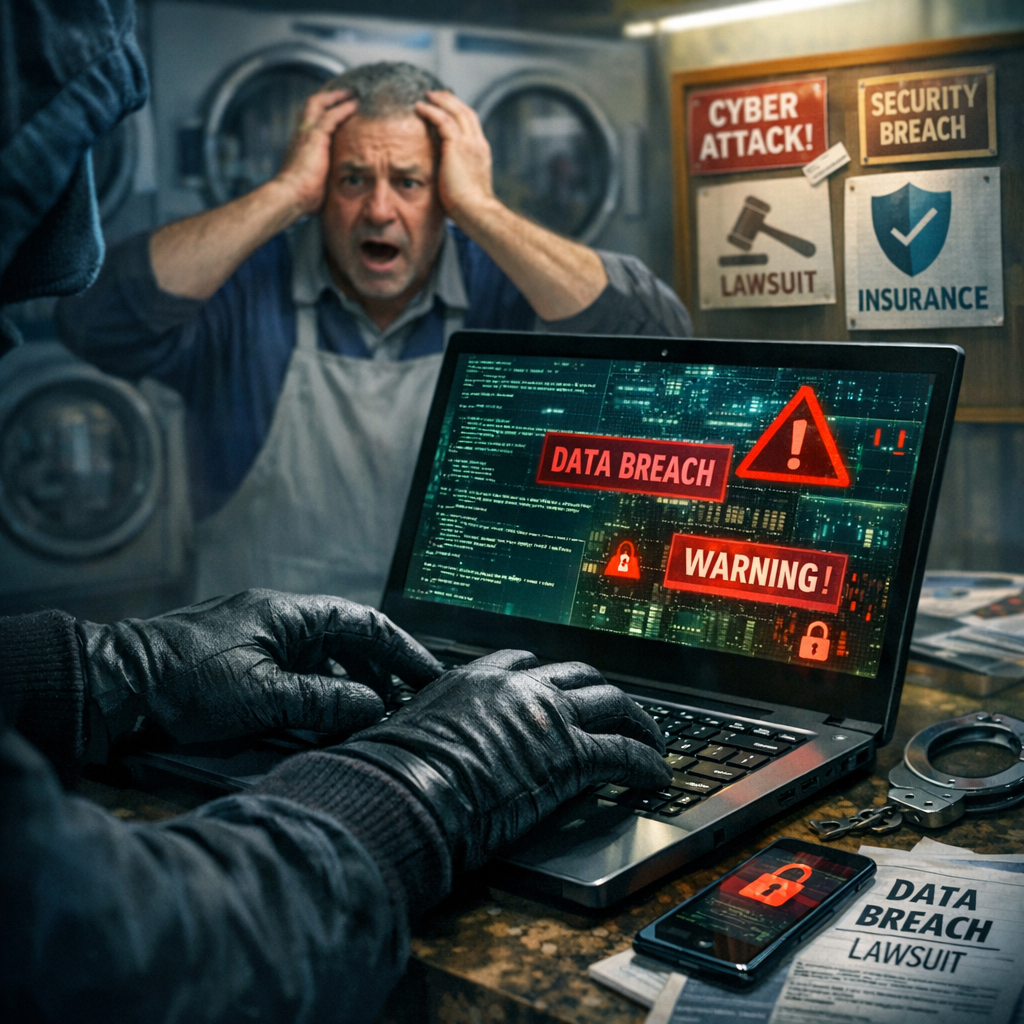
In today’s digital age, laundromats have increasingly relied on technology to streamline operations and enhance customer experience. With the advent of app-based payment systems and smart washing machines, businesses in this industry are more connected than ever before. However, this increased connectivity brings a new set of challenges, as cyber threats continue to evolve and put businesses at risk.
- The use of digital technology has made laundromats more vulnerable to data breaches and other cyber attacks, which could lead to financial losses and even legal consequences.
Understanding the Risks: Types of Data Breaches and Their Consequences
Understanding the Risks: Types of Data Breaches and Their Consequences
Data breaches can occur in various ways, each posing distinct risks to laundromat businesses. The three primary types of data breaches are:
- External Hacks: These involve unauthorized access to your system from an external source. Hackers may gain access to customer data, including credit card information or personal details, which can lead to identity theft and legal troubles for the laundromat owner.
- Internal Breaches: These occur when employees or insiders misuse their access privileges. This could include stealing customer data for fraudulent purposes or using it for personal gain. Such breaches can severely damage your business’s reputation and trust among customers.
- Ransomware Attacks: In this type of breach, hackers lock down your system and demand payment in exchange for the decryption key. If you don’t pay, your data remains encrypted and inaccessible. Ransomware attacks can be devastating to laundromats, as they disrupt operations and may lead to loss of customer trust.
Identifying Vulnerabilities: Assessing Your Laundromat’s Security Measures
Identifying Vulnerabilities: Assessing Your Laundromat’s Security Measures
In today’s digital age, laundromats that offer app-based payment systems are at an increased risk of cyber threats. To protect your business from potential data breaches and lawsuits, it is crucial to assess the security measures currently in place.
- Firstly, evaluate the security of your payment system:
- Is the system encrypted?
- Are two-factor authentication and password policies enforced?
- Does the system have access controls in place to prevent unauthorized access?
- Secondly, review your staff training:
- Are employees aware of potential phishing attacks and how to respond?
- Do they know the proper procedures for handling sensitive customer data?
- Lastly, consider implementing additional security measures:
- Regularly updating software and systems to patch known vulnerabilities.
- Installing firewalls and anti-virus software.
- Securing your Wi-Fi network with WPA2 encryption and strong passwords.
By taking these steps, laundromat owners can better protect their businesses from cyber liability and ensure that they are prepared for potential data breaches. It is essential to stay vigilant and continuously reassess security measures as new threats emerge in the ever-evolving digital landscape.
Implementing Best Practices: Strengthening Your Business’s Cybersecurity
Implementing Best Practices: Strengthening Your Business’s Cybersecurity
In today’s digital age, laundromats that offer app-based payment systems must prioritize cybersecurity to protect their businesses from data breach lawsuits.
- Firstly, ensure all software and applications are regularly updated with the latest security patches. This reduces the risk of exploitation by hackers who rely on known vulnerabilities to access sensitive information.
- Secondly, implement two-factor authentication for accessing your laundromat’s payment system. This adds an extra layer of protection, making it more difficult for unauthorized users to gain access and commit fraud or theft.
- Thirdly, educate your staff on cybersecurity best practices. Encourage them to use strong, unique passwords and avoid sharing sensitive information over unsecured networks or email.
- Lastly, consider investing in data encryption and secure cloud storage for your payment system’s data. This will further safeguard customer information from potential breaches.
Investing in Insurance: Protecting Your Assets from Financial Losses
Investing in Insurance: Protecting Your Assets from Financial Losses
Cyber liability insurance is crucial for laundromats, as it provides financial protection against data breaches and cyberattacks.
- Without proper coverage, a laundromat may face significant financial losses due to lawsuits or settlements resulting from a data breach.
- The average cost of a data breach in 2021 is $3.86 million, according to IBM’s ‘Cost of a Data Breach Report.’
- Investing in cyber liability insurance can help protect your business and personal assets from financial losses resulting from data breaches.
Conclusion: The Importance of Proactive Cybersecurity for Laundromats
Conclusion:
In today’s digital age, laundromats must prioritize cybersecurity to protect their businesses and personal assets from data breach lawsuits. By investing in proactive cybersecurity measures, such as regular software updates, employee training on secure practices, and comprehensive data protection policies, laundromat owners can significantly reduce the risk of a cyber attack. It is essential to remember that prevention is key – the costs of recovering from a data breach far outweigh the investment in preventative cybersecurity. Don’t let your business become a statistic; take action today to safeguard your digital infrastructure.
Leave a Reply