Table of Contents
Introduction
Laundromat Bill-Validator Maintenance: Reducing ‘False Rejects’ in Cash Kiosks
In the hustle and bustle of a typical laundromat, it’s easy to overlook the small yet critical details that can make or break the customer experience. One such detail is the maintenance of bill validators in cash kiosks. These machines, while seemingly simple, are responsible for accurately accepting payment from customers and ensuring a smooth laundry experience. However, when these machines fail due to dirty or jammed sensors, they result in ‘false rejects,’ causing frustration and inconvenience for users. In this technical guide, we will explore the importance of regularly cleaning optical sensors in laundromat change machines to prevent customer dissatisfaction and optimize efficiency.
Understanding False Rejects in Laundromat Change Machines
Understanding False Rejects in Laundromat Change Machines
False rejects, or ‘jam-ups,’ are a significant concern for laundromat operators and customers alike. These occur when a coin is not properly accepted by the machine’s change mechanism, resulting in an incorrect refusal of payment and potential frustration for users.
- These false rejections can be attributed to several factors such as:
- Dirt or debris accumulation on optical sensors
- Inadequate cleaning of coin slots
- Misalignment of change machine components
To reduce the occurrence of false rejects and improve overall customer satisfaction, regular maintenance of laundromat change machines is crucial. Operators should consider implementing a comprehensive cleaning schedule to ensure optimal performance of these essential machines.
Identifying Common Causes of False Rejects
Identifying Common Causes of False Rejects
Laundromat bill-validators can experience a variety of issues that lead to false rejects, causing customer frustration and potentially resulting in jammed machines. To minimize these problems, it’s essential to understand the common causes of false rejects:
- Worn or Dirty Sensors: Over time, optical sensors may become worn or dirty due to constant exposure to coins and debris. This can cause the sensor to fail in identifying valid coins, leading to false rejects.
- Inaccurate Coin Detection: In some cases, the change machine may struggle to accurately detect certain coin denominations, particularly if they are damaged or have an unusual shape.
- Misaligned Coins: When a coin is not properly aligned with the sensor, it can cause the system to fail in identifying its denomination, resulting in false rejects.
- Damaged or Malfunctioning Mechanism: If the internal mechanism of the change machine has been damaged or is otherwise malfunctioning, this can lead to incorrect coin readings and increased instances of false rejects.
Maintaining Optical Sensors: Cleaning Methods and Best Practices
Maintaining Optical Sensors: Cleaning Methods and Best Practices
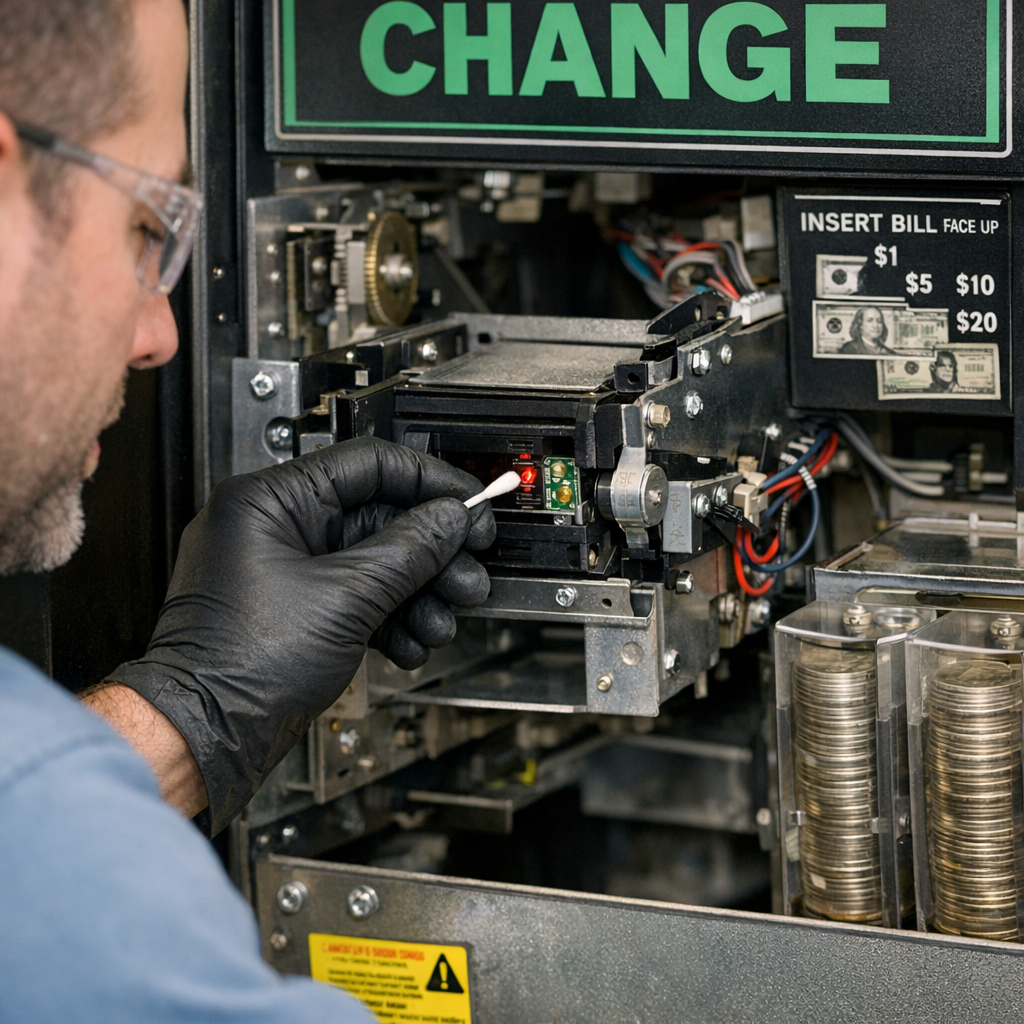
Optical sensors in laundromat change machines are essential for accurate bill validation, but they can become dirty over time, leading to ‘false rejects’ and customer frustration. To prevent these issues, it is crucial to maintain the optical sensors through regular cleaning and proper best practices.
- Firstly, ensure the area around the sensor is clear of any debris or dust that could interfere with the sensor’s function. Use a soft brush or compressed air to remove any dirt or debris.
- Next, clean the lens of the optical sensor using a lint-free cloth and a gentle cleaning solution specifically designed for optical sensors. Avoid using harsh chemicals or abrasive materials that could damage the sensor.
- Periodically inspect the sensor’s alignment and make adjustments as needed to ensure accurate readings. Misaligned sensors can cause incorrect bill validation, leading to customer frustration and lost business.
- Regularly test the sensor’s functionality by inserting various denominations of bills into the machine and verifying that they are properly validated. This will help identify any issues with the sensor before they become major problems.
- Lastly, consider investing in advanced cleaning technologies, such as ultrasonic cleaners or laser cleaners, to provide a more thorough cleaning process for your laundromat machines. These options can be especially useful in high-traffic locations where sensors may require more frequent maintenance.
By following these best practices and regularly maintaining the optical sensors in your laundromat change machines, you can help reduce ‘false rejects’ and prevent customer frustration, ultimately leading to a more enjoyable experience for your patrons and improved business performance.
Implementing a Routine Maintenance Schedule
Implementing a Routine Maintenance Schedule
To minimize ‘false rejects’ and maintain the efficiency of laundromat bill-validators, it is essential to implement a routine maintenance schedule. This includes cleaning optical sensors and checking for any malfunctions regularly.
- Firstly, clean the optical sensors every two weeks using a soft cloth and a mild detergent. Remove any dirt or debris that may obstruct the sensor’s view of the bill denominations.
- Secondly, perform a thorough inspection of the machine for loose connections, faulty wiring, or damaged components every month. This will help identify potential issues before they cause further problems.
- Lastly, conduct a full system test once a quarter to ensure that all components are working correctly and the machine is accurately validating bills. Record the results and compare them to previous tests for identifying any trends or patterns in malfunctions.
Conclusion
In this technical guide on laundromat bill-validator maintenance, we have explored the importance of regularly cleaning optical sensors in cash kiosks to reduce ‘false rejects’ and customer frustration. By following these steps, you can ensure that your laundromat’s change machines operate smoothly and efficiently, providing a better experience for both customers and staff.
- Always refer to the manufacturer’s guidelines when maintaining your machine.
- Regularly inspect and clean the optical sensors to prevent false reject issues.
- Keep spare parts on hand in case of unexpected repairs or breakdowns.
In conclusion, investing time and effort into maintaining your laundromat’s bill-validator machines is essential for preventing customer frustration and ensuring a smooth operation. By following the tips outlined in this guide, you can reduce ‘false rejects,’ minimize machine downtime, and provide an overall better experience for your patrons.
Take Action Today
Don’t wait until your laundromat’s bill-validator machines start causing problems – take action today! Schedule regular maintenance checks, keep spare parts on hand, and follow the manufacturer’s guidelines to ensure that your machines run smoothly and efficiently. Your customers will thank you for it!
Leave a Reply