Table of Contents
- Introduction: The Importance of Maintaining Optimal pH Balance for Laundromat Linens.
- Understanding Alkalinity and Souring: How ‘Sours’ Can Be Used to Neutralize Excess Alkaline Residues in Laundry.
- Common Causes of Alkaline Buildup: Identifying Potential Issues in Commercial Laundering Processes.
- Preventing Graying and Skin Irritation: The Benefits of Proper pH Balance for Laundromat Linens.
- Maintaining Balanced pH Levels: Practical Tips for Ensuring Long-Lasting, High-Quality Linen Products at Your Business.
- Conclusion: Embracing a Balanced Approach to Laundry Care for Sustainable Success in the Laundromat Industry.
Introduction: The Importance of Maintaining Optimal pH Balance for Laundromat Linens.
Alkalinity and Souring: Balancing pH for Long-Life Laundromat Linens
In the world of commercial laundry services, maintaining optimal pH balance is crucial for ensuring the longevity and quality of linens. As laundromats handle an array of fabrics with varying levels of alkalinity, it’s essential to understand how these interactions can lead to graying, skin irritation, and other undesirable outcomes.
- Discover the science behind pH balance in laundromats
- Learn about the potential consequences of improper pH management
- Explore practical solutions for neutralizing alkaline residues and preventing souring
Understanding Alkalinity and Souring: How ‘Sours’ Can Be Used to Neutralize Excess Alkaline Residues in Laundry.
In commercial laundry services, maintaining the optimal pH balance is crucial for preserving the quality and longevity of linens. Alkalinity and souring are two interconnected processes that can help achieve this balance.
- Alkalinity occurs when there’s an excess of hydroxide ions (OH-) in the water, making it basic or caustic. In laundromats, hard water with high mineral content contributes to increased alkalinity.
- Souring, on the other hand, is a natural process where laundry detergent reacts with hard water minerals to form soap scum. This scum can cause graying and skin irritation if not neutralized properly.
To utilize ‘sours’ for balancing pH levels in laundromat linens:
- First, it’s essential to identify the source of alkalinity in your laundry system. Common sources include water hardness, detergent residues, and fabric softener deposits.
- Next, introduce a souring agent into the wash cycle that will react with the alkaline residues and form soap scum. This can be achieved by adding an appropriate amount of white vinegar or citric acid to the wash water.
- Afterward, allow sufficient time for the souring process to occur during the wash cycle. This typically takes around 10-15 minutes at temperatures between 140°F – 180°F (60°C – 82°C).
- Finally, rinse thoroughly to remove any residual soap scum and ensure that the pH balance is restored. This step is crucial for preventing graying, skin irritation, and other negative effects associated with alkaline residues in commercial laundry services.
Common Causes of Alkaline Buildup: Identifying Potential Issues in Commercial Laundering Processes.
Alkaline buildup in commercial laundering processes can occur due to various reasons, including improper water hardness management, inadequate rinse cycles, and the use of incompatible detergents.
- Improper Water Hardness Management: The hardness of laundry water can contribute significantly to alkaline residues. It is crucial to maintain optimal water hardness levels in commercial laundries, as excessively hard water can lead to the formation of soap scum and calcium deposits on laundry surfaces. Regular testing and monitoring of water hardness are essential to ensure proper pH balance.
- Inadequate Rinse Cycles: Insufficiently rinsed laundry can result in leftover detergent residues, which contribute to alkaline buildup. It is vital for commercial laundries to implement effective rinse cycles that thoroughly remove all traces of detergent from the fabric before drying or ironing.
- Use of Incompatible Detergents: Mixing incompatible detergents or utilizing harsh chemical cleaners can cause an imbalance in laundry pH levels, leading to alkaline residues. It is essential for commercial laundries to use compatible detergents and avoid the use of excessive chemicals that could disrupt the natural pH balance.
Preventing Graying and Skin Irritation: The Benefits of Proper pH Balance for Laundromat Linens.
Preventing Graying and Skin Irritation: The Benefits of Proper pH Balance for Laundromat Linens
Proper pH balance in commercial laundry services is crucial to prevent graying and skin irritation, as well as ensure the longevity of linens. In this section, we will explore the benefits of maintaining a healthy pH level in laundromats.
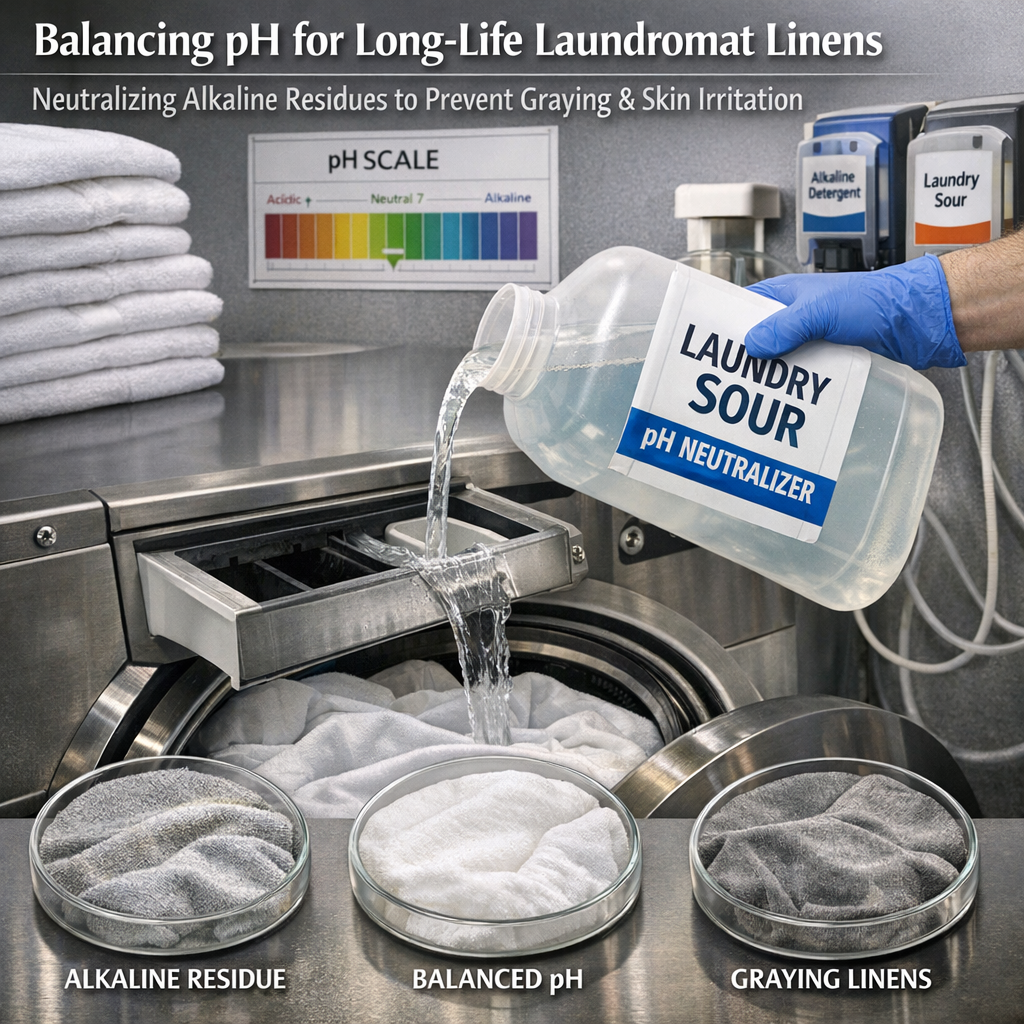
- Neutralizing Alkaline Residues: When detergents are used in commercial laundry services, they leave behind alkaline residues that can cause graying and skin irritation. By using laundry ‘sours,’ or acidic substances, these residues can be effectively neutralized, preventing damage to linens.
- Enhanced Fabric Life: Maintaining a balanced pH level helps preserve the quality of fabrics, reducing the risk of discoloration and degradation over time. This ultimately extends the life of linens used in laundromats, saving businesses money on constant replacements.
- Improved Cleaning Efficiency: A balanced pH environment allows for more efficient cleaning, as it ensures that detergents are effectively neutralized and can penetrate fabrics to remove dirt and stains more thoroughly. This results in cleaner, fresher linens for customers.
Maintaining Balanced pH Levels: Practical Tips for Ensuring Long-Lasting, High-Quality Linen Products at Your Business.
Maintaining balanced pH levels is crucial for extending the lifespan of linen products in commercial laundry services. Alkaline residues, resulting from detergents and water hardness, can cause fabrics to gray and irritate skin. To counteract these issues, laundromats should implement the following practical tips:
- Routinely test your wash water for pH using a pH meter or indicator strips. This will help you monitor any changes in acidity or alkalinity.
- Consider adding a laundry sour to your wash cycle. A laundry sour is an acidic material, typically vinegar or lemon juice, that can neutralize the alkaline residues left by detergents.
- Use a high-quality, pH-balancing laundry additive designed specifically for commercial use. These products contain optimal levels of citric acid to effectively lower pH and prevent graying.
In conclusion, maintaining balanced pH levels in your laundromat’s wash cycle is essential for providing high-quality, long-lasting linen products. Regularly testing water pH, incorporating laundry sours, and using pH-balancing additives can significantly improve the quality of your commercial laundry service.
Conclusion: Embracing a Balanced Approach to Laundry Care for Sustainable Success in the Laundromat Industry.
Conclusion
In conclusion, maintaining the proper pH balance in commercial laundry services is crucial for long-lasting linens and avoiding skin irritation for customers. By embracing a balanced approach to laundry care, laundromat owners can not only ensure customer satisfaction but also contribute to the sustainability of their business.
- Regularly test your wash water’s pH levels using an appropriate testing kit.
- Add souring agents or pH adjusters to your wash cycle when necessary, following the manufacturer’s guidelines and recommendations.
- Educate your staff about the importance of pH balance in laundry care and encourage them to monitor and maintain optimal conditions.
By taking these steps, laundromat owners can provide customers with clean, fresh linens that won’t gray or cause skin irritation while also promoting a sustainable business model. Don’t let your laundromat’s reputation suffer due to subpar laundry care; embrace the balanced approach today!
Leave a Reply