Table of Contents
Introduction
Laundromat Lease ‘Percentage Rent’ Clauses: Why You Should Never Sign One
If you’re a laundromat owner, the last thing you want is unexpected surprises hiding in your lease agreement. Unfortunately, some landlords include what’s known as a ‘percentage rent’ clause – and it could be a financial nightmare for unsuspecting business owners.
What are ‘Percentage Rent’ Clauses?
What are ‘Percentage Rent’ Clauses?
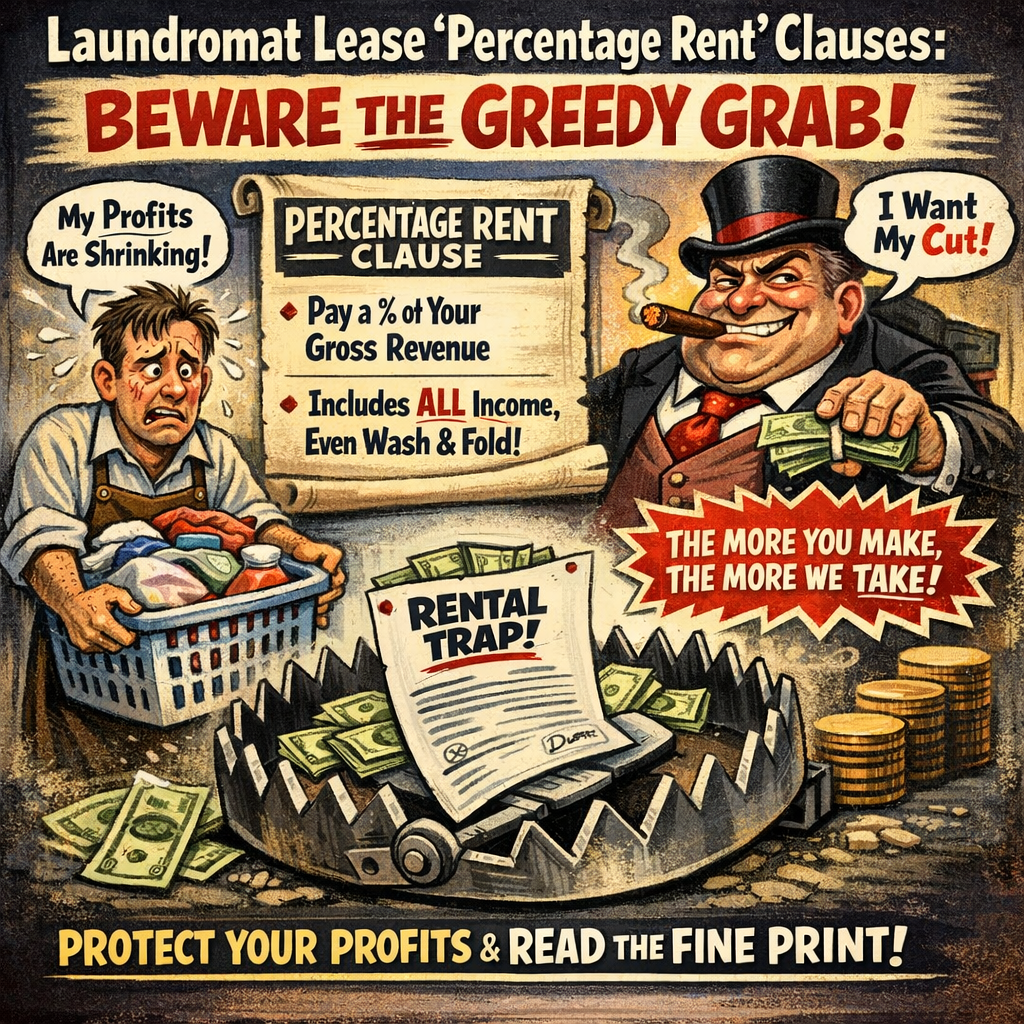
A ‘percentage rent’ clause in a laundromat lease is a provision that requires the tenant to pay a percentage of their gross revenue from laundry services, instead of a fixed monthly rent.
- These clauses can be detrimental to business owners, as they tie the tenant’s financial obligations to their revenue, leaving them vulnerable to unexpected fluctuations in income.
- The use of ‘percentage rent’ clauses is more common in retail businesses and restaurants than in laundromats, but they can still pose a significant risk for those who sign such leases.
- It is crucial for laundromat owners to be aware of these clauses and understand the potential consequences before signing any lease agreements.
In summary, ‘percentage rent’ clauses in laundromat leases can expose tenants to financial instability, making it essential for them to avoid such terms and seek alternative leasing arrangements that provide more predictable monthly expenses.
Why Laundromat Owners Should Avoid These Clauses
Why Laundromat Owners Should Avoid These Clauses
Laundromat lease agreements that include ‘percentage rent’ clauses can prove detrimental to business owners in the long run. Such clauses require landlords to receive a percentage of the lessee’s gross revenue, rather than a fixed monthly rate.
- Increased Financial Risk: Percentage rent clauses make it more difficult for laundromat owners to budget and plan for the future, as their monthly expenses are not fixed. This can lead to financial instability and increased risk of defaulting on lease payments.
- Incentive Misalignment: Landlords who demand percentage rent may prioritize revenue over tenant stability, encouraging laundromat owners to cut corners or sacrifice customer service in pursuit of higher profits.
- Legal Complexity: Percentage rent clauses can complicate legal proceedings in the event of a lease dispute. They often require complex calculations and documentation, which can be both time-consuming and costly for all parties involved.
How to Protect Yourself from ‘Percentage Rent’ Clauses
How to Protect Yourself from ‘Percentage Rent’ Clauses
- Be aware of the risks: Research and understand the implications of signing a lease with percentage rent clauses before committing.
- Negotiate flat monthly rates: When leasing a laundromat, aim to negotiate a fixed monthly rate instead of agreeing to percentage-based rent payments.
- Consult a lawyer: Seek legal advice from an experienced commercial real estate attorney to help you navigate the complexities of lease agreements and protect your interests.
- Explore alternative options: Consider other alternatives such as purchasing or building, which may offer more predictable costs in the long run.
- Be cautious when investing: When considering investment opportunities that include percentage rent clauses, weigh the potential risks against potential rewards before making any decisions.
The Impact of ‘Percentage Rent’ Clauses on Small Businesses
The Impact of ‘Percentage Rent’ Clauses on Small Businesses
While percentage rent clauses may seem like a fair way for landlords to receive a share of a laundromat’s profits, they can have severe consequences for small businesses. Here are some key points to consider:
- Increased financial risk: With a flat monthly rate, laundromat owners can budget and plan accordingly. However, when a percentage of revenue is due, the owner faces an unpredictable income stream that can make it difficult to manage finances effectively.
- Possibility of overpaying: If a laundromat has high operating costs or low revenues, the landlord may still demand their percentage rent, even if it means the business is losing money. This could force owners into bankruptcy and make it challenging to recover in the long run.
- Discouragement of investment: Investors are less likely to invest in businesses with percentage rent clauses, as they increase financial risk for the investor and the business owner alike. This can make it harder for small laundromats to secure funding or attract investors.
Conclusion
Conclusion:
In light of the potential risks and drawbacks associated with ‘percentage rent’ clauses in laundromat leases, it is crucial for owners to thoroughly review and understand the terms before signing any agreements. It is advisable to consult with a legal professional or seek guidance from industry experts to help navigate these complex lease provisions.
- Be cautious of leases that demand a percentage of your gross revenue instead of a flat monthly rate.
- Consult with a legal professional or seek guidance from industry experts before signing any lease agreements.
- Understand the potential risks and drawbacks associated with ‘percentage rent’ clauses in laundromat leases.
If you find yourself in this situation, consider alternative options such as flat monthly rates or seeking a more transparent leasing arrangement. By doing so, you can protect your business from the potentially detrimental effects of these lease provisions.
Leave a Reply