Table of Contents
- Introduction
- The Importance of Wastewater Turbidity Testing in Laundromats
- Understanding Light-Scattering Sensors and Their Role in Monitoring Wastewater Quality
- Implementing Real-Time Turbidity Testing Systems at Laundromats
- Benefits and Challenges of Real-Time Wastewater Turbidity Testing for Laundromat Owners
- Conclusion
Introduction
Real-Time Wastewater Turbidity Testing for Laundromat Compliance
Have you ever wondered about the water leaving your local laundromat? Is it clean and safe, or laden with detergents and other pollutants? In this article, we will dive into the world of wastewater management and explore a cutting-edge technology that helps laundromats maintain compliance with environmental regulations. By using advanced light-scattering sensors, these businesses can monitor their drain water’s turbidity in real-time, ensuring they stay within permissible limits and avoid costly fines from local EPA or water district agencies.
The Importance of Wastewater Turbidity Testing in Laundromats
In recent years, the importance of wastewater turbidity testing in laundromats has become increasingly apparent as environmental concerns continue to grow. To maintain compliance with local EPA or water district regulations, it is crucial for laundromat owners and operators to understand the significance of regular wastewater turbidity testing.
- Turbidity refers to the cloudiness or haziness of a liquid caused by the presence of suspended particles such as solids, bacteria, or other organic matter. In the context of laundromats, these suspended particles often consist of detergents, fabric softeners, and various other chemicals that can be released into the wastewater during the washing process.
- By monitoring the turbidity levels in their drain water, laundromat owners can ensure they are operating within the acceptable range set by regulatory agencies. This not only helps to avoid potential fines but also demonstrates a commitment to environmental stewardship and responsible business practices.
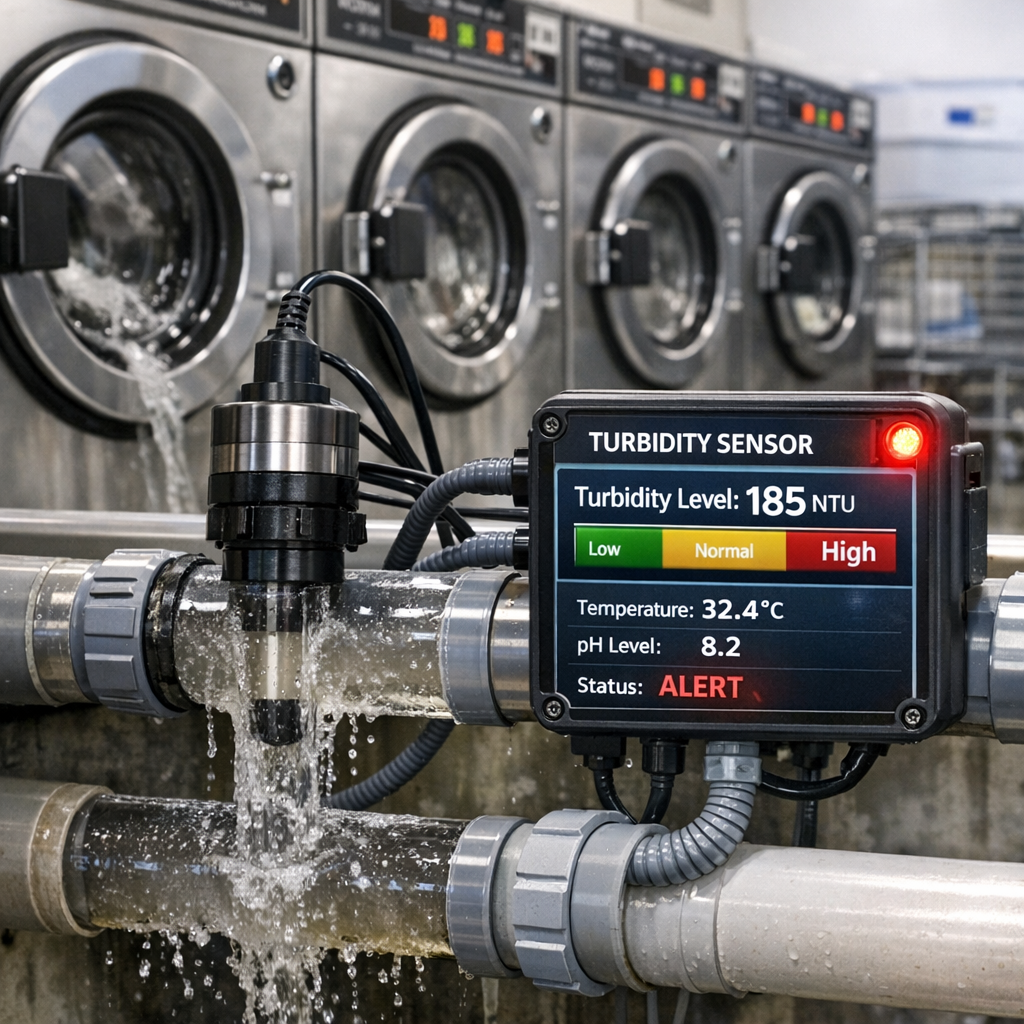
- The use of light-scattering sensors allows for real-time monitoring of wastewater turbidity levels, providing laundromat operators with instant feedback on the cleanliness of their discharge water. This information can be used to adjust washing processes or implement additional treatment methods if necessary, ultimately reducing the overall environmental impact of their business.
- Regularly maintaining and calibrating the light-scattering sensors is essential for accurate turbidity testing results. By ensuring that the sensors are functioning properly, laundromat owners can have confidence in the data they are using to make informed decisions about their operations.
In conclusion, wastewater turbidity testing plays a vital role in maintaining compliance with environmental regulations and demonstrates a commitment to responsible business practices. Laundromat owners who invest in real-time monitoring systems using light-scattering sensors can better manage their discharge water quality, ultimately benefiting both the environment and their bottom line.
Understanding Light-Scattering Sensors and Their Role in Monitoring Wastewater Quality
Understanding Light-Scattering Sensors and Their Role in Monitoring Wastewater Quality
Light-scattering sensors are a crucial tool for monitoring wastewater quality, providing real-time turbidity testing data that can help laundromats maintain compliance with local EPA or water district regulations. These sensors work by shining light through a sample of drain water and measuring how much light is scattered as it passes through suspended particles.
The technology behind these sensors has evolved significantly over the years, making them more reliable and accurate than ever before. Modern light-scattering sensors are capable of detecting extremely low levels of turbidity, with some models offering detection limits as low as 0.1 NTU (Nephelometric Turbidity Units).
By continuously monitoring wastewater turbidity in real-time, laundromat owners can quickly identify potential issues and take corrective action to avoid fines or other penalties from regulatory agencies. Additionally, this data can help inform more sustainable cleaning practices, ultimately benefiting the environment and contributing to a cleaner, healthier community.
- Light-scattering sensors measure turbidity in real-time, allowing for quick identification of potential issues and immediate corrective action.
- Modern sensors can detect extremely low levels of turbidity, with some models offering detection limits as low as 0.1 NTU.
- Real-time monitoring data can inform more sustainable cleaning practices, benefiting the environment and contributing to a cleaner community.
Implementing Real-Time Turbidity Testing Systems at Laundromats
Real-Time Turbidity Testing Systems in Laundromats
Implementing real-time turbidity testing systems at laundromats can greatly improve compliance with local EPA or water district regulations, while also providing a more environmentally friendly approach to managing wastewater.
- These advanced sensors use light-scattering technology to measure the cloudiness or haziness of the wastewater in real-time, providing immediate feedback on the cleanliness level.
- The data collected by these systems can help laundromat owners identify potential sources of contamination and make necessary adjustments to their washing processes, reducing the risk of fines and ensuring a cleaner environment.
- Real-time monitoring also allows for more efficient use of water and detergents, as operators can adjust their washing cycles based on the actual turbidity levels detected by the sensors.
- In addition to improving compliance and environmental performance, real-time turbidity testing systems can help businesses save money on water and detergent costs over time.
Benefits and Challenges of Real-Time Wastewater Turbidity Testing for Laundromat Owners
Benefits and Challenges of Real-Time Wastewater Turbidity Testing for Laundromat Owners
Real-time wastewater turbidity testing offers numerous benefits to laundromat owners, including enhanced compliance with regulatory standards, improved operational efficiency, and potential cost savings. However, it also presents several challenges that must be addressed for successful implementation.
- Enhanced Compliance: Real-time monitoring allows laundromat owners to continuously track their wastewater turbidity levels, ensuring they remain within the permitted limits set by local EPA or water district regulations. This reduces the risk of fines and penalties associated with non-compliance.
- Improved Operational Efficiency: By monitoring turbidity in real-time, laundromat owners can quickly identify any issues that may be affecting their wastewater quality. This enables them to take corrective action promptly, minimizing downtime and potential losses due to violations or customer complaints.
- Potential Cost Savings: While the initial investment in light-scattering sensors and data logging systems may seem expensive, real-time monitoring can lead to cost savings over time. By identifying inefficiencies and reducing non-compliant events, laundromat owners can minimize their expenses related to fines, legal fees, and customer dissatisfaction.
- Technical Expertise: Implementing a real-time wastewater turbidity testing system requires a certain level of technical expertise. Laundromat owners must ensure they have access to qualified personnel or contractors who can install, operate, and maintain the monitoring equipment effectively.
- Data Analysis and Interpretation: Real-time data is only useful if it can be analyzed and interpreted accurately. Laundromat owners need to invest in appropriate software tools or staff training to ensure they can efficiently analyze their turbidity data and make informed decisions based on the insights gained.
- Cost of Maintenance and Upkeep: Like any electronic equipment, light-scattering sensors require periodic maintenance and calibration to maintain accurate readings. Laundromat owners must factor in these ongoing costs when considering the overall investment in real-time wastewater turbidity testing systems.
Conclusion
Conclusion:
In light of the potential environmental and financial consequences, it is crucial for laundromats to adopt real-time wastewater turbidity testing systems. By investing in these innovative solutions, businesses can ensure compliance with local EPA or water district regulations, avoid costly fines, and contribute to a cleaner environment. As technology continues to advance, the adoption of such systems will not only become more affordable but also increasingly beneficial for both businesses and communities alike.
So, let’s take action today and make real-time wastewater turbidity testing an integral part of our laundromats’ operations!
- Invest in real-time wastewater turbidity testing systems
- Ensure compliance with local EPA or water district regulations
- Avoid costly fines
- Contribute to a cleaner environment
Leave a Reply