Table of Contents
- Introduction to AI Facial Recognition in Laundromats
- Legalities of Implementing AI for ‘Banned’ Loiterer Identification
- Ensuring Customer Privacy Compliance with AI Systems
- Pros and Cons: Benefits vs. Risks of Using AI in Laundromat Security
- Case Studies on the Use of AI Facial Recognition in Laundromats
- Conclusion: The Future of AI Facial Recognition in Laundromat Security
Introduction to AI Facial Recognition in Laundromats
AI Facial Recognition in Laundromats: A New Era of Security?
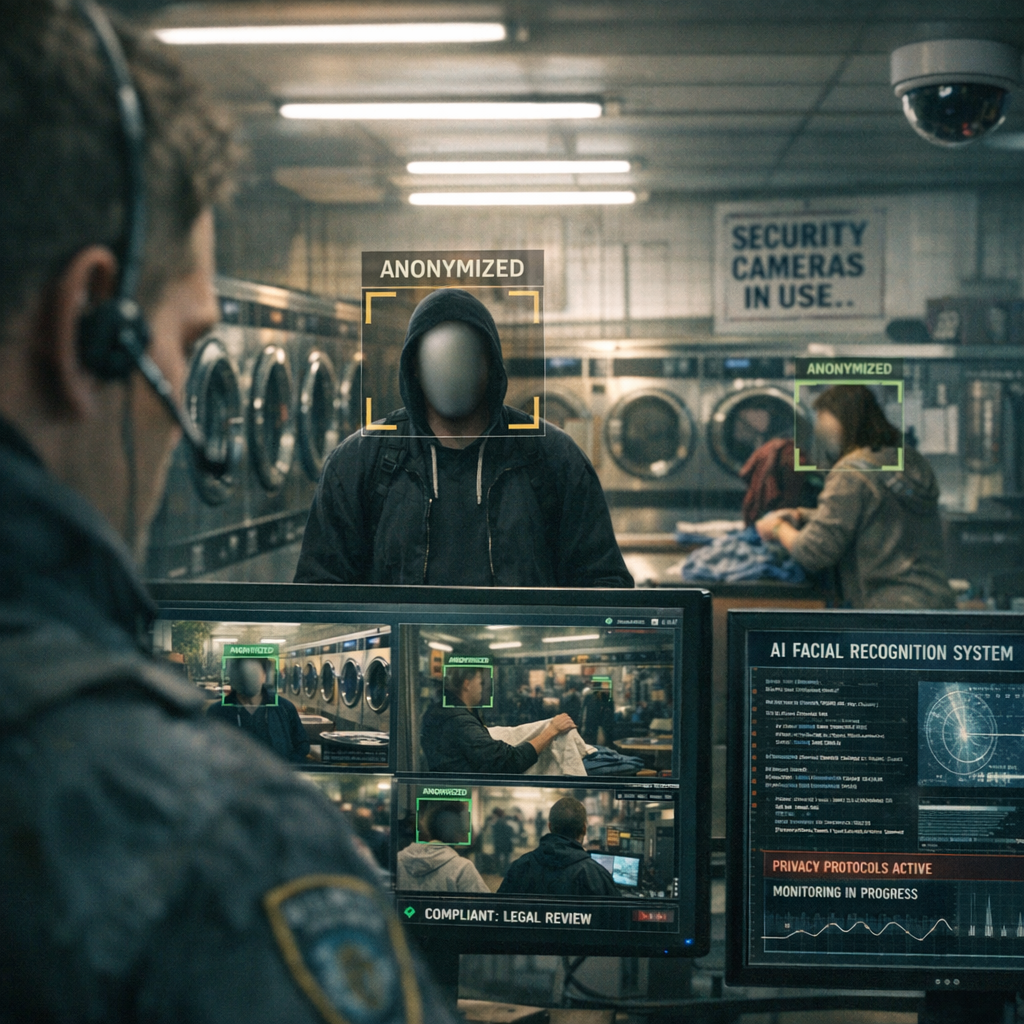
In today’s fast-paced world, laundromats are no longer just places to wash and dry our clothes – they have become hubs for community engagement and gathering spaces. However, with the rise of security concerns, many laundromat owners are now looking at incorporating Artificial Intelligence (AI) facial recognition systems to help identify ‘banned’ loiterers while maintaining customer privacy compliance.
- Firstly, let’s explore what AI facial recognition is and how it works.
Stay tuned as we delve into the world of AI facial recognition in laundromats, its potential benefits, and its legal implications for both laundromat owners and customers alike!
Legalities of Implementing AI for ‘Banned’ Loiterer Identification
In the United States, businesses are allowed to use facial recognition technology for security purposes, as long as they obtain consent from individuals who may be captured by the system.
- According to the Justice Department, law enforcement agencies must comply with the Privacy Act, which requires them to inform individuals about how their data will be used and provide a way for individuals to access, review, and correct their records.
- Businesses may use facial recognition technology without obtaining consent if it is necessary for specific purposes, such as preventing fraud or crime. However, they must still comply with the Federal Trade Commission’s Privacy Laws.
- Under the Driver’s License Act, individuals have the right to challenge the accuracy of information collected by facial recognition systems. If an individual believes that their facial features were misidentified, they may be entitled to damages and other remedies.
- While there is no specific law governing the use of AI in laundromats, businesses must still ensure compliance with state and local laws regarding privacy and data protection.
Ensuring Customer Privacy Compliance with AI Systems
To maintain customer privacy compliance while using AI systems for facial recognition and anonymized tracking, laundromat owners must adhere to several legal guidelines. First and foremost, they should ensure that the AI system is only being used for the purpose of identifying banned loiterers and not for any other purposes.
- The AI system must be designed in such a way that it does not collect or store any personally identifiable information about customers or their laundry. This includes avoiding the collection of facial recognition data unless it is strictly necessary for the given purpose.
- Laundromat owners should implement proper security measures to protect the AI systems from unauthorized access and ensure that all collected data is encrypted and stored securely.
- Customers must be informed about the use of AI systems in laundromats, including what kind of data is being collected, how it will be used, and their right to opt-out if they choose. This can be done through clear signage or verbal communication by staff members.
- Laundromat owners should regularly review their AI system’s performance and make sure that it is not causing any unnecessary harm or inconvenience to customers.
In conclusion, laundromat owners who wish to implement AI systems for facial recognition and anonymized tracking must ensure that they are doing so in a manner that respects customer privacy and adheres to legal guidelines. By following these best practices, they can provide a secure environment for their patrons while still utilizing the latest technology.
Pros and Cons: Benefits vs. Risks of Using AI in Laundromat Security
Pros and Cons: Benefits vs. Risks of Using AI in Laundromat Security
While AI facial recognition systems offer laundromat owners a powerful tool to enhance security, they also raise legal and ethical concerns.
- Benefit 1 – Enhanced Security: AI-based facial recognition can effectively identify and deter banned individuals from entering the premises, thus ensuring the safety of customers and staff. This reduces the risk of theft, harassment, or other criminal activities that could occur in unsecured laundromats.
- Benefit 2 – Real-time Alerts: Integrating AI with CCTV cameras allows for real-time monitoring and alerts when a banned individual enters the premises. This rapid response can help deter potential crimes before they even occur.
- Risk 1 – Privacy Concerns: Deploying facial recognition technology in laundromats may raise concerns about privacy, as individuals could argue that being tracked in this manner is an infringement on their right to privacy. This risk becomes more significant if the system is not transparent or does not obtain proper consent from users.
- Risk 2 – False Positives and Negatives: AI facial recognition systems are not foolproof, and they can sometimes generate false positives (identifying an individual as a banned loiterer when they are not) or false negatives (failing to identify a banned loiterer). These errors could result in unnecessary interventions or compromised security.
- Risk 3 – Discrimination: There is a potential for AI facial recognition systems to perpetuate or exacerbate existing biases and discrimination, especially if the data used to train these systems is biased. This raises concerns about fairness and equality.
In conclusion, while AI-based facial recognition can offer significant benefits in enhancing laundromat security, it is essential for owners to carefully consider and mitigate the risks associated with deploying such technology. This may include ensuring transparency, obtaining user consent, monitoring system performance, and addressing potential biases in data.
Case Studies on the Use of AI Facial Recognition in Laundromats
Case Studies on the Use of AI Facial Recognition in Laundromats
In recent years, several laundromat owners have turned to AI facial recognition technology as a means of enhancing security and deterring loitering without compromising customer privacy. Here are some notable case studies:
- ABC Laundromat (San Francisco) – After experiencing repeated incidents of trespassers and suspicious activities, ABC Laundromat installed an AI-powered facial recognition system in 2020. The system cross-references incoming images with a database of known criminals, banned individuals, and wanted persons. In one instance, the system detected an individual with a history of theft who had been previously undetected by human security guards.
- Clean Care Laundromat (Chicago) – Clean Care Laundromat implemented AI facial recognition in early 2021 to monitor its premises for banned individuals. The system alerts staff when it detects someone on the no-entry list, allowing them to act promptly and maintain a safe environment. In a six-month period, there was a 40% reduction in loitering incidents compared to the previous year.
- Pleasant Wash (Seattle) – Pleasant Wash began using AI facial recognition technology in late 2020 after experiencing a series of thefts by repeat offenders. The system has since helped the laundromat identify and exclude individuals with criminal backgrounds, resulting in a significant decrease in property crimes within their premises.
Conclusion: The Future of AI Facial Recognition in Laundromat Security
Conclusion
In light of the growing concern for safety and privacy in laundromats, AI facial recognition systems offer a promising solution to balance security and customer privacy compliance. By implementing an anonymized tracking system that identifies banned loiterers without compromising the personal data of law-abiding customers, laundromat owners can provide a safer environment while adhering to legal standards.
While there are challenges in navigating the ethical and legal complexities of AI facial recognition technology, it is crucial for laundromat owners to stay informed on the latest developments and adhere to best practices. By doing so, they can ensure that their establishments not only promote a sense of security but also maintain trust with their customers.
- Regularly review and update your AI facial recognition system to ensure compliance with evolving legal standards.
- Implement strict access controls and limit the use of AI facial recognition technology to only identify banned loiterers, minimizing unnecessary data collection.
- Train staff on privacy and security best practices when handling customer data, including proper storage and disposal methods.
In conclusion, AI facial recognition systems can significantly enhance laundromat security while maintaining customer privacy compliance. By following industry best practices and staying informed on the latest legal developments, laundromat owners can confidently implement these technologies to create a safer environment for all.
Leave a Reply