Table of Contents
- Introduction: The Importance of Leak Detection in Laundromats
- Understanding Ultrasonic Technology: How it Works and its Benefits
- Identifying Potential Leak Areas: Step-by-Step Process
- Preparing Your Equipment for Ultrasonic Leak Detection
- Conducting the Ultrasonic Inspection: Tips and Tricks
- Conclusion: Maximizing Efficiency and Cost Savings with Ultrasonic Leak Detection
Introduction: The Importance of Leak Detection in Laundromats
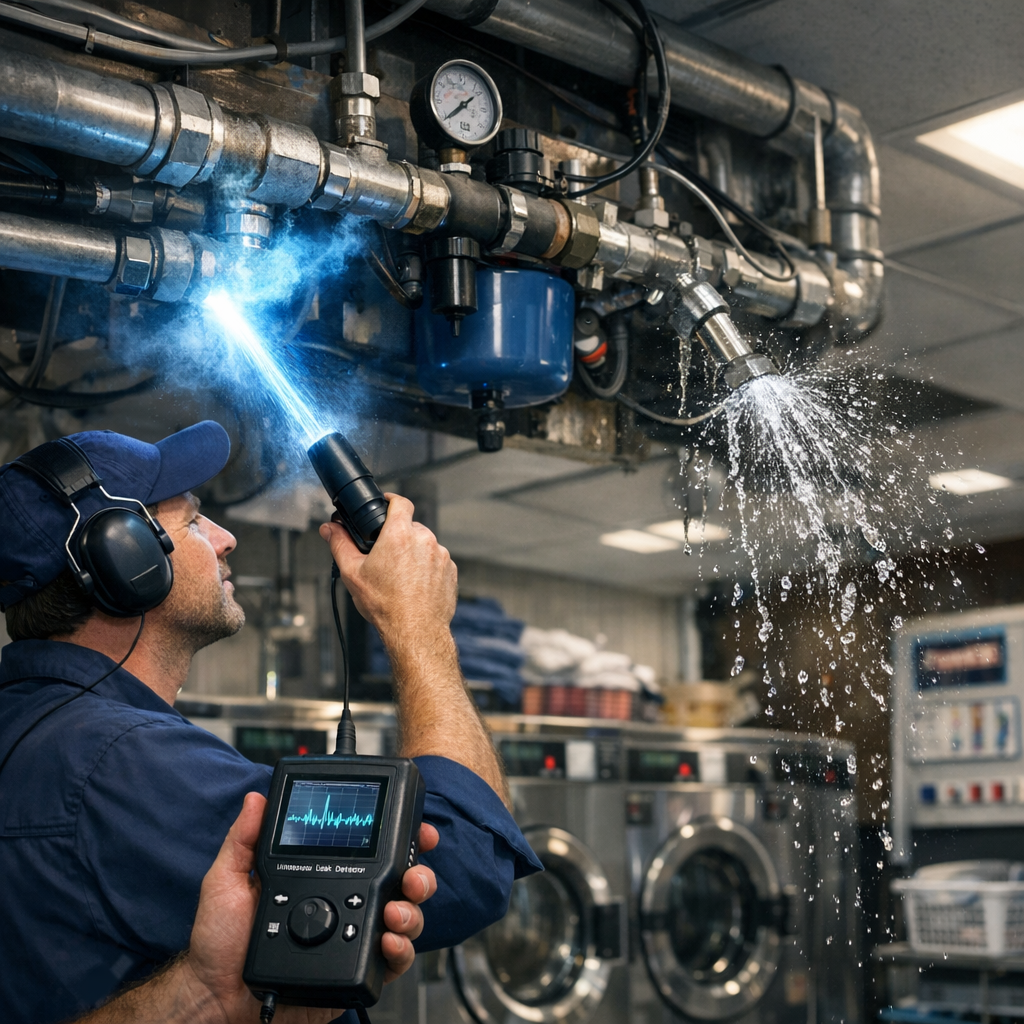
Ultrasonic Leak Detection: Finding Compressed Air and Water Leaks in a Laundromat
A laundromat is a business that relies heavily on its pneumatic systems and water lines to function efficiently. Even the smallest leak can result in substantial financial losses over time, making it crucial for owners and managers to detect these ‘invisible’ leaks as soon as possible.
- Discovering and repairing compressed air and water leaks quickly helps prevent costly downtime and repairs.
- In this article, we will explore the benefits of using ultrasonic leak detection technology in laundromats and how it can help save time, money, and resources.
Understanding Ultrasonic Technology: How it Works and its Benefits
Understanding Ultrasonic Technology: How it Works and its Benefits
Ultrasonic leak detection technology harnesses the power of high-frequency sound waves to identify and locate invisible leaks in compressed air and water lines within laundromats. This innovative method offers numerous advantages over traditional methods, such as auditory or visual inspections.
- Non-invasive: Unlike other invasive techniques that require shutting down machines or cutting into pipes for inspection, ultrasonic technology can detect leaks without causing any disruption to the laundromat’s operations. This saves time and money while ensuring continuous service for customers.
- High Accuracy: Ultrasonic tools emit sound waves that travel through materials at specific speeds, allowing for precise calculations of pipe thicknesses and leak locations. This level of accuracy helps technicians quickly identify the source of leaks, reducing downtime and repair costs.
- Noise Reduction: Traditional auditory methods often involve noisy equipment or listening devices, which can be distracting to customers and employees alike. Ultrasonic technology operates at frequencies that are inaudible to human ears, eliminating this issue entirely.
Identifying Potential Leak Areas: Step-by-Step Process
Identifying Potential Leak Areas: Step-by-Step Process
To effectively identify potential leak areas in a laundromat, follow these steps:
- Start by visually inspecting all components of the pneumatic system and water lines for any visible signs of damage or wear.
- Next, use an ultrasonic leak detection tool to listen for unusual sounds that could indicate a leak. Move the sensor over each component systematically, taking note of any unusual audio feedback.
- If you detect a potential leak area, mark it with a non-permanent marker or flag so you can revisit it later.
- Repeat this process for all components and lines in the system until you have thoroughly inspected everything.
Preparing Your Equipment for Ultrasonic Leak Detection
Preparing Your Equipment for Ultrasonic Leak Detection
To effectively use ultrasonic leak detection tools, you must first prepare your equipment. This involves checking and calibrating the sensitivity of your devices to ensure accurate readings.
- First, inspect your ultrasonic leak detector for any damage or malfunctions. Replace batteries if needed and ensure that the device is functioning properly.
- Next, calibrate the sensitivity of your ultrasonic tool using a reference standard. This step is crucial to obtain accurate measurements and prevent false positives or negatives.
- Adjust the gain settings on your detector according to the manufacturer’s recommendations for optimal performance in detecting compressed air and water leaks.
Conducting the Ultrasonic Inspection: Tips and Tricks
Conducting the Ultrasonic Inspection: Tips and Tricks
To effectively conduct an ultrasonic inspection, follow these steps:
- Ensure that the ultrasonic tool is properly calibrated according to the manufacturer’s specifications.
- Start by inspecting the compressed air system’s components such as valves, cylinders, and hoses for any signs of leaks. Focus on areas where leaks are most likely to occur, like joints and connections.
- Next, move on to the water lines in the laundromat. Pay special attention to pipes near washing machines and water heaters, as these areas are prone to leaks.
- When scanning for leaks, listen for distinctive sounds emitted by the ultrasonic tool. These sounds indicate the presence of a leak in the system.
- If you detect a potential leak, mark its location with a non-permanent marker or other suitable method before shutting down the affected component to investigate further.
- Periodically inspect and maintain your pneumatic systems and water lines to prevent leaks from turning into major problems. Regular maintenance can save time and money in the long run.
Conclusion: Maximizing Efficiency and Cost Savings with Ultrasonic Leak Detection
Conclusion: Maximizing Efficiency and Cost Savings with Ultrasonic Leak Detection
In today’s competitive business environment, every penny counts, and minimizing losses due to leaks is crucial for laundromat owners. By implementing ultrasonic leak detection tools in your establishment, you can efficiently locate compressed air and water leaks, saving both money and resources. Not only does this technology help you maintain a clean and efficient space, but it also ensures customer satisfaction through uninterrupted service and reduced downtime.
By investing in high-frequency sound devices, laundromat owners have the opportunity to:
- Reduce energy consumption and costs associated with compressed air leaks
- Lower water bills by detecting and repairing water leaks promptly
- Improve overall facility maintenance and safety
- Enhance customer experience through timely repairs and consistent service quality
In conclusion, incorporating ultrasonic leak detection technology into your laundromat’s operations is a smart investment that can lead to significant cost savings and increased efficiency. Don’t let ‘invisible’ leaks rob you of valuable resources any longer – take action today and experience the benefits firsthand.
Leave a Reply