Table of Contents
- Introduction to Peak Gallons Per Minute (GPM) and Its Importance in Laundromat Design
- Understanding Fluid Dynamics in a High-Volume Laundromat Setting
- Calculating Peak GPM for Optimal Plumbing System Design
- Factors Affecting Peak GPM: Washer Efficiency, Water Pressure, and More
- Ensuring Adequate Water Flow for 20 Washers Simultaneously
- Conclusion: The Role of Proper GPM Calculation in Laundromat Success
Introduction to Peak Gallons Per Minute (GPM) and Its Importance in Laundromat Design
Understanding Peak Gallons Per Minute (GPM): The Key to Efficient Laundromat Design
In the world of laundromats, fluid dynamics play a crucial role in ensuring a smooth and efficient experience for customers. One important factor that must be considered is peak gallons per minute (GPM), which measures the maximum flow rate a plumbing system can handle without experiencing a pressure drop.
- Peak GPM is essential because it helps prevent issues like low water pressure, which could result in dissatisfaction among laundromat patrons and potentially harm your business.
As a business owner or operator, understanding the importance of peak GPM in your laundromat’s plumbing design can help you make informed decisions about necessary upgrades or improvements to accommodate high-volume laundry operations. In this article, we will explore what peak GPM is, why it matters in laundromat design, and how to calculate it effectively for optimal performance.
Understanding Fluid Dynamics in a High-Volume Laundromat Setting
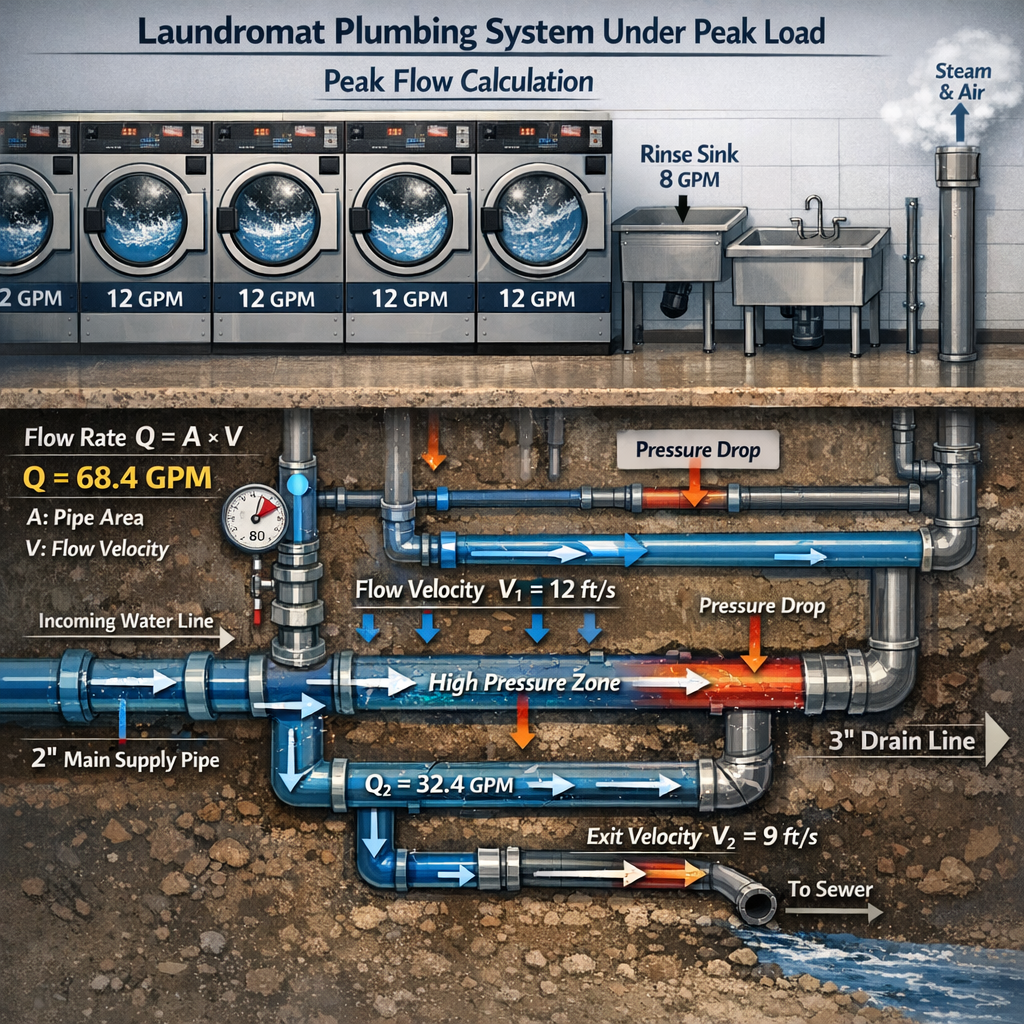
Fluid dynamics in a high-volume laundromat setting are crucial to understand when designing the plumbing system for such establishments. Understanding these principles ensures that your main water line can handle multiple washers filling simultaneously without experiencing a significant pressure drop.
- Firstly, it is essential to comprehend how water flows through a pipe system. This involves understanding concepts like velocity, flow rate, and Reynolds number:
- Velocity: The speed of the fluid (water) as it moves through the pipes.
- Flow rate: The volume of fluid that passes through a cross-section of the pipe per unit time. In this case, we are interested in peak gallons per minute (GPM).
- Reynolds number: A dimensionless value that helps predict how fluids will behave in different situations based on their viscosity, density, and flow velocity.
- Next, it is vital to consider the characteristics of the water supply system. This includes factors such as pipe diameter, length, and material:
- Pipe diameter: The larger the diameter, the higher the flow rate can be before significant friction and pressure losses occur.
- Length: Longer pipes result in more substantial pressure losses due to friction. It is crucial to account for this when designing a laundromat plumbing system.
- Pipe material: Different materials have varying levels of resistance to the flow of water, which can impact overall flow rate and pressure loss.
- Finally, it is essential to analyze the demands placed on the plumbing system by the laundromat equipment. This includes considering factors such as washer capacity and usage patterns:
- Washer capacity: The more washers operating simultaneously, the higher the GPM required to meet demand.
- Usage patterns: Understanding how frequently and for how long washers are in use can help predict peak GPM requirements.
Calculating Peak GPM for Optimal Plumbing System Design
Calculating Peak GPM for Optimal Plumbing System Design
To calculate peak gallons per minute (GPM) for high-volume laundromat plumbing design, it’s essential to understand the factors that contribute to efficient fluid dynamics. This includes considering the number of washers, water supply pressure, and plumbing system components.
- Number of Washers: Determine the total number of washing machines in your laundromat. High-volume laundromats typically have between 20 and 50 washers.
- Water Supply Pressure: Identify the water supply pressure available at the main line connection. Commonly, this is around 40-80 psi for residential systems and 100-125 psi for commercial applications.
- Plumbing System Components: Consider the length and diameter of your plumbing system’s supply and return lines, as well as any fittings or valves that may impact flow rate.
Once these factors are determined, use the following formula to calculate peak GPM:
- Calculate the average washer flow rate. Typical washing machines have a flow rate of about 4-6 GPM.
- Multiply the number of washers by the average washer flow rate: (Number of Washers) x (Average Washer Flow Rate)
- Determine the total peak GPM required for your laundromat by multiplying the result from step two by the water supply pressure in pounds per square inch (PSI): (Total Washer Flow Rate) x (Water Supply Pressure in PSI)
For example, if you have a laundromat with 30 washers and an available water supply pressure of 80 psi:
- Average washer flow rate: 5 GPM
- Total washer flow rate: 30 x 5 = 150 GPM
- Peak GPM required: 150 x 80 = 12,000 GPM
By calculating peak GPM for your laundromat’s plumbing system, you can ensure that the main water line can handle multiple washers filling simultaneously without a pressure drop. This will help maintain efficient fluid dynamics and prevent potential issues with your plumbing system.
Factors Affecting Peak GPM: Washer Efficiency, Water Pressure, and More
Factors Affecting Peak GPM: Washer Efficiency, Water Pressure, and More
In order to calculate the peak Gallons Per Minute (GPM) for a high-volume laundromat plumbing design, it is essential to consider several key factors. These include washer efficiency, water pressure, and other elements that can influence the overall performance of your laundromat’s plumbing system.
- Washer Efficiency: The efficiency of a washing machine plays a crucial role in determining peak GPM. High-efficiency (HE) washers use less water than traditional machines, which means they require lower flow rates and can contribute to a higher peak GPM. When designing a laundromat plumbing system, it is essential to account for the type of washers being used.
- Water Pressure: The available water pressure also affects the calculation of peak GPM. Higher water pressure allows for increased flow rates and higher GPM. However, it is crucial to ensure that the plumbing system can handle the pressure without causing leaks or other issues. In some cases, pressure-reducing valves may be necessary to maintain a stable water pressure within the laundromat.
- Plumbing System Design: The design of your laundromat’s plumbing system can significantly impact peak GPM. Factors such as pipe size, layout, and materials all play a role in determining the flow rate and overall efficiency of the system. It is essential to work with a qualified plumber or engineer when designing a high-volume laundromat plumbing system.
- Laundry Detergents: The type and amount of laundry detergent used can also affect peak GPM. Some detergents require less water to achieve the desired cleaning results, which can lead to higher flow rates and increased GPM. However, it is crucial to choose a detergent that is compatible with your laundromat’s plumbing system and does not cause clogging or other issues.
- Laundry Load: The volume of laundry being washed simultaneously can impact peak GPM. A higher load of laundry requires a greater flow rate to ensure efficient cleaning, which can lead to increased GPM. It is essential to consider the capacity of your plumbing system when designing a laundromat that caters to large numbers of customers.
Ensuring Adequate Water Flow for 20 Washers Simultaneously
Ensuring Adequate Water Flow for 20 Washers Simultaneously
To calculate the peak gallons per minute (GPM) required for a high-volume laundromat with 20 washers operating simultaneously, we must first consider the water flow rate needed to fill each washer efficiently.
- Assuming an average load size of 2.5 cubic feet per washer, and a typical cycle time of 45 minutes, we can estimate that each washer will require approximately 0.625 gallons of water per minute (GPM) to maintain proper agitation and cleaning efficiency.
Next, let’s calculate the total GPM needed for all 20 washers operating simultaneously:
- 20 washers * 0.625 gallons per washer per minute = 12.5 gallons per minute (GPM)
Now that we have determined the peak GPM required, it is crucial to select a main water line with sufficient capacity to supply this amount of water flow without experiencing pressure drops or other issues.
As a rule of thumb, it is recommended to have at least 1.5 times the calculated peak GPM available in your plumbing design. In this case, that would be approximately:
- 12.5 gallons per minute * 1.5 = 18.75 gallons per minute
To ensure adequate water flow for a high-volume laundromat with 20 washers operating simultaneously, it is essential to design your plumbing system with a minimum peak GPM of 18.75 gallons per minute.
Conclusion: The Role of Proper GPM Calculation in Laundromat Success
Conclusion:
In conclusion, calculating peak gallons per minute (GPM) for high-volume laundromat plumbing design is crucial to ensure the success of your business. Understanding fluid dynamics and ensuring that your main water line can handle multiple washers filling simultaneously without experiencing a pressure drop is key to providing efficient service and maintaining customer satisfaction.
- By properly calculating GPM, you can prevent costly damage to equipment and plumbing systems due to excessive pressure or flow rates.
- You can optimize your laundromat’s water usage, reducing costs and promoting environmental sustainability.
- Proper GPM calculation enables you to provide a better experience for your customers by minimizing wait times and ensuring that machines are always available when needed.
In summary, invest time in calculating peak GPM for your laundromat’s plumbing design. This investment will pay off in the long run by helping you avoid costly issues, reduce expenses, maintain customer satisfaction, and promote a successful business.
Leave a Reply