Table of Contents
Introduction
High-Altitude Orifice Conversion: Adjusting Laundromat Burners for Low-Oxygen Environments
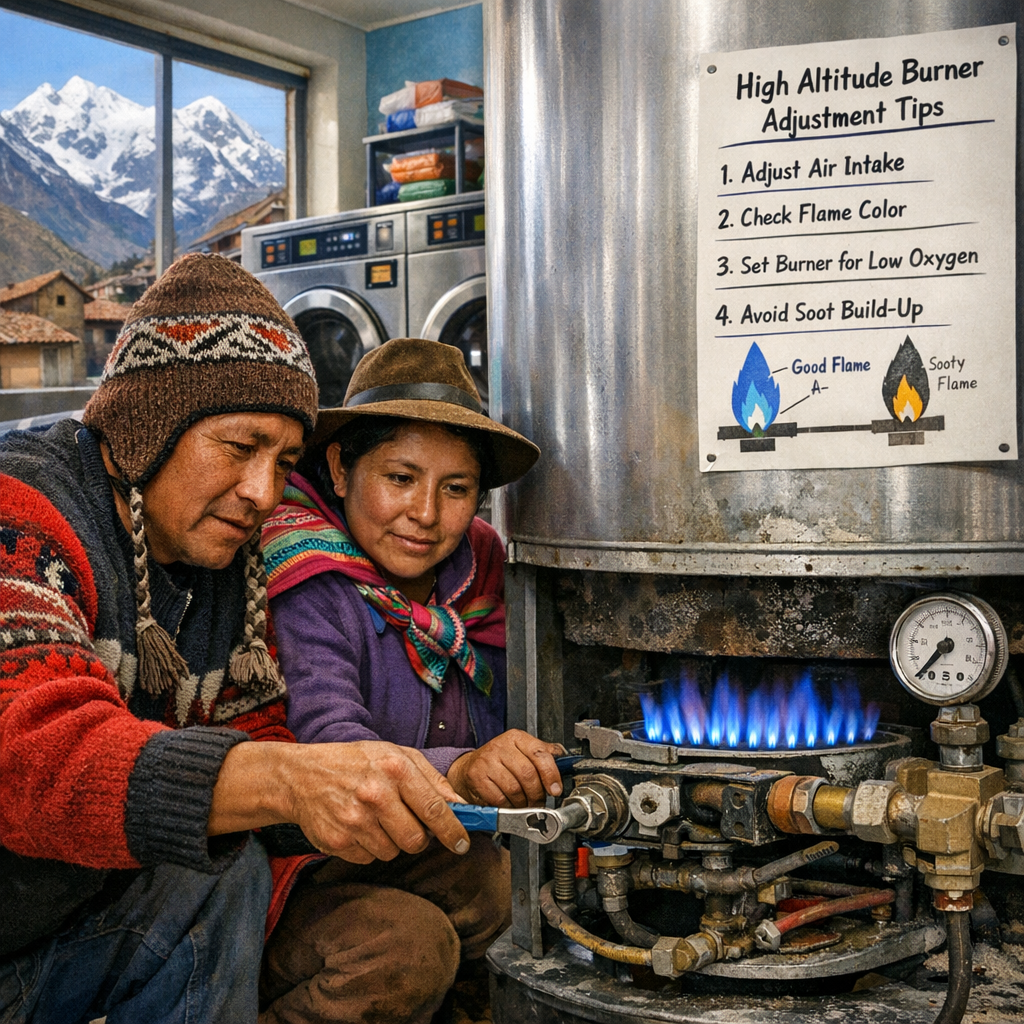
Dryers in laundromats located at high altitudes often face challenges due to low oxygen environments, which can lead to sooting and incomplete combustion. In this guide, we will provide a step-by-step approach to help laundromat owners in mountain regions avoid these issues and ensure optimal dryer performance.
At high altitudes, the air becomes thinner and contains less oxygen. This poses a significant challenge for appliances that rely on proper combustion, such as laundromat dryers. Incomplete combustion results in soot buildup, which can cause fires or even shut down the appliance entirely. To maintain safety and efficiency, it is crucial to adapt dryer burners for low-oxygen environments.
In this comprehensive guide, we will cover the following topics:
- Understanding the impact of high-altitude environments on laundromat dryers
- Identifying the signs of sooting and incomplete combustion
- Adjusting burner orifices to compensate for low oxygen levels
- Safety precautions to ensure a safe working environment
By following these steps, you can maintain a clean and efficient laundromat dryer, ensuring the safety of your business and customers.
The Problem: Sooting and Incomplete Combustion in High-Altitude Laundromats
The Problem: Sooting and Incomplete Combustion in High-Altitude Laundromats
Sooting and incomplete combustion are major issues for laundromat owners operating at high altitudes. The lower oxygen levels prevalent in such environments can lead to ‘sooting,’ which causes a buildup of carbon deposits on the dryer’s burner, ultimately reducing its efficiency and increasing the risk of fire hazards.
- At higher altitudes, the air is thinner and contains less oxygen, which can cause incomplete combustion when operating dryers.
- Incomplete combustion results in sooting, leading to carbon deposits on the burner, reduced efficiency, and an increased risk of fire hazards.
To avoid these problems, laundromat owners should consider adjusting their dryer burners for low-oxygen environments. This can be achieved by following a few simple steps:
…
Understanding Low-Oxygen Environments
Understanding Low-Oxygen Environments
In high-altitude locations, the air is thinner and contains less oxygen than at sea level. This can pose a problem for laundromat owners who operate their machines in such environments due to a phenomenon known as ‘sooting.’ Sooting occurs when incomplete combustion takes place, resulting in a buildup of carbon deposits within the dryer’s combustion chamber.
- At low oxygen levels, the air-fuel mixture becomes richer, leading to an increase in soot production and a reduction in flame efficiency. This can cause damage to the dryer’s components and even pose a fire hazard.
- The solution for laundromat owners is to adjust their machines’ burners to compensate for the lower oxygen levels. This involves reducing the burner’s air-fuel ratio while maintaining proper combustion temperature, ensuring that the dryer operates safely and efficiently in high-altitude environments.
Adjusting Dryer Burners for Low-Oxygen Conditions
Adjusting Dryer Burners for Low-Oxygen Conditions
In high-altitude locations, the air is thinner and contains less oxygen than at sea level. This can lead to incomplete combustion in laundromat dryers, causing sooting and potentially hazardous conditions. To prevent these issues, it’s essential to adjust the dryer burners according to the following steps:
- Measure the current air-fuel ratio: Use an exhaust gas analyzer to determine the existing air-fuel ratio in your laundromat dryer.
- Determine the optimal air-fuel ratio for low-oxygen environments: Consult the manufacturer’s guidelines or conduct a combustion tune-up to identify the ideal air-fuel ratio for your dryer. This will vary depending on the model and specifications of the appliance.
- Adjust the burner control settings: Modify the burner controls to achieve the desired air-fuel ratio. This may involve adjusting the potentiometer or other control mechanisms within the dryer’s control panel.
- Monitor combustion efficiency: Continuously assess the performance of your dryer after adjustments by using an exhaust gas analyzer to ensure optimal combustion and prevent sooting.
Preventative Maintenance and Regular Inspection
Preventative Maintenance and Regular Inspection
In high-altitude locations, it’s crucial to take extra precautions when maintaining your laundromat equipment. The low-oxygen environments can lead to sooting and incomplete combustion in dryers, which may result in costly repairs or replacements. To avoid these issues, follow these preventative maintenance and regular inspection steps:
- Inspect the lint filter in your dryer regularly. Clogged filters can cause overheating and reduce the efficiency of your dryer.
- Check the burner assembly for any signs of soot or debris buildup. Clean it thoroughly using a specialized cleaner designed for gas burners, if needed.
- Inspect the heat exchanger and ensure it’s free from blockages or corrosion. If necessary, replace any damaged components.
- Regularly inspect the pilot light and make sure it’s functioning correctly. A faulty pilot light can lead to safety hazards and inefficient operation.
Conclusion
In this guide, we have explored the challenges of operating laundromats in high-altitude areas and discussed various methods to mitigate the risks associated with low-oxygen environments. We have highlighted the importance of regular maintenance, proper ventilation, and adjusting dryer burners to ensure optimal performance and safety. In conclusion, it is crucial for laundromat owners in mountain regions to take these precautions to avoid sooting and incomplete combustion, protecting both their equipment and customers.
- Regularly inspect and clean your dryers
- Ensure proper ventilation in your laundromat
- Adjust dryer burners as needed for low-oxygen environments
Leave a Reply