Table of Contents
- Introduction: The Growing Importance of Safe-Haven Laundromats in Extreme Weather
- Liability Concerns: Legal Implications and Public Safety Responsibilities
- Best Practices for Managing Public Safety During Severe Weather Conditions
- Minimizing Liability Exposure: Proactive Measures to Protect Assets
- Case Studies: Real-Life Examples of Successful Safe-Haven Laundromat Management
- Conclusion: The Future of Safe- Haven Laundromats and their Role in Emergency Preparedness
Introduction: The Growing Importance of Safe-Haven Laundromats in Extreme Weather
Safe- Haven Liability: Laundromat Public Responsibilities During Extreme Weather
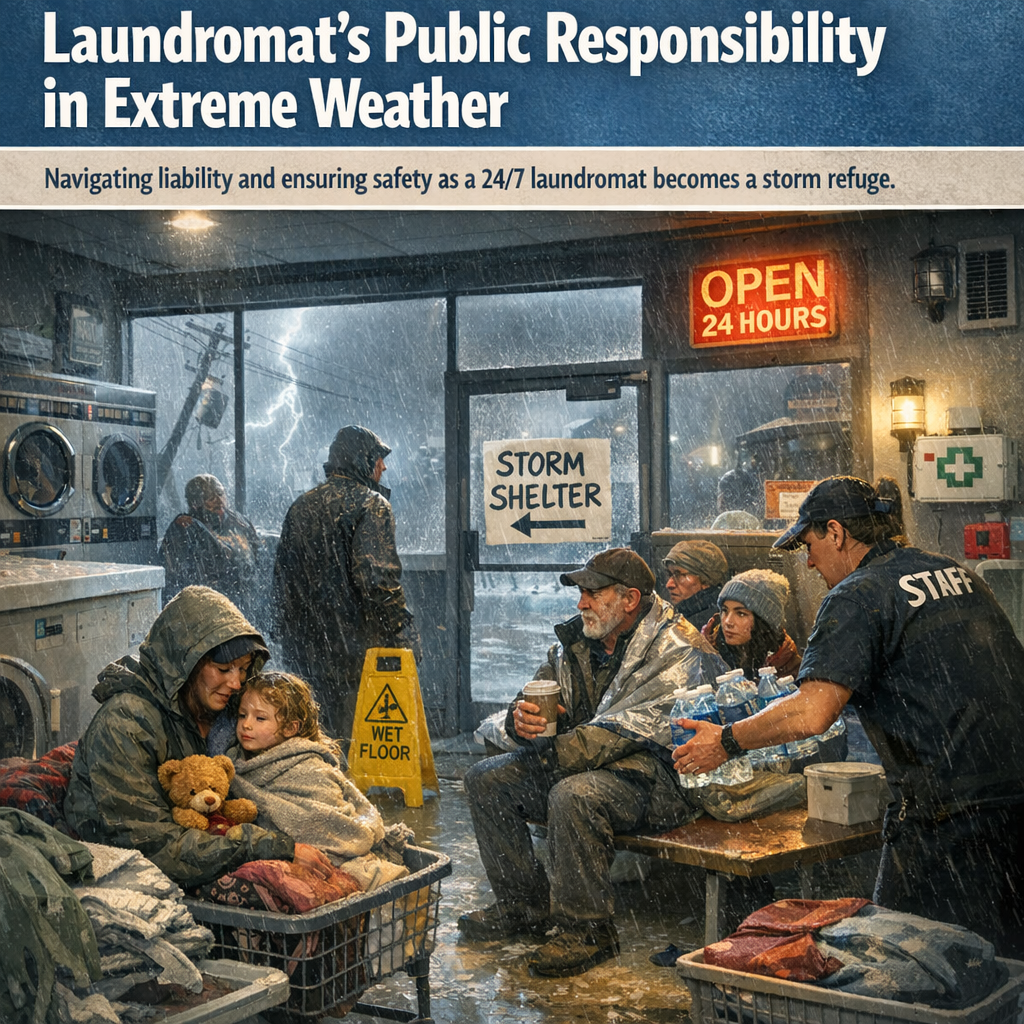
In recent years, extreme weather events have become increasingly common and severe. As climate change continues to make our weather patterns more unpredictable, businesses like 24/7 laundromats are finding themselves in the unexpected role of safe-havens for those seeking shelter during these tumultuous times.
- This growing phenomenon has raised important questions about the liability that comes with providing public safety in such a setting. How much responsibility do laundromat owners have when they become impromptu shelters, and what measures can they take to protect both their customers and assets?
Liability Concerns: Legal Implications and Public Safety Responsibilities
Liability Concerns: Legal Implications and Public Safety Responsibilities
In the event of extreme weather, a laundromat owner may face liability concerns related to their legal obligations and public safety responsibilities.
- The first concern is the potential for injury or property damage caused by customers seeking shelter in the laundromat during storms. To mitigate this risk, owners should ensure that their facilities are properly maintained and up-to-code with appropriate electrical systems, structural integrity, and fire safety measures.
- Secondly, there may be legal implications related to providing assistance or medical care to customers in need during an emergency. Owners should be aware of their obligations under local laws and consider partnering with local emergency services to ensure a coordinated response if needed.
- Finally, laundromat owners should be aware of their responsibility to provide adequate notice and information to customers about the risks associated with seeking shelter in their establishment during extreme weather events. This may include posting signs or providing verbal warnings to customers about potential hazards such as electrical outlets, hot surfaces, or other laundry-related equipment.
By understanding these liability concerns and taking appropriate steps to manage public safety while protecting their assets, laundromat owners can help ensure a safe environment for their patrons during extreme weather events.
Best Practices for Managing Public Safety During Severe Weather Conditions
Best Practices for Managing Public Safety During Severe Weather Conditions
In order to ensure the safety of your patrons while minimizing liability, it is crucial to establish and follow a set of best practices during severe weather conditions.
- 1. Develop an emergency plan: Create a comprehensive plan that outlines steps for evacuating customers in case of severe weather or other emergencies. Ensure all staff are familiar with the plan and conduct regular drills to keep everyone prepared.
- 2. Monitor weather forecasts: Stay informed about upcoming storms or extreme weather conditions through reliable sources, such as local news stations or the National Weather Service. This will allow you to make informed decisions regarding your laundromat’s operations and alert customers of any potential hazards.
- 3. Provide clear communication: Clearly display signs and provide verbal announcements to inform customers about any safety precautions they should take during severe weather, such as seeking shelter in a nearby building or staying away from windows and doors. Additionally, ensure that your staff is well-versed in addressing customer concerns and providing accurate information regarding the safety of your laundromat during inclement weather.
- 4. Maintain a safe environment: Regularly inspect your laundromat for potential hazards such as broken glass or faulty electrical systems, and address any issues promptly to minimize the risk of injury to customers or staff members. Additionally, keep walkways and parking lots clear of debris and ice during winter months to reduce the risk of slip-and-fall accidents.
- 5. Ensure adequate staffing: During periods of severe weather, it may be necessary to increase staffing levels to safely manage an increased number of patrons seeking shelter in your laundromat. Properly training staff members on emergency protocols and cross-training them for various tasks can also help ensure a smooth operation during high-stress situations.
By following these best practices, you can effectively manage public safety while minimizing liability concerns related to your 24/7 laundromat’s use as a shelter during extreme weather conditions.
Minimizing Liability Exposure: Proactive Measures to Protect Assets
Minimizing Liability Exposure: Proactive Measures to Protect Assets
In order to minimize liability exposure and protect assets, laundromat owners should consider implementing the following proactive measures:
- Clear signage and communication: Clearly display signs informing patrons of the laundromat’s policies regarding use during extreme weather conditions. This may include maximum occupancy limits, rules for using emergency shelters, and contact information for local authorities or emergency services.
- Safety equipment and supplies: Ensure that safety equipment such as fire extinguishers, first aid kits, and flashlights are readily available and in good working condition. Additionally, consider providing blankets, pillows, and other comfort items to help patrons feel more secure during severe weather events.
- Staff training: Train employees on how to respond to emergencies and how to properly communicate with patrons and emergency services. This may include knowledge of local shelter facilities or evacuation routes.
- Surveillance systems: Install security cameras to monitor the premises and deter potential criminal activity, as well as to provide evidence in case of liability disputes.
Case Studies: Real-Life Examples of Successful Safe-Haven Laundromat Management
Case Studies: Real-Life Examples of Successful Safe-Haven Laundromat Management
In order to better understand the challenges and potential solutions for managing a laundromat as a safe-haven during extreme weather, let’s examine some real-life examples:
- Example 1: Miami Laundromat, Hurricane Irma (2017) – During Hurricane Irma, a laundromat owner in Miami proactively reached out to local authorities and neighboring businesses to coordinate a plan for public safety. The laundromat’s large windows and sturdy structure allowed for sheltering approximately 40 people safely during the storm, with sufficient food, water, and power supply. This proactive approach resulted in positive press coverage and increased customer loyalty.
- Example 2: Seattle Laundromat, Winter Storm Nemo (2013) – A laundromat owner in Seattle experienced a winter storm of record-breaking proportions. By providing customers with blankets, flashlights, and extra laundry detergent, the owner transformed the laundromat into an improvised shelter for over 50 people seeking refuge from the storm. Local media coverage praised the business’s efforts, leading to increased foot traffic and revenue in the weeks following the event.
- Example 3: New York Laundromat, Hurricane Sandy (2012) – In the aftermath of Hurricane Sandy, a laundromat owner in New York City opened their doors as a temporary shelter for over 100 residents without power or safe housing. Working closely with local emergency management officials, the owner ensured that their business provided hot meals, charging stations, and necessary supplies to those seeking refuge. This act of community service garnered significant praise and support from local government and media outlets, resulting in increased patronage even after the storm had passed.
Conclusion: The Future of Safe- Haven Laundromats and their Role in Emergency Preparedness
Conclusion:
In light of the increasing frequency and severity of extreme weather events, it is crucial for laundromat owners to consider their role in providing safe havens during emergencies. While there may be liability concerns, the potential impact on public safety can be significant. As such, a clear understanding of one’s responsibilities and proactive measures are essential components of effective emergency preparedness.
By incorporating best practices for laundromat design, staff training, and crisis management planning, owners can minimize their liabilities while maximizing the lifesaving capabilities of their businesses. Moreover, collaborating with local authorities and community organizations can further enhance the collective resilience against natural disasters.
In conclusion, safe-haven laundromats have an important role to play in emergency preparedness, and it is incumbent upon owners to recognize this responsibility and take appropriate actions to safeguard their patrons and protect their assets. By doing so, they not only contribute to the well-being of their communities but also set a standard for other businesses to follow.
- Recognize your role in providing safe havens during emergencies
- Understand your liability concerns
- Incorporate best practices for laundromat design, staff training, and crisis management planning
- Collaborate with local authorities and community organizations
Leave a Reply