Table of Contents
- Introduction: The Hidden Maintenance Costs of Laundromat Gray-Water Reclamation Systems
- Background on Gray-Water Reclamation in Laundromats
- Filtration Media Costs and Their Impact on Laundromat Maintenance Budgets
- Addressing the ‘Sewage Smell’ Issue in Laundromat Gray-Water Systems
- Case Studies: Comparing Laundromat Gray-Water Reclamation Systems with Traditional Water Supply Methods
- Conclusion: The Future of Laundromat Gray-Water Reclamation and Its Potential for Cost Savings
Introduction: The Hidden Maintenance Costs of Laundromat Gray-Water Reclamation Systems
Laundromat Gray-Water Reclamation: The Hidden Maintenance Costs of $50k Systems
Have you ever considered the environmental impact and hidden costs associated with traditional laundromats? As we delve into the world of laundry facilities, it’s time to face the facts about water recycling systems.
- The installation of a gray-water reclamation system may cost up to $50,000 – but what about the maintenance costs that often go unnoticed?
Background on Gray-Water Reclamation in Laundromats
Background on Gray-Water Reclamation in Laundromats
Gray-water reclamation systems have been gaining popularity in laundromats as a means to conserve water and reduce costs. These systems collect and treat laundry wastewater, also known as “gray water,” before discharging it back into the washing machines or returning it to the municipal water supply.
- In recent years, gray-water reclamation has become increasingly common in commercial laundromats due to rising water costs and growing environmental concerns. According to a study by the National Science Foundation, approximately 80% of commercial laundromats now utilize some form of gray-water reclamation technology.
- However, despite their widespread adoption, many operators are unaware of the hidden maintenance costs associated with these systems. These costs can include replacement filters, frequent system cleanings, and potential issues with unpleasant odors from untreated sewage.
Filtration Media Costs and Their Impact on Laundromat Maintenance Budgets
Filtration Media Costs and Their Impact on Laundromat Maintenance Budgets
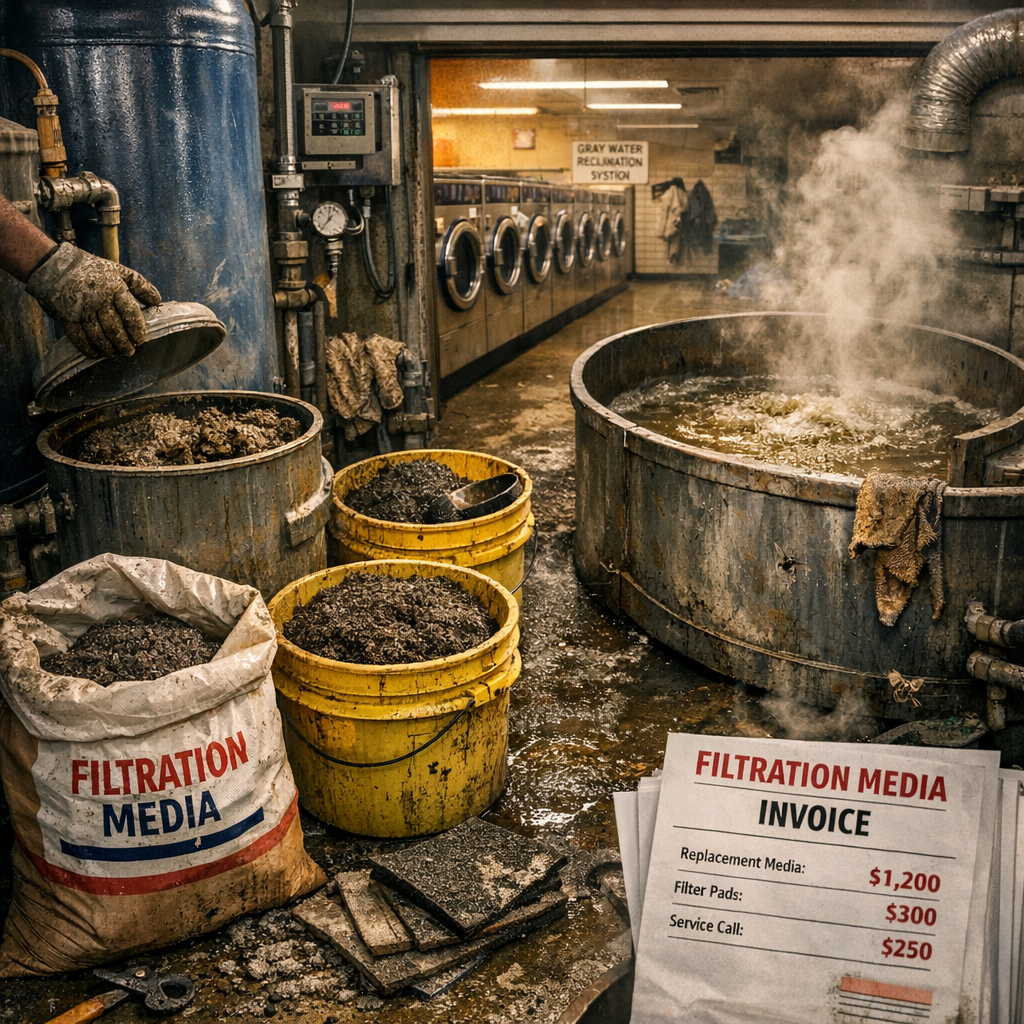
While laundromat gray-water reclamation systems can significantly reduce water usage and provide a more environmentally friendly solution, they also come with hidden maintenance costs that can quickly add up. One such cost is the filtration media expenses, which are often overlooked in the initial budget estimations.
- The primary function of these systems is to filter out contaminants from laundry wastewater before it’s reused for subsequent cycles. This process requires specialized filtration media, such as carbon filters or sand filters, that need to be replaced periodically.
- According to industry experts, the average lifespan of filtration media ranges between six months and two years, depending on usage and water quality. However, some high-efficiency systems may require media replacement every three to four years.
- The cost of replacing filtration media can vary greatly, ranging from $200 for a basic carbon filter to over $1,000 for more advanced sand filters. In a laundromat with heavy usage, the annual expense can easily reach several thousand dollars.
Addressing the ‘Sewage Smell’ Issue in Laundromat Gray-Water Systems
Addressing the ‘Sewage Smell’ Issue in Laundromat Gray-Water Systems
The installation of gray-water reclamation systems in laundromats has become increasingly popular, as businesses and consumers alike seek to reduce water waste and lower utility costs. However, despite their potential benefits, these systems can sometimes present hidden maintenance challenges, particularly concerning the elimination of unpleasant odors.
- One primary concern related to gray-water reclamation in laundromats is the potential for a ‘sewage smell’ issue. This occurs when bacteria within the system break down laundry detergents and other contaminants, producing a strong, unpleasant odor that can be difficult to eradicate.
- To mitigate this problem, it’s essential for businesses to invest in high-quality filtration media capable of neutralizing odors effectively. While such media may increase the upfront cost of implementing a gray-water reclamation system, it can save businesses money over time by reducing their need for costly wastewater treatment services and helping them meet strict environmental regulations.
- In addition to investing in effective filtration media, laundromat owners should also regularly monitor and maintain their gray-water systems. This includes inspecting filters and other components for signs of wear or damage, replacing any contaminated or worn-out media, and ensuring that all system components are functioning optimally. By performing these maintenance tasks promptly, businesses can help prevent odor issues from arising in the first place.
Case Studies: Comparing Laundromat Gray-Water Reclamation Systems with Traditional Water Supply Methods
Case Studies: Comparing Laundromat Gray-Water Reclamation Systems with Traditional Water Supply Methods
In this section, we will delve into a series of case studies that compare the effectiveness and cost-efficiency of gray-water reclamation systems in laundromats against traditional water supply methods.
- Case Study 1: Laundromat A (Traditional Water Supply) vs. Laundromat B (Gray-Water Reclamation System)
- Laundromat A: Using traditional water supply methods, Laundromat A spends $10,000 per year on water bills alone.
- Laundromat B: After installing a gray-water reclamation system at a cost of $50,000, Laundromat B saves an average of $8,000 annually in water costs. However, this savings is offset by the additional maintenance costs associated with the system.
- Case Study 2: Laundromat C (Gray-Water Reclamation System) vs. Laundromat D (Traditional Water Supply)
- Laundromat C: Laundromat C invested in a $50,000 gray-water reclamation system and saw an immediate reduction in water costs by 30%. However, the system required frequent filter replacement, adding an additional $2,500 in annual maintenance expenses.
- Laundromat D: Laundromat D opted for traditional water supply methods, resulting in a more predictable and lower-cost laundry experience. While their water bills were higher than Laundromat C’s post-reclamation costs, the lack of additional maintenance concerns allowed them to allocate those savings elsewhere.
Conclusion: The Future of Laundromat Gray-Water Reclamation and Its Potential for Cost Savings
Conclusion: The Future of Laundromat Gray-Water Reclamation and Its Potential for Cost Savings
In light of the high initial costs, ongoing maintenance expenses, and potential odor issues associated with gray-water reclamation systems in laundromats, it is crucial for businesses to carefully weigh the benefits against the costs before investing. However, should a laundromat decide to implement such a system, there are several strategies they can employ to minimize long-term expenses:
- Regularly inspect and maintain equipment to prevent costly breakdowns.
- Invest in high-quality filtration media that requires less frequent replacement, reducing ongoing costs.
- Implement a regular cleaning schedule to combat the ‘sewage smell’ issue and extend the life of the system.
In conclusion, while laundromat gray-water reclamation systems hold great potential for cost savings in the long run, it is essential for businesses to thoroughly assess their benefits and drawbacks. By taking proactive measures to maintain these systems and investing in quality components, laundromats can maximize their potential for financial gains without sacrificing the health and safety of their customers.
Leave a Reply