Table of Contents
- Introduction: The Importance of Reinforcing Laundromat Floors for High-Spin Washers
- Understanding the Impact of 450G+ Extraction Washers on Concrete Slabs
- Assessing the Condition of Your Current Laundromat Floor
- Choosing the Appropriate Reinforcement Method for Your Slab
- Steps to Install and Secure Reinforcing Bolts Properly
- Conclusion: Prioritizing Floor Safety in Your Laundromat Business
Introduction: The Importance of Reinforcing Laundromat Floors for High-Spin Washers
Laundromat Slab Reinforcement: Preparing Floors for 450G High-Spin Extraction Washers
As laundromats continue to evolve and embrace cutting-edge technology, one critical aspect often overlooked is the structural reinforcement of floors to accommodate high-spin extraction washers. With these powerful machines comes a significant increase in force exerted on the concrete slabs they rest on, potentially causing cracks and compromising the integrity of the entire structure.
Understanding the importance of reinforcing laundromat floors for high-spin washers is crucial for business owners considering an upgrade to this advanced equipment. In this article, we will delve into the consequences of neglecting slab reinforcement and outline the best practices for ensuring a secure and stable environment for your 450G+ extraction washer.
- Exploring the impact of high-spin washers on traditional concrete slabs
- Discussing the importance of proper reinforcement for laundromat floors
- Outlining the steps to properly bolt down and secure your 400G+ extraction washer
Understanding the Impact of 450G+ Extraction Washers on Concrete Slabs
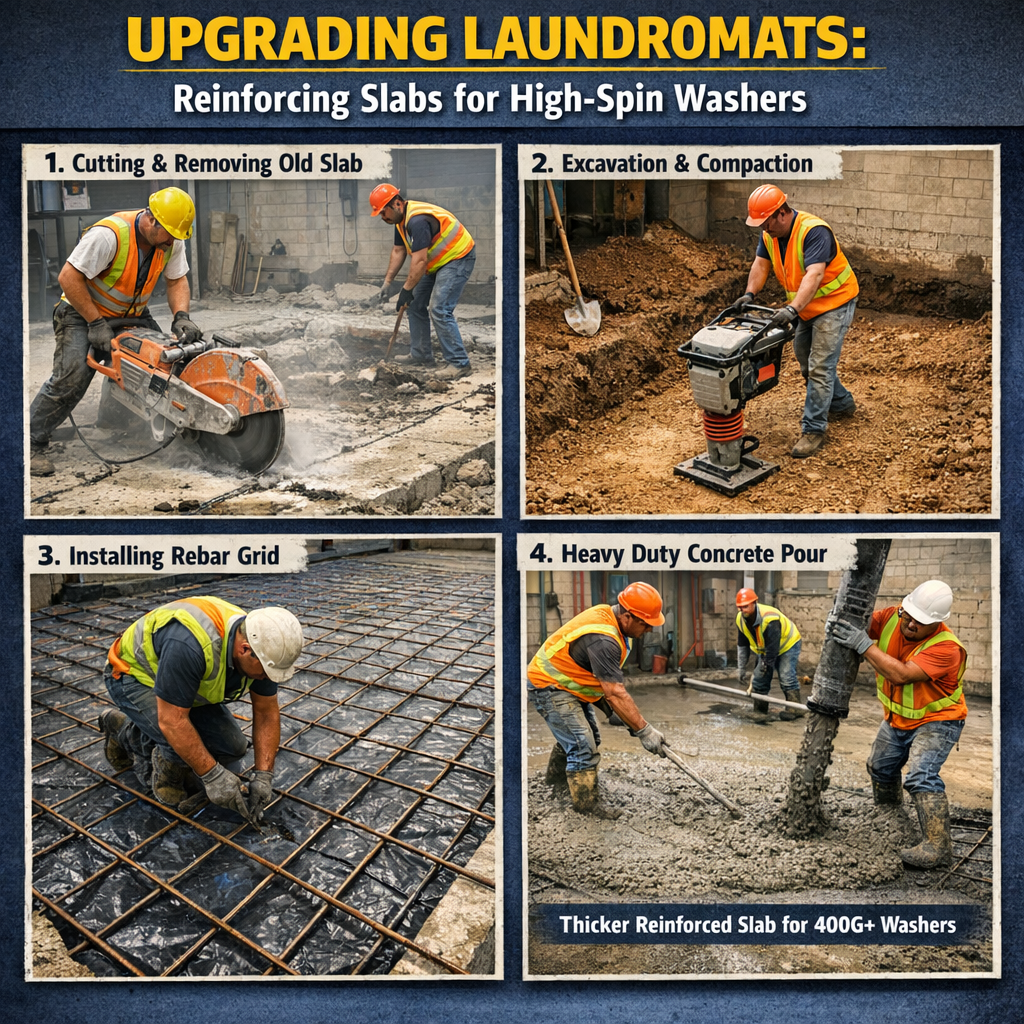
Laundromat owners upgrading to high-spin extraction washers, specifically those operating at 450G or greater, should be aware of the potential impact on their concrete slabs. Unlike standard washing machines, these powerful units can exert enough force to crack a typical 4-inch concrete slab if not properly supported.
- Concrete slabs in laundromats are typically designed to withstand compressive forces, but not tensile forces that result from the high-speed spin cycles of modern washers. This means that when the washer’s basket spins at high speed, it can create a centrifugal force that pulls the slab apart.
- While a 4-inch concrete slab may seem robust enough to handle most washing machine vibrations and movements, the increased G-forces from a 450G+ washer can cause significant damage over time. Owners should consider reinforcing their slabs to prevent costly repairs or even total structural failure.
To prepare your laundromat floor for a high-spin extraction washer, it’s essential to reinforce the concrete slab adequately:
- Choose a reinforced concrete product that is specifically designed to handle the increased forces from modern washers. Consult with an engineer or construction specialist to ensure you select the correct product for your needs.
- Properly anchor the washer and its support frame to the reinforced concrete slab using high-strength bolts, ensuring they’re spaced evenly across the entire slab area. This will help distribute the forces evenly, reducing the risk of cracking or other structural issues.
In conclusion, upgrading your laundromat with a 450G+ extraction washer can significantly impact your concrete slabs if not reinforced correctly. By selecting the right reinforcement materials and securely anchoring the washer’s support frame, you can protect your investment and ensure a safe, structurally sound laundromat for years to come.
Assessing the Condition of Your Current Laundromat Floor
Assessing the Condition of Your Current Laundromat Floor
To determine whether your laundromat’s floor is capable of withstanding the forces exerted by a high-spin extraction washer, it is essential to conduct a thorough assessment of its current condition. Begin by examining the thickness and overall integrity of the concrete slab. A standard 4-inch concrete slab should be able to handle 400G+ extraction without issue; however, any cracks or signs of deterioration may compromise its structural integrity.
- Check for cracks: Inspect the entire surface of the slab for hairline cracks or larger fissures that could potentially weaken the structure. Pay special attention to areas around the perimeter and load-bearing supports, as these are common points of weakness.
- Look for signs of wear: Observe the overall condition of the concrete, paying close attention to any spalling (chipping or flaking), surface erosion, or other visible signs of wear. These can also indicate a compromised slab.
If you notice any cracks or significant signs of wear during your assessment, it is highly recommended that you reinforce the slab before installing a high-spin extraction washer to prevent potential damage and costly repairs down the line.
Choosing the Appropriate Reinforcement Method for Your Slab
Choosing the Appropriate Reinforcement Method for Your Slab
To prepare your laundromat slab for high-spin extraction washers, it is crucial to understand how much reinforcement your slab will need to withstand the forces exerted by these powerful machines.
- Method 1: Drop Ceiling and Isolated Floor System: This method involves installing a drop ceiling below the existing slab and constructing an isolated floor system above it. The gap between the two structures helps dissipate vibrations, reducing stress on the slab and prolonging its lifespan.
- Method 2: Reinforced Concrete Slab: In this approach, additional steel reinforcement bars are added to the existing concrete slab. These bars increase the structural integrity of the slab, allowing it to withstand higher forces without cracking or breaking apart.
- Method 3: Composite Slab: This method combines the existing concrete slab with a new layer of concrete or other compatible materials. The added material provides increased strength and durability while also filling any existing cracks or voids in the original slab.
Steps to Install and Secure Reinforcing Bolts Properly
Installing and securing reinforcing bolts properly is crucial when preparing floors for 450G high-spin extraction washers in laundromats. This section outlines the necessary steps to ensure your concrete slabs can withstand the stress of these powerful machines without cracking or failing.
- 1. Assess the existing slab: Begin by evaluating the condition of your current 4-inch concrete slab for any signs of cracks, spalling, or other damage. If any issues are detected, repairs must be made before proceeding with reinforcement installation.
- 2. Determine bolt locations: Carefully plan out where you will place the reinforcing bolts in the slab. This will depend on the size and layout of your laundromat, as well as the specific washer model being used. Be sure to consult the manufacturer’s guidelines for recommended bolt patterns.
- 3. Prepare holes for bolts: Using a core drill or diamond saw, create appropriately sized holes in the concrete slab for each reinforcing bolt. The hole diameter should match the diameter of your chosen bolts, while the depth should be slightly greater than the total length of the bolt and nut combined.
- 4. Install epoxy anchor: To further secure the bolts, use an epoxy-resin anchor to bond them to the concrete slab. This will prevent any movement or loosening over time due to the high forces exerted by the washers. Follow the manufacturer’s instructions for mixing and applying the epoxy.
- 5. Tighten bolts: Once the epoxy has cured, tighten the nuts on your reinforcing bolts to the recommended torque specifications provided by the washer manufacturer. It is crucial that you do not overtighten the bolts, as this can cause stress fractures in the concrete slab.
- 6. Apply a protective coating (optional): If desired, consider applying a protective coating to the exposed portions of your reinforcing bolts to prevent corrosion and ensure long-lasting performance.
Conclusion: Prioritizing Floor Safety in Your Laundromat Business
In conclusion, ensuring the safety and integrity of your laundromat’s flooring is crucial when upgrading to high-spin extraction washers capable of 400G+ forces. By implementing proper slab reinforcement methods, you can prevent costly damage and maintain a safe environment for your customers.
- Always consult with a professional engineer or contractor before attempting any major renovations or upgrades.
- Consider investing in reinforced concrete slabs or adding additional support structures to withstand the increased forces generated by high-spin washers.
- Regularly inspect your laundromat’s flooring for signs of wear, cracks, or other damage that may indicate a need for reinforcement.
If you’re unsure about how to proceed with reinforcing your laundromat’s floors, don’t hesitate to reach out to industry experts or contact local building authorities for guidance. By prioritizing floor safety and taking the necessary steps to reinforce your concrete slabs, you can protect your business’s infrastructure and provide a safe environment for your customers.
Leave a Reply