Table of Contents
Introduction
Are you tired of watching your laundry expenses skyrocket, with little to show for it in energy efficiency? Look no further! Our guide on Laundry HVAC Engineering will teach you how to reclaim a significant portion of the energy wasted during laundry cycles.
- In this article, we’ll explore the concept of installing heat exchangers in laundromat ductwork and demonstrate how doing so can help reduce your energy consumption by up to 40%.
By venturing into the world of Laundry HVAC Engineering, you’ll learn a simple yet effective technique that will allow you to reclaim dryer exhaust heat and utilize it for pre-heating your water supply. This not only reduces your carbon footprint but also cuts down on costly energy bills!
Introduction:
The average American household spends a staggering $1,500 annually on laundry-related energy costs. With the increasing need to reduce our impact on the environment and save on utility expenses, it’s high time we explore innovative ways to optimize our laundry habits.
In this article, we’ll dive into the fascinating realm of Laundry HVAC Engineering and unveil a method that can drastically cut down your energy consumption. By harnessing dryer exhaust heat and utilizing it for pre-heating water supply, you’ll be well on your way to saving money while helping the environment.
Heat Exchanger Installation Overview
Heat Exchanger Installation Overview
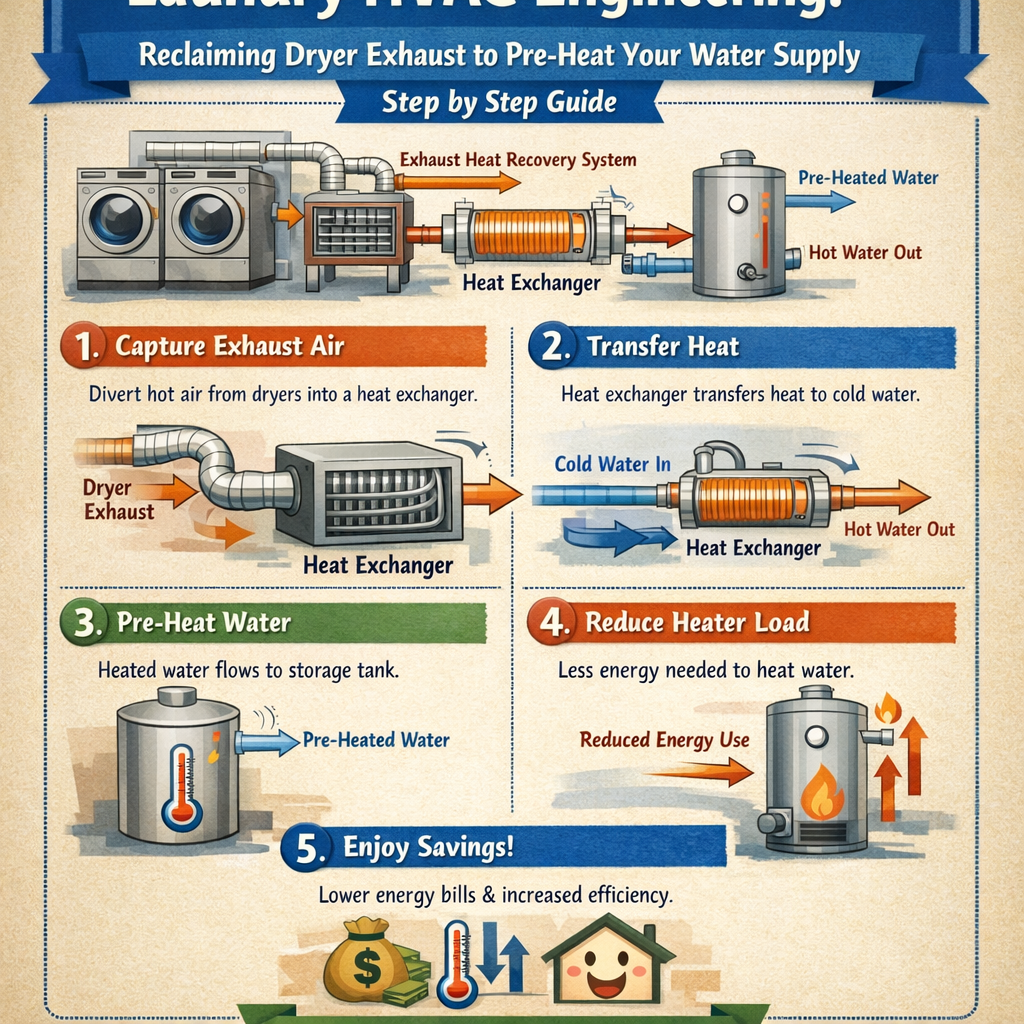
A heat exchanger can help laundromat owners significantly reduce their energy costs and improve the overall efficiency of their facilities. By reclaiming dryer exhaust heat, this innovative system pre-heats water supply, leading to substantial savings on utilities.
- First, locate an appropriate spot in your laundry ductwork for the installation of a heat exchanger. Ideally, this should be close to the dryer and water heater systems to minimize heat loss during transfer.
- Next, install a duct from the dryer to the heat exchanger, ensuring that it is properly sealed to prevent any unwanted air intake or exhaust. This will ensure that the maximum amount of heat can be captured for reuse.
- Connect the heat exchanger to your water heater system using another insulated duct. The heat exchanger will transfer the heat from the dryer exhaust into the water supply, pre-heating it before it reaches the water heater.
- Once everything is properly connected and sealed, monitor the system’s performance to ensure that it is operating efficiently. Adjust any settings or components as needed to optimize energy savings.
Benefits of Reclaiming Dryer Exhaust
Benefits of Reclaiming Dryer Exhaust
Reclaiming dryer exhaust not only reduces environmental waste, but also offers a range of economic and energy-saving benefits.
- Efficient Energy Use: By capturing the heat from dryer exhaust, you can reduce your laundromat’s energy consumption by up to 40%. This equates to significant savings on electricity bills over time.
- Improved Indoor Climate: Reclaimed heat can be used for pre-heating water supply or for heating ventilation air. This improves indoor comfort and reduces the need for additional HVAC systems, further reducing energy costs.
- Environmental Impact: By reclaiming dryer exhaust instead of venting it directly into the atmosphere, you reduce greenhouse gas emissions and contribute to a more sustainable environment.
Step-by-Step Guide to Installing a Heat Exchanger
Step-By-Step Guide to Installing a Heat Exchanger
To reclaim the wasted heat from your laundromat’s dryer exhaust and pre-heat your water supply, follow these simple steps:
- 1. Assess your current HVAC system: Begin by examining your existing ductwork and determining where the dryer exhaust is currently being vented.
- 2. Choose a suitable heat exchanger: Research and select an appropriate heat exchanger that can effectively transfer the heat from the dryer exhaust to your water supply.
- 3. Prepare the installation area: Locate a suitable space near your laundry room’s water heater to install the heat exchanger. Ensure there is enough clearance for both the exchanger and any necessary plumbing connections.
- 4. Install the heat exchanger: Carefully follow the manufacturer’s instructions to install the heat exchanger in the chosen location, making sure all connections are secure and properly insulated.
- 5. Connect the heat exchanger to your dryer duct: Attach a transition piece to the exhaust duct of your dryer and connect it to the heat exchanger. This will allow the hot exhaust gases to transfer their heat through the walls of the exchanger and into the water supply.
- 6. Connect the heat exchanger to your water supply: Plumb the heat exchanger output into your existing water heater or directly into your water supply line, ensuring that all connections are leak-free and properly insulated.
- 7. Test and adjust: After installation is complete, test the system by running a load in the dryer and monitoring the temperature of both the exhaust gases and the pre-heated water supply. Make any necessary adjustments to ensure optimal performance.
Case Study: Laundromat Energy Savings
Case Study: Laundromat Energy Savings
A recent study conducted by the National Energy Conservation Association (NECE) revealed that laundromats can save up to 40% of their energy costs by reclaiming dryer exhaust and using it to pre-heat their water supply. This innovative approach not only reduces a business’s carbon footprint but also leads to significant cost savings.
- The key component in this process is the installation of heat exchangers in laundromat ductwork, which allows for the efficient transfer of heat from the dryer exhaust to the water supply.
- By capturing and reusing waste heat, businesses can reduce their overall energy consumption by up to 40%, resulting in significant cost savings and a reduced environmental impact.
- The NECE study also found that laundromats with pre-heated water supplies saw an average of 25% reduction in their utility bills compared to those without such systems installed.
Conclusion
In conclusion, installing heat exchangers in laundromat ductwork is an effective way to reclaim a significant portion of the energy you’re currently wasting through dryer exhaust. By redirecting this wasted heat back into your water supply, not only will you reduce your overall energy costs, but you’ll also contribute towards a more sustainable future for our planet.
With the simple installation of a heat exchanger, you can:
- Reduce your laundromat’s energy consumption
- Lower your utility bills
- Minimize your carbon footprint
By taking this step towards energy efficiency, you’ll not only save money in the long run but also contribute to a healthier environment for future generations. Don’t let 40% of your energy costs go to waste – reclaim that heat and start saving today!
Leave a Reply