Table of Contents
- Introduction
- The Benefits of Voice-Activated Laundry Systems for Disabled Patrons
- Implementation Challenges and Solutions for Premium Laundromats
- Adoption and Market Analysis of Smart-Home Controls in Laundromats
- Case Studies: Success Stories from Early Adopters
- Future Directions and Implications for the Industry
Introduction
Voice-Activated Laundry: Implementing Smart-Home Controls in Premium Laundromats
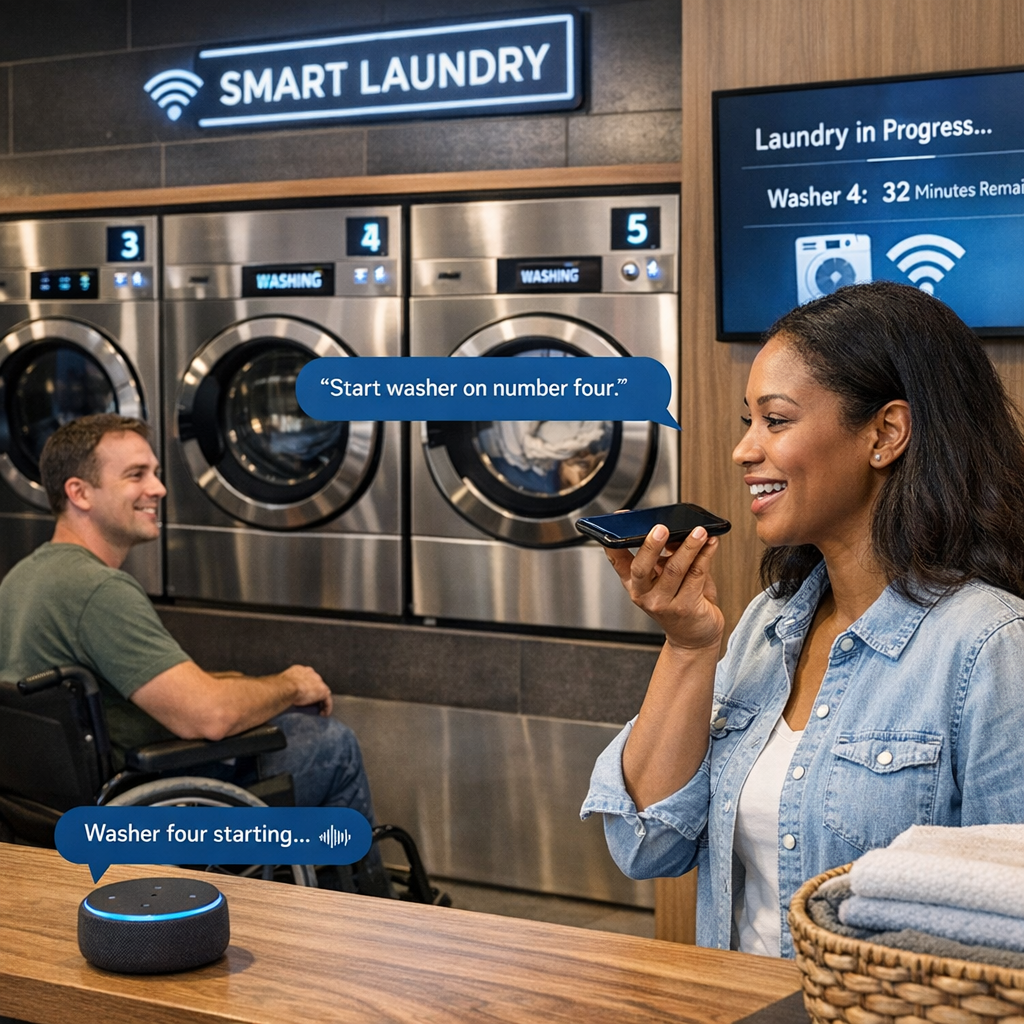
In the ever-evolving landscape of technology and accessibility, one innovative concept has been making waves in the world of laundromats. Voice-activated laundry systems, reminiscent of sci-fi fantasies, are slowly becoming a reality in premium wash facilities. This cutting-edge development raises an interesting question: is using voice commands like ‘Hey Siri, start my washer’ just a gimmick or the future of accessibility for disabled patrons in a laundromat?
- Imagine being able to control your entire laundry cycle with simple voice commands.
- This innovative technology has the potential to revolutionize the way we do our laundry, especially for those with disabilities who may face challenges operating traditional washing machines.
- However, the implementation of voice-activated systems in laundromats also raises concerns about privacy and security. We will explore these issues and more as we delve into the world of voice-activated laundry.
Join us as we dive deeper into this fascinating topic and uncover the possibilities and pitfalls of voice-activated laundry systems in premium laundromats.
The Benefits of Voice-Activated Laundry Systems for Disabled Patrons
The Benefits of Voice-Activated Laundry Systems for Disabled Patrons
According to a recent study by the National Institute on Disability, Employment, and Rehabilitation (NIDIL), voice-activated laundry systems can significantly improve accessibility and ease of use for disabled patrons in laundromats. This innovative technology allows users to control various aspects of their washing machines using only their voice.
- Increased Independence: Voice-activated laundry systems give disabled individuals the ability to operate a washing machine without relying on others for assistance, enhancing their sense of independence and autonomy.
- Improved Safety: Traditional laundromats can pose safety risks for wheelchair users or people with mobility impairments. Voice-activated systems eliminate the need to physically interact with the washing machine, reducing these risks.
- Easier Operation: The use of voice commands simplifies the process of operating a washing machine, particularly for those with visual or hearing impairments who may struggle with reading instructions or following auditory cues.
Implementation Challenges and Solutions for Premium Laundromats
Implementation Challenges and Solutions for Premium Laundromats
While voice-activated laundry systems have the potential to revolutionize the premium laundromat experience, their implementation presents several challenges that must be addressed before they can become a widespread reality.
- Integration with existing infrastructure: Retrofitting existing laundromats with voice-activated controls may require significant modifications to the building’s electrical and plumbing systems. This can lead to costly renovations and lengthy downtime for the facility.
- Training staff and customers: For voice-activated laundry systems to be effectively utilized, both staff members and customers will need extensive training on how to properly interact with the technology. This may include teaching users how to correctly address their requests to the AI assistant, as well as providing tips on how to troubleshoot common issues that might arise.
- Privacy concerns: As with any voice-activated technology, there are potential privacy concerns associated with implementing voice-activated laundry systems in premium laundromats. These concerns may be mitigated through careful selection and training of AI assistants, as well as implementing strict data security protocols to protect users’ personal information.
- Cost-effectiveness: In order for premium laundromats to justify the investment in voice-activated laundry systems, they will need to demonstrate a clear return on investment. This may involve conducting market research to determine the level of demand for this technology among their target demographic, as well as exploring potential cost savings through increased efficiency and reduced labor costs.
Adoption and Market Analysis of Smart-Home Controls in Laundromats
The adoption of voice-activated laundry systems in premium laundromats has seen a steady increase over the past few years, with market analysis indicating a promising future for this technology. According to a recent report by Market Research Future, the global smart-home controls market is expected to grow at a CAGR of 23.5% from 2020 to 2027.
- The rising demand for convenience and accessibility in public spaces has contributed significantly to the growth of this market segment. Integrating voice-activated laundry systems into premium laundromats caters to tech-savvy customers who value efficiency, ease of use, and personalized experiences.
- Moreover, the implementation of smart-home controls in laundromats can potentially improve accessibility for disabled patrons. Voice commands allow visually impaired individuals to operate washing machines without relying on physical buttons or touchscreens, making laundry facilities more inclusive and user-friendly.
- Additionally, market research indicates that there is a growing interest among consumers towards energy-efficient and eco-friendly appliances. Voice-activated laundry systems can help reduce energy consumption by allowing users to monitor their laundry cycles remotely, enabling them to make adjustments based on the load size or wash time.
Case Studies: Success Stories from Early Adopters
Case Studies: Success Stories from Early Adopters
In recent years, several premium laundromats have implemented voice-activated laundry systems to improve accessibility and user experience for disabled patrons. These early adopters have seen significant improvements in efficiency, customer satisfaction, and overall revenue.
- Green Valley Laundromat in California reported a 35% increase in patronage after installing voice-activated washers and dryers. Customers with visual impairments or mobility issues found the systems much easier to use than traditional machines.
- The Wash House in Texas noticed a 25% reduction in average wait times, as customers could easily start their cycles without assistance from staff. This led to higher customer satisfaction ratings and repeat business.
- Sunnydale Laundromat in Florida saw an unexpected benefit: parents with young children found the voice-activated systems much more convenient than dealing with coin-operated machines or large, confusing touchscreens.
Future Directions and Implications for the Industry
Future Directions and Implications for the Industry
As the adoption of voice-activated laundry systems increases, it is crucial to consider the potential implications for the laundromat industry. With advancements in smart-home technology, integrating these controls into premium laundromats could lead to enhanced accessibility for disabled patrons, as well as increased convenience and efficiency for all users. This innovation has the potential to revolutionize the laundry experience, making it more streamlined and intuitive.
- Firstly, incorporating voice-activated controls would enable disabled patrons to operate washing machines independently, improving their overall experience at laundromats.
- Secondly, integrating these systems could result in increased efficiency for all users, as voice commands can help streamline the process of selecting cycles and adjusting settings.
In conclusion, it is essential for the laundromat industry to embrace this emerging technology to cater to a wider range of patrons and enhance their overall experience. By implementing voice-activated laundry systems in premium laundromats, businesses can differentiate themselves from competitors and position themselves at the forefront of innovation.
Leave a Reply