Table of Contents
Introduction
Vibration Sensor Deployment: Predicting Laundromat Bearing Failure via IoT
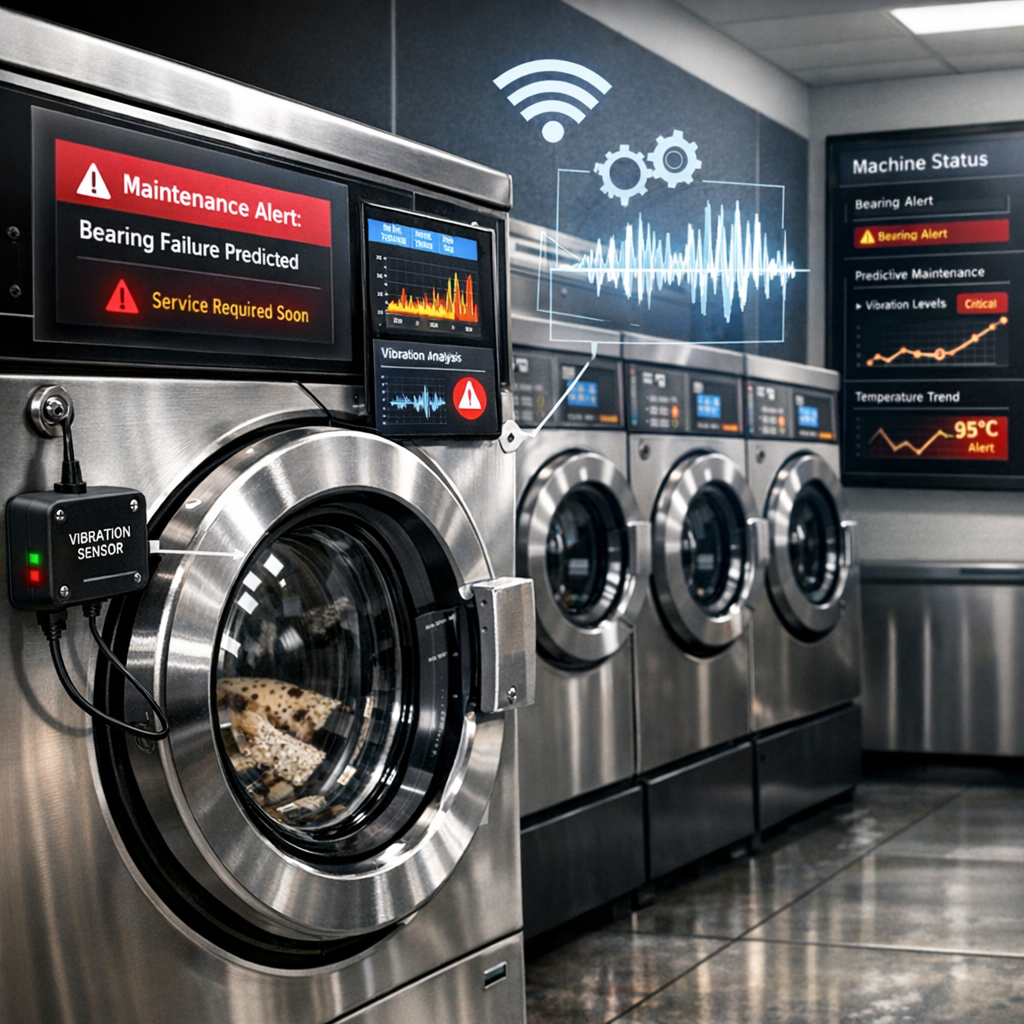
In today’s fast-paced world, where time is money and efficiency is key, it’s crucial to maintain the smooth operation of machines in various industries. One such industry that relies heavily on efficient machinery is the laundromat business. However, detecting bearing failures early has been a challenge due to the harsh operating conditions and hard-to-reach locations within washing machines. This article explores how Internet of Things (IoT) technology can help solve this problem by deploying vibration sensors on washer shafts to detect the early harmonic signatures of bearing wear before a total machine seizure.
The Importance of Predictive Maintenance in Laundromats
Predictive maintenance has become an increasingly popular method of reducing downtime and extending the lifespan of machinery in various industries, including laundromats. By utilizing vibration sensors, such as accelerometer sensors mounted on washer shafts, it is possible to detect early signs of bearing wear before a complete machine failure occurs.
In traditional reactive maintenance approaches, equipment malfunctions lead to costly repairs or replacements. However, with predictive maintenance, data from IoT devices like vibration sensors can be analyzed to identify potential failures and schedule preventative maintenance accordingly. This allows laundromat owners to save money on unexpected repair costs while also prolonging the life of their machines.
One key advantage of using accelerometer sensors for predictive maintenance in laundromats is their ability to detect early harmonic signatures of bearing wear. These signatures, which may not be audible or visually noticeable, can indicate a gradual decline in bearing performance. By monitoring these signals continuously, it becomes possible to predict when a machine’s bearings will fail and schedule repairs before any severe damage occurs.
Moreover, deploying IoT devices like vibration sensors is cost-effective compared to the potential consequences of neglecting maintenance. In some cases, a single bearing failure can result in thousands of dollars worth of damages or lost revenue due to machine downtime. Implementing predictive maintenance through accelerometer sensors can help laundromat owners avoid these costly scenarios.
In conclusion, deploying vibration sensors in laundromats for predictive maintenance is crucial for ensuring the longevity and efficiency of washing machines. By detecting early signs of bearing wear, laundromat owners can save money on repair costs while also minimizing machine downtime and maximizing revenue. The adoption of IoT devices like accelerometer sensors will continue to gain traction as a cost-effective solution for maintaining laundromat equipment in optimal condition.
How Vibration Sensors Work
How Vibration Sensors Work
Vibration sensors, also known as accelerometer sensors, work by detecting changes in vibration patterns. They are installed on critical components such as washer shafts to monitor the health of bearings and other moving parts. These sensors convert mechanical energy into electrical energy, producing a voltage signal proportional to the intensity and frequency of the vibrations.
When there’s an issue with a bearing or another component, it will produce specific harmonic signatures in the vibration pattern. By analyzing these patterns through advanced algorithms and machine learning techniques, it becomes possible to predict when a bearing is about to fail and take proactive measures to prevent costly downtime.
- Accelerometers can detect early signs of bearing wear before a total machine seizure occurs.
- The data collected by these sensors can be used to calculate the Remaining Useful Life (RUL) of bearings, allowing for better maintenance planning and cost savings.
- Vibration analysis is an effective predictive maintenance tool that can help laundromats avoid unexpected downtime and reduce repair costs.
Deploying IoT Accelerometer Sensors in Laundromats
Deploying IoT Accelerometer Sensors in Laundromats
The deployment of IoT accelerometer sensors in laundromats can help predict bearing failures and prevent costly downtime for washing machines. These sensors, also known as vibration sensors, are attached to the washer shafts and constantly monitor the machine’s vibrations.
- By continuously measuring these vibrations, the sensors can detect the early harmonic signatures of bearing wear before a total machine seizure occurs.
- The data collected by the sensors is transmitted in real-time through the internet to a cloud-based platform where it is analyzed using machine learning algorithms.
- Based on this analysis, maintenance teams are alerted when a washing machine’s bearings show signs of wear, allowing them to perform preventative maintenance before a failure occurs.
This early detection system not only reduces the likelihood of expensive and time-consuming repairs but also ensures that laundromats remain operational, providing customers with uninterrupted service.
Analyzing Sensor Data to Detect Bearing Wear
Analyzing Sensor Data to Detect Bearing Wear
The accelerometer sensors installed on the washer shafts collect real-time vibration data, which is then transmitted to a cloud-based platform via IoT. The analyzed sensor data can reveal early harmonic signatures of bearing wear, allowing for predictive maintenance and preventing unexpected machine failures.
- Accelerometer sensors detect changes in velocity caused by vibrations.
- Data from these sensors is transmitted through IoT platforms, enabling remote monitoring and analysis.
- Advanced algorithms analyze the vibration data to identify specific harmonic signatures associated with bearing wear.
- Predictive maintenance can be performed based on the detected bearing wear, reducing machine downtime and repair costs.
Conclusion and Future Applications
Conclusion
The successful deployment of vibration sensors in laundromat machinery has proven to be a valuable tool in predicting bearing failures and preventing costly machine seizures. By monitoring the harmonic signatures of bearing wear through IoT technology, maintenance teams can effectively reduce downtime and increase overall efficiency.
- By implementing this solution, businesses operating laundromats can save on repair costs and extend the lifespan of their machinery.
- This innovation not only benefits commercial establishments but also contributes to environmental sustainability by reducing energy consumption during machine breakdowns.
In conclusion, the deployment of vibration sensors in laundromat machines is a promising application of IoT technology. We urge businesses to consider adopting this solution to enhance their operational efficiency and contribute to a greener future.
Leave a Reply