Table of Contents
Introduction
Underwriting Your Laundromat Sale: Preparing a Profit and Loss Statement for Buyers
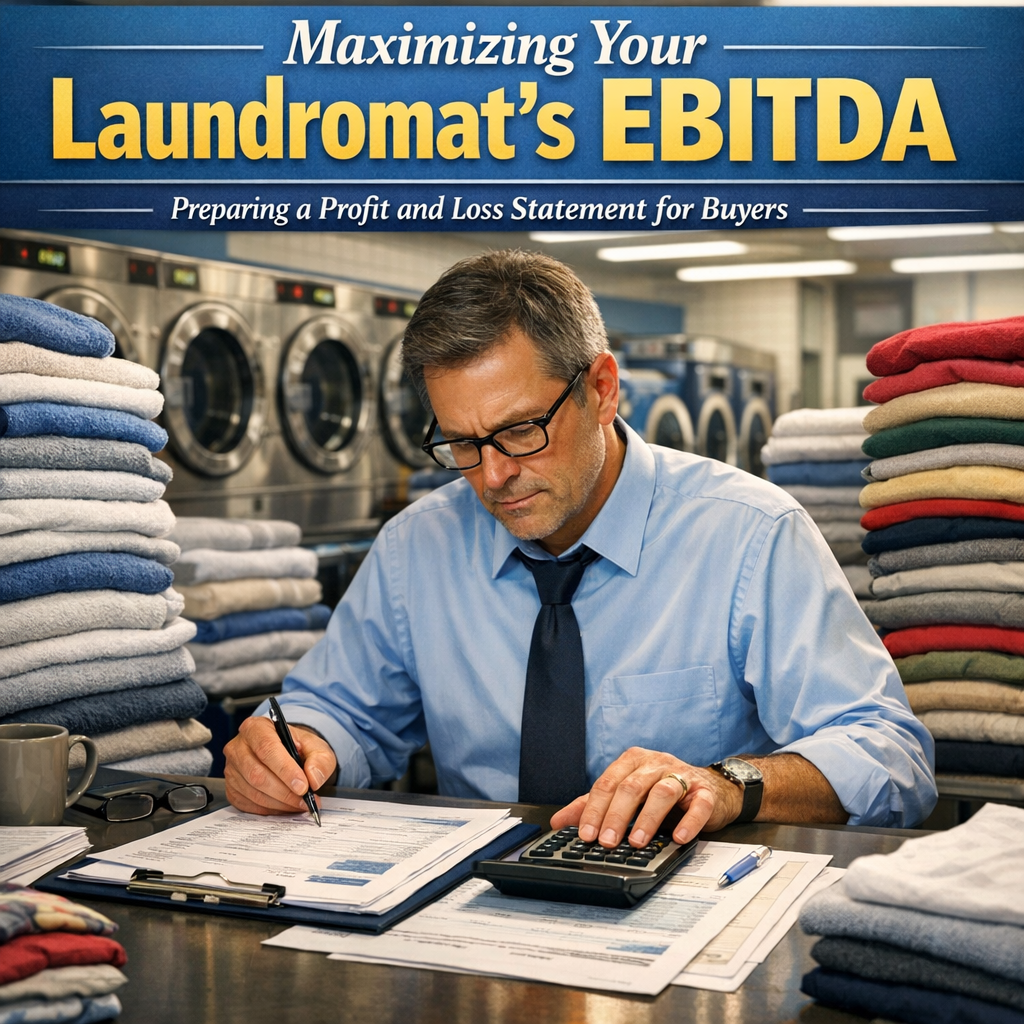
Selling your laundromat can be an exciting yet daunting process, especially when it comes to presenting the financial health of your business to potential investors. One crucial document that will help you showcase the profitability and growth potential of your laundromat is the profit and loss (P&L) statement. In this article, we’ll guide you through preparing a compelling P&L statement for buyers, focusing on ‘add-backs’ and other strategies to maximize your earnings before interest, taxes, depreciation, and amortization (EBITDA).
Understanding EBITDA’s Importance in Laundromat Sales
Understanding EBITDA’s Importance in Laundromat Sales
EBITDA, or Earnings Before Interest, Taxes, Depreciation, and Amortization, is a crucial metric for understanding the financial health of a laundromat business. It provides potential investors with an insight into the operating income generated by the facility, allowing them to assess its profitability.
Preparing a well-structured profit and loss statement (P&L) that maximizes the EBITDA can significantly boost your laundromat’s value in the eyes of prospective buyers. To create this document, it is essential to understand how ‘add-backs’ work and which expenses should be considered when calculating EBITDA.
- Defining Add-Backs:
- Calculating EBITDA:
- Key Expenses to Consider:
- Utilities: Water, electricity, and gas costs associated with operating the laundromat
- Supplies: Detergents, washing machine maintenance, and other necessary supplies used in the laundry process
- Rent: The cost of leasing or owning the property where your laundromat operates
- Employee salaries: Wages paid to employees working at the facility
- Gross Revenues: Start by calculating your laundromat’s total earnings from washing, drying, and other services. This includes all income generated by coin-operated machines or payment transactions.
- Cost of Goods Sold (COGS): Next, determine the direct costs associated with providing laundry services. These may include:
- Detergent costs
- Electricity and water expenses
- Maintenance and repair fees
- Operating Expenses: In addition to COGS, consider other operating costs that contribute to your laundromat’s daily operations. These might include:
- Rent or mortgage payments for the facility
- Insurance premiums
- Taxes and licenses
- Employee wages and salaries
- Marketing and advertising expenses
- Earnings Before Interest, Taxes, Depreciation, and Amortization (EBITDA): Finally, subtract your COGS and operating expenses from gross revenues to calculate your laundromat’s EBITDA. This figure represents the maximum possible earnings before accounting for interest payments, taxes, depreciation, or amortization.
- Common add-backs for laundromats include:
- Interest expense: If your business carries a significant amount of debt, including interest expenses in the calculation can provide a more accurate representation of your company’s cash flow and profitability.
- Taxes: While taxes are already included in EBITDA calculations, they may not reflect the actual tax rate your business is subject to. Including your specific tax rate as an add-back can help potential investors better understand your company’s effective tax rate and overall profitability.
- Depreciation and amortization: These non-cash expenses represent the cost of using assets over their useful life. Adding them back to EBITDA can provide a more accurate picture of your business’s cash flow and ability to reinvest in the company.
- Owner’s salary
- Rent or lease payments
- Utilities (electricity, water, gas)
- Supplies and maintenance costs
- Marketing expenses
- Professional fees (legal and accounting services)
- Always consult a professional for accuracy and compliance
- A comprehensive P&L statement can make all the difference in securing favorable financing deals
- Preparation is key to demonstrating your business’s financial health and growth potential
Add-backs are non-cash expenses that a potential buyer may choose to add back into the P&L to improve the EBITDA. These could include expenses such as owner’s salary, rent, depreciation, and vehicle expenses.
To calculate the EBITDA for your laundromat, you must first determine your gross revenue. This is achieved by subtracting your cost of goods sold (COGS) from your total revenue. Next, you should add back any non-cash expenses or ‘add-backs’ to arrive at the final EBITDA figure.
Preparing a Profit and Loss Statement for Buyers
Preparing a Profit and Loss Statement for Buyers
To create a compelling profit and loss (P&L) statement for potential laundromat buyers, you must first understand the key components that contribute to your business’s financial performance.
To further enhance your P&L statement, you may choose to document ‘add-backs.’ These are non-cash expenses that can be added back to your EBITDA to provide a more accurate representation of your business’s cash flow. Examples include interest expense and income tax expense.
Documenting ‘Add-Backs’ to Enhance EBITDA
Documenting ‘Add-Backs’ to Enhance EBITDA
When selling a laundromat, it’s crucial to understand how add-backs can improve your business’s financial performance and increase its value to potential buyers. An add-back is an adjustment made to the historical financial statements of a company to reflect specific non-cash expenses that are not included in the standard EBITDA (Earnings Before Interest, Taxes, Depreciation, and Amortization) calculation.
Preparing and documenting these add-backs is essential when selling your laundromat, as it demonstrates to potential investors that you have taken the time to thoroughly review and enhance your business’s financial performance. By presenting a more accurate representation of your company’s profitability, you increase its value and make it more attractive to prospective buyers.
Presenting the Enhanced EBITDA to Prospective Investors
Presenting the Enhanced EBITDA to Prospective Investors
To effectively present an enhanced EBITDA (Earnings Before Interest, Taxes, Depreciation, and Amortization) to potential investors, it is crucial to understand how this financial metric can significantly impact the perceived value of your laundromat business. In simple terms, EBITDA measures a company’s operating profitability by ignoring interest payments, taxes, depreciation, and amortization. This allows buyers to assess your laundromat’s core performance without factoring in external financial obligations or long-term investments.
When preparing a profit and loss statement for buyers, it is essential to showcase your laundromat’s strengths by highlighting its EBITDA. To enhance this figure, consider the following add-backs:
By including these add-backs in your profit and loss statement, you can effectively present an enhanced EBITDA to prospective investors. This will help demonstrate the maximum possible profitability of your laundromat business and increase its perceived value during negotiations.
Conclusion
Conclusion:
A well-prepared profit and loss statement can make all the difference in securing a favorable deal for your laundromat sale. By incorporating ‘add-backs’ and scrubbing your books, you’ll be able to demonstrate the maximum possible EBITDA to potential investors. This not only helps you secure better financing but also makes it easier for buyers to understand your business’s financial health and growth potential. So, if you’re looking to sell your laundromat, make sure to prepare a comprehensive profit and loss statement that accurately reflects your business’s performance.
Don’t forget to consult with a professional accountant or financial advisor when preparing your documentation to ensure compliance with industry standards and legal requirements.
Leave a Reply