Table of Contents
Introduction
In recent years, lithium battery fires have become a significant concern in laundromats and lint traps across the globe. With the increasing popularity of electronic devices like smartphones and vaporizers, it’s essential to find innovative solutions to prevent these devastating fires from occurring.
Thermal Runaway Sensors: The Future of Laundromat Safety
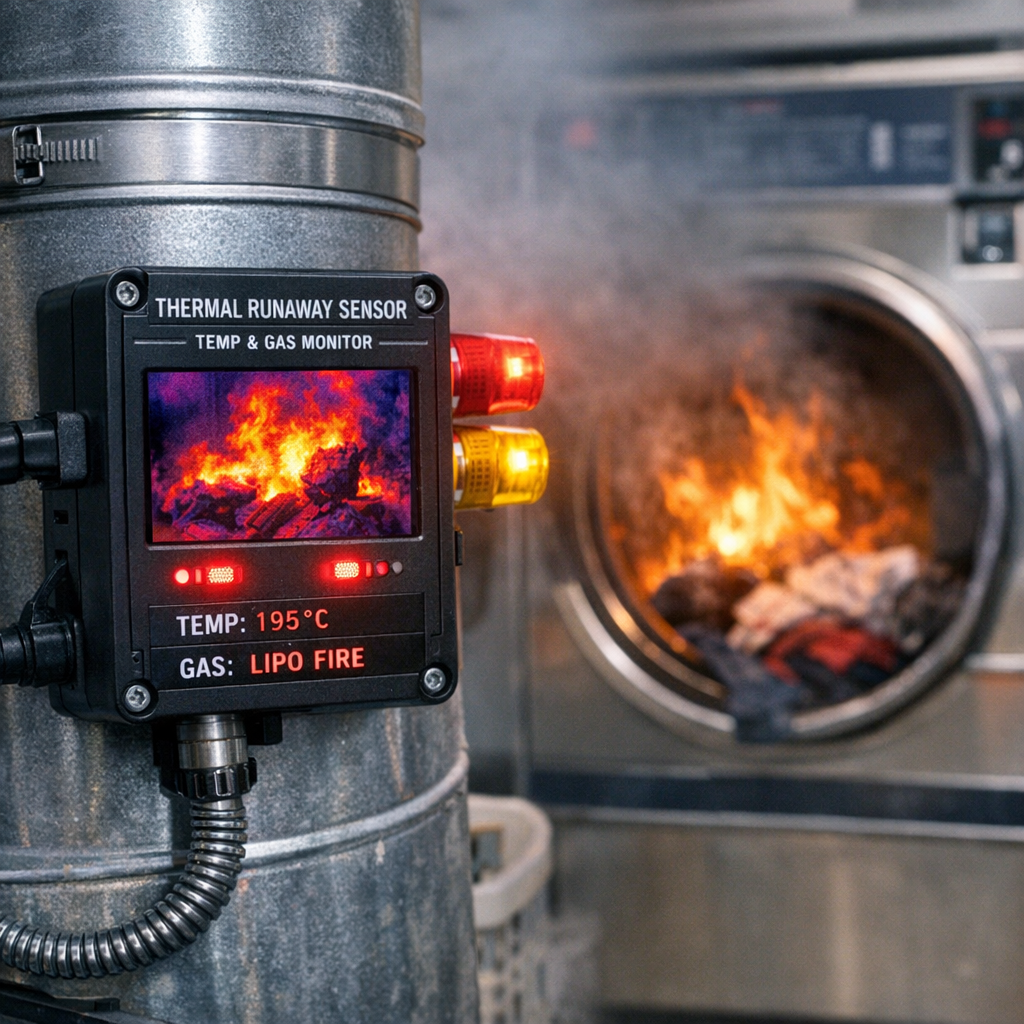
One promising solution is the installation of thermal runaway sensors in dryer ducts. These cutting-edge devices are designed to detect the unique heat signature emitted by a vape or phone battery fire before it starts, thereby allowing laundromat owners and operators to take immediate action and prevent catastrophic fires.
- The introduction of thermal runaway sensors can save lives, protect property, and minimize financial losses caused by lithium battery fires in laundromats and lint traps.
The Problem: Lithium Battery Fires in Laundromats
The Problem: Lithium Battery Fires in Laundromats
Lithium-ion batteries have become increasingly popular due to their high energy density and lightweight nature, making them ideal for powering mobile devices like smartphones and vape pens. However, these batteries can pose a significant fire risk when they’re exposed to extreme temperatures or overcharged. This problem becomes particularly acute in laundromats, where dryers are frequently used in close proximity to lithium-ion batteries stored in customers’ pockets or bags.
According to the U.S. Consumer Product Safety Commission (CPSC), there have been at least 136 reported incidents of laundromat fires between 2000 and 2017, with an estimated 291 victims and $21 million in property damage. In many cases, these fires were traced back to lithium-ion batteries overheating or catching fire inside dryers.
Such incidents have led to increased scrutiny of lithium-ion batteries and the potential hazards they pose, especially in public spaces like laundromats. As a result, researchers and engineers are exploring innovative solutions to mitigate this risk, such as installing thermal runaway sensors in dryer ducts that can detect the unique heat signature of a vape or phone battery fire before it starts.
Thermal Runaway Sensors: How They Work
Thermal runaway sensors are an innovative solution designed to prevent lithium battery fires in laundromats and other similar establishments. These sensors work by detecting the unique heat signature emitted during a vape or phone battery fire.
- The thermal runaway sensor consists of a temperature-sensitive element that is connected to an alarm system.
- When the temperature around the sensor rises above a certain threshold, typically due to a lithium-ion battery undergoing thermal runaway, the alarm sounds as a warning.
- This early detection allows for immediate intervention and prevents potential fires from starting or spreading.
How Thermal Runaway Sensors Benefit Laundromat Owners and Customers
The installation of thermal runaway sensors in dryer ducts offers several benefits to both laundromat owners and their customers:
- Enhanced safety: By detecting the heat signature of a potential fire, these sensors can alert staff and patrons about an impending hazard, reducing the risk of injury or property damage.
- Cost-effective prevention: The cost of installing thermal runaway sensors is significantly lower than the financial impact of a lithium battery fire-related incident.
- Promotion of responsible behavior: Thermal runaway sensors remind users to be more cautious when storing their devices in laundromats, encouraging safe practices that can prevent future incidents.
In conclusion, thermal runaway sensors are an effective and affordable solution for preventing lithium battery fires in laundromats. Their ability to detect the unique heat signature of a vape or phone battery fire before it starts can potentially save lives and protect property. By installing these sensors in dryer ducts, laundromat owners demonstrate their commitment to safety and responsible business practices.
Benefits of Installing Thermal Runaway Sensors
Benefits of Installing Thermal Runaway Sensors
- Predictive Fire Detection: By monitoring temperature changes in dryer ducts, thermal runaway sensors can detect the unique heat signature emitted by a lithium battery fire before it starts.
- Quick Response Time: Once a sensor detects abnormal heat levels, an alarm is triggered immediately, alerting staff to take action and potentially preventing a full-scale fire incident.
- Cost-Effective Solution: Installing thermal runaway sensors in laundromats with lint traps is a cost-effective solution compared to the damages caused by lithium battery fires or the expense of retrofitting existing structures with fire-suppressing systems.
- Safety Enhancement: These sensors enhance safety for both staff and patrons, reducing the risk of injury and loss due to lithium battery fires in laundromats.
Installation Process and Cost Analysis
Installation Process and Cost Analysis
The installation process for thermal runaway sensors in laundromat lint traps involves the following steps:
- Identifying the most vulnerable areas of the laundromat, such as high-traffic pathways or shared spaces.
- Installing the sensors in strategic locations along dryer ducts and near potentially hazardous materials (e.g., detergent pods).
- Ensuring proper sensor placement for optimal heat signature detection and minimizing false alarms.
- Integrating the sensors into the existing laundromat infrastructure, including power supply and data transmission systems.
The cost of installing thermal runaway sensors in a typical laundromat ranges from $5,000 to $10,000, depending on factors such as sensor type, installation complexity, and maintenance requirements. While this initial investment may seem steep, the potential savings from preventing lithium battery fires far outweigh the costs. In addition to financial benefits, implementing these sensors also enhances overall safety and reduces liability risks for laundromat owners.
Conclusion
In conclusion, implementing thermal runaway sensors in laundromat dryer ducts can significantly reduce the risk of lithium battery fires caused by vapes or phone batteries. By detecting the unique heat signature of a potential fire, these sensors provide an early warning system that allows for prompt intervention and prevents catastrophic consequences.
- Investigate thermal runaway sensor options and determine which model best suits your laundromat’s needs;
- Train staff on the importance of monitoring dryer ducts for unusual heat signatures, and establish clear protocols for responding to potential battery fires;
- Regularly inspect dryer ducts for any signs of wear or damage that could compromise sensor functionality.
By taking these steps, laundromat owners can significantly enhance their facilities’ safety and protect patrons from the devastating effects of lithium battery fires. Don’t wait – take action today to safeguard your business and your customers.
Leave a Reply