Table of Contents
- Introduction: The Importance of Floor Friction Testing in Laundromats
- Understanding COF (Coefficient of Friction): Establishing Safety Standards for Slip-and-Fall Incidents
- The Tribometer: A Key Tool for Measuring Flooring Surface Roughness and Friction Levels
- Conducting Proper Floor Friction Testing: Step-by-Step Guide to Accurate Measurements
- Documenting Your Laundromat’s COF Compliance: Legal Considerations and Evidence Management Strategies
- Conclusion: Ensuring Laundromat Safety through Regular Floor Friction Testing
Introduction: The Importance of Floor Friction Testing in Laundromats
The Crucial Role of Floor Friction Testing in Ensuring Laundromat Safety
- Discover how proper floor friction testing can protect your laundromat customers and help you win lawsuits.
- Understand the importance of meeting COF (Coefficient of Friction) safety standards in preventing accidents at your facility.
- Learn how using a tribometer can effectively document that your laundromat floors meet the necessary safety requirements.
Laundromats have long been an essential part of our daily lives, providing a convenient and time-saving solution for cleaning our clothes. However, with this increased reliance on these facilities comes the potential for accidents, particularly slip-and-fall incidents. As a result, it is crucial to ensure that laundromat floors meet safety standards, which can be achieved through proper floor friction testing.
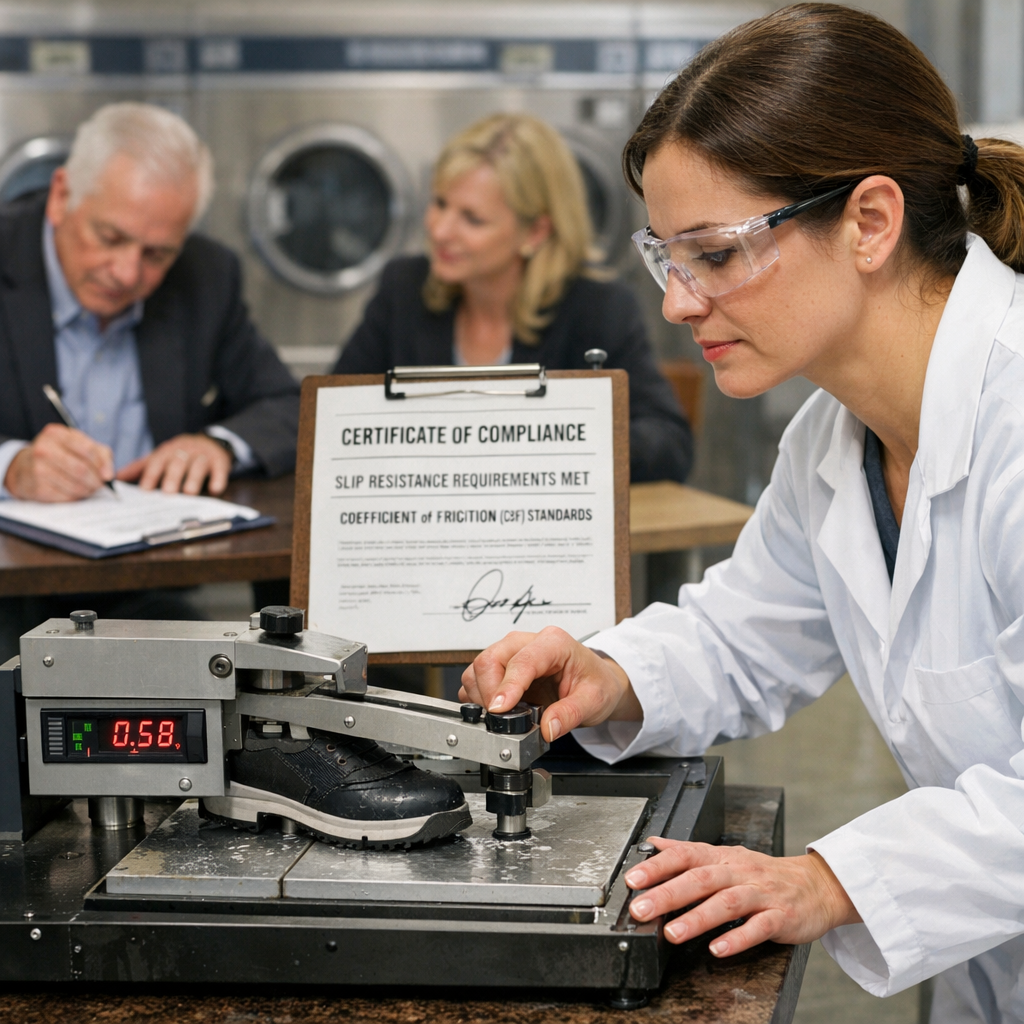
Meeting the recommended COF (Coefficient of Friction) safety standards is essential in preventing accidents at your facility. By using a tribometer to measure the friction between your laundromat floor and common footwear, you can effectively document that your floors meet these necessary requirements. This documentation can prove invaluable in the event of a lawsuit, demonstrating that you have taken the appropriate steps to maintain a safe environment for your customers.
Understanding COF (Coefficient of Friction): Establishing Safety Standards for Slip-and-Fall Incidents
Understanding COF (Coefficient of Friction): Establishing Safety Standards for Slip-and-Fall Incidents
The Coefficient of Friction (COF) is a critical factor in determining the safety of flooring surfaces, particularly in high-risk environments like laundromats. It represents the ratio of frictional force to the normal force acting on two surfaces in contact. A higher COF value indicates a greater resistance to slip-and-fall incidents.
According to the American National Standards Institute (ANSI), the minimum COF required for safe floor surfaces is 0.24. This standard applies to both wet and dry conditions. Meeting or exceeding this threshold can significantly reduce the likelihood of slip-and-fall accidents, protecting both customers and employees from potential injuries.
- COF values are influenced by several factors, including the type of flooring material, surface texture, humidity, and temperature.
- To ensure compliance with safety standards, laundromat owners should conduct regular floor friction tests using a tribometer – an instrument specifically designed to measure COF. This device provides accurate, reliable data that can be used in legal proceedings or to make informed decisions about flooring upgrades or maintenance needs.
The Tribometer: A Key Tool for Measuring Flooring Surface Roughness and Friction Levels
The tribometer, an essential piece of equipment for laundromat owners and operators, is a key tool in measuring flooring surface roughness and friction levels. This indispensable device helps ensure that your business meets the COF (Coefficient of Friction) safety standards, crucial for preventing slip-and-fall accidents and protecting your establishment from costly lawsuits.
By using a tribometer, laundromat owners can accurately measure their floors’ friction levels and document compliance with industry safety guidelines. These measurements are vital in demonstrating that the laundromat’s flooring is safe for patrons and employees alike. A properly calibrated tribometer provides reliable data on surface roughness and friction levels, allowing operators to identify potential hazards before they become significant issues.
The tribometer is easy to use: place it on a clean, dry section of the floor, ensuring that there are no obstructions or debris in the testing area. Once activated, the device measures the force required to move it across the surface and provides an accurate reading of the COF. This value represents the frictional resistance between the flooring material and the tribometer’s rubber shoe.
To maintain compliance with safety standards, laundromat owners should conduct regular tribometer tests on their floors. This ensures that any changes in surface roughness or friction levels are promptly identified and addressed. In addition to preventing potential slip-and-fall accidents, maintaining safe COF levels can help protect your business from costly litigation.
In conclusion, investing in a tribometer is an essential step for laundromat owners seeking to safeguard their premises against slip-and-fall accidents and associated legal risks. By regularly monitoring flooring surface roughness and friction levels with this invaluable tool, operators can maintain safe environments for patrons and employees alike while demonstrating compliance with industry safety standards.
Conducting Proper Floor Friction Testing: Step-by-Step Guide to Accurate Measurements
Conducting Proper Floor Friction Testing: Step-By-Step Guide to Accurate Measurements
To ensure your laundromat floors meet COF safety standards and protect your business from potential lawsuits, it is crucial to conduct proper floor friction testing. Here’s a step-by-step guide on how to achieve accurate measurements using a tribometer:
- Prepare the tribometer: Before beginning any tests, ensure that your tribometer is calibrated correctly and in good working condition.
- Select a representative sample area: Choose an area of the floor that represents the typical surface conditions found throughout your laundromat. This will provide a more accurate assessment of overall safety.
- Perform multiple tests: To account for natural variations in flooring materials and surface conditions, conduct at least five measurements from different areas within the selected sample area.
- Record measurements accurately: Document each test result, including the date, location, and corresponding COF value. This data will be vital in defending your laundromat against potential legal action.
- Analyze results and implement necessary changes: After collecting all data, compare your measurements to established safety standards. If any areas fall short of these benchmarks, consider implementing improvements such as flooring modifications or increased cleaning efforts to enhance overall safety.
Documenting Your Laundromat’s COF Compliance: Legal Considerations and Evidence Management Strategies
Legal considerations and evidence management strategies play a crucial role in demonstrating your laundromat’s compliance with COF (Coefficient of Friction) safety standards.
- Failing to maintain adequate floor friction can lead to slip-and-fall accidents, resulting in costly lawsuits and potential liability claims. Properly documenting your laundromat’s COF compliance can help protect your business from such legal action.
- It is essential to conduct regular floor friction tests using a tribometer, an instrument designed to measure the coefficient of friction between two surfaces. This will provide valuable data on the slip resistance of your laundromat floors and ensure they meet safety standards.
- In addition to conducting tests, it is vital to maintain accurate records and documentation of your COF measurements. This evidence can be used in court to demonstrate that your laundromat has taken appropriate measures to maintain a safe environment for its patrons.
- Furthermore, maintaining proper cleaning and maintenance procedures can also contribute to increased floor friction and reduced slip-and-fall risks. Regularly inspecting floors for signs of wear or damage, addressing these issues promptly, and ensuring that wet floors are immediately marked with warning signs can further enhance safety measures.
In conclusion, by implementing proper COF testing procedures and maintaining comprehensive documentation, your laundromat can effectively demonstrate compliance with safety standards, reducing the risk of legal action and protecting your business from costly lawsuits.
Conclusion: Ensuring Laundromat Safety through Regular Floor Friction Testing
Conclusion: Ensuring Laundromat Safety through Regular Floor Friction Testing
In conclusion, proper floor friction testing is crucial for maintaining a safe laundromat environment and mitigating the risk of slip-and-fall accidents. By using a tribometer to document your laundromat’s COF levels, you can demonstrate compliance with safety standards and protect your business from potential lawsuits.
- Regularly test floors for coefficient of friction (COF) to ensure they meet safety standards.
- Invest in a tribometer to accurately measure floor friction and maintain documentation.
- Educate employees on the importance of clean and dry floors to reduce slip-and-fall risks.
We encourage laundromat owners and managers to prioritize floor friction testing as part of their regular maintenance routines. By doing so, you can provide a safe environment for your customers and protect your business from potential legal liabilities.
Leave a Reply