Table of Contents
- Introduction: The Problem with Excessive Detergent Use in Laundromats
- Understanding Centrifugal Pumps and Their Role in Laundromat Drainage Systems
- The Science of Air-Binding: How Over-Sudsing Can Damage Pump Performance
- Long-Term Consequences of Damaged Laundromat Drain Pumps
- Mitigating the Risks of Excessive Detergent Use in Laundromats
- Conclusion: Balancing Effective Cleaning with Properly Maintained Laundromat Equipment
Introduction: The Problem with Excessive Detergent Use in Laundromats
The Science of ‘Suds-Lock’: How Excessive Detergent Damages Laundromat Drain Pumps
Have you ever noticed a sticky residue left on clothes after a cycle at the laundromat? This phenomenon, known as ‘suds-lock,’ is more than just an annoying inconvenience. In this article, we dive deep into the science behind excessive detergent use in laundromats and how it’s causing damage to centrifugal pumps.
It all starts with the humble detergent. Designed to break down and remove dirt and grime from clothes, its chemical makeup is a complex cocktail of surfactants, enzymes, and other additives. But what happens when we use too much?
- The Suds-Lock Phenomenon: When excessive amounts of detergent are used in a washing machine, the resulting foam can accumulate in the centrifugal pump.
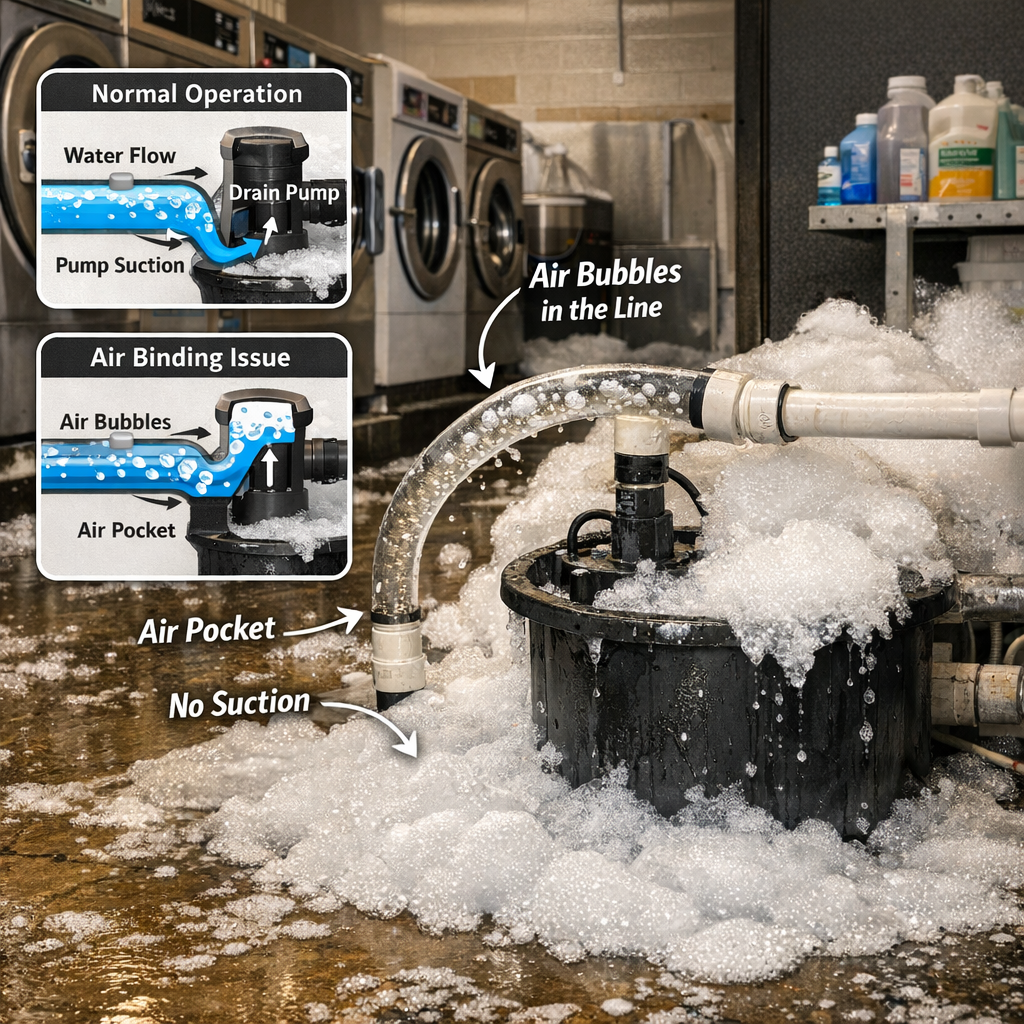
As laundry spins round and round in high-speed laundromat washers, this frothy mix of water and detergent is forced into the pump. The air bubbles within the suds act as a binding agent, creating a dense and viscous substance that can gum up the works. This ‘suds-lock’ prevents the pump from effectively removing excess water from clothes, leading to slow drying times and potentially damaging the machine itself.
Understanding Centrifugal Pumps and Their Role in Laundromat Drainage Systems
Understanding Centrifugal Pumps and Their Role in Laundromat Drainage Systems
Centrifugal pumps play a critical role in laundromat drainage systems, efficiently removing water from washing machines after the spin cycle is complete.
- The basic principle of operation for these pumps involves the conversion of rotational motion into linear velocity, which then creates a pressure differential that forces water out of the pump and through the drain lines.
- When used in laundromats, centrifugal pumps must be capable of handling large volumes of water quickly to keep up with the high-speed wash cycles commonly found in commercial settings.
In order for these pumps to function optimally, it is essential to maintain an appropriate balance of detergent in the washing machine. Excessive use of detergent can lead to ‘suds-lock’, a phenomenon where air-binding within centrifugal pumps prevents them from effectively removing water from the laundromat’s drain lines.
- Suds-lock occurs when excessive foam created by over-sudsing clogs the impeller of the pump, reducing its ability to transfer linear velocity into rotational motion, ultimately causing a decrease in pressure differential and a failure to remove water from the system.
The Science of Air-Binding: How Over-Sudsing Can Damage Pump Performance
The Science of Air-Binding: How Over-Sudsing Can Damage Pump Performance
In laundromats, high-speed washers are commonly used to clean clothes quickly and efficiently. However, excessive detergent usage can lead to a phenomenon known as ‘suds-lock,’ which affects the performance of the centrifugal drain pumps.
- Suds-lock occurs when an excessive amount of detergent foam accumulates in the washer drum during the wash cycle.
- This foam is composed primarily of air and water, with tiny soap micelles trapping dirt and debris within their structure.
- When the washer drains, the centrifugal pump rapidly spins the water and foam mixture, causing a significant increase in air content due to the reduced density of the foam compared to pure water.
- This increased air content results in an effect called air-binding, where the air becomes trapped within the pump impeller, reducing its efficiency and potentially damaging the pump over time.
To prevent suds-lock and subsequent damage to laundromat drain pumps, it is essential to maintain proper detergent usage and ensure that wash cycles are balanced effectively. This can be achieved by regularly inspecting and maintaining the washing equipment, monitoring soap concentrations, and providing clear guidelines for customers on detergent use.
Understanding the science behind suds-lock and air-binding helps laundromat owners and operators take appropriate measures to protect their investment in centrifugal pump technology while ensuring optimal cleaning performance for their customers.
Long-Term Consequences of Damaged Laundromat Drain Pumps
Long-Term Consequences of Damaged Laundromat Drain Pumps
The long-term consequences of damaged laundromat drain pumps can be significant and wide-reaching, impacting not only the individual machine but also the entire laundry facility.
- Reduced Efficiency: A pump suffering from ‘suds-lock’ will operate less efficiently, leading to increased energy consumption and longer wash cycles. This can result in a decline in overall productivity for the laundromat, potentially affecting its revenue and customer satisfaction.
- Mechanical Damage: As the drain pump continues to function with excessive detergent residue clogging its components, it may suffer irreversible mechanical damage. This could lead to costly repairs or even replacement of the pump, putting a strain on the laundromat’s budget and operations.
- Environmental Concerns: Excessive detergent runoff from laundromats can contribute to local water pollution. When drain pumps are unable to effectively remove this residue, it can accumulate in nearby waterways, posing risks to aquatic ecosystems and potentially violating environmental regulations.
- Health and Safety Risks: In extreme cases, if a drain pump fails completely due to excessive detergent buildup, it could cause flooding or other hazardous conditions within the laundromat. This may present risks to employees, customers, and equipment.
Mitigating the Risks of Excessive Detergent Use in Laundromats
Mitigating the Risks of Excessive Detergent Use in Laundromats
To minimize the risks associated with excessive detergent use, laundromat owners and users should follow these best practices:
- Read and adhere to the manufacturer’s recommended detergent dosage for each washing machine.
- Use a liquid detergent instead of a powder when possible, as it is less likely to cause clogs in the pump system.
- For heavily soiled clothes, opt for a longer wash cycle rather than increasing the amount of detergent used.
- Periodically inspect and clean the laundromat’s drain pump to detect any signs of air-binding or debris accumulation.
Conclusion: Balancing Effective Cleaning with Properly Maintained Laundromat Equipment
Conclusion: Balancing Effective Cleaning with Properly Maintained Laundromat Equipment
In light of the science behind excessive detergent causing ‘suds-lock’ and damaging laundromat drain pumps, it is crucial for both operators and manufacturers to balance effective cleaning with properly maintained equipment. To prevent costly repairs or replacements due to air-binding in centrifugal pumps, consider implementing these best practices:
- Regularly inspect and clean laundromat washers and drain systems.
- Adjust detergent dosages according to manufacturer recommendations and local water conditions.
- Educate customers on the proper use of washing machines, including correct detergent usage.
By taking these steps, you can ensure a cleaner laundry experience for all while protecting your investment in high-speed laundromat washers and minimizing unexpected equipment issues.
Leave a Reply