Table of Contents
- Introduction: The Rise of ‘Laundry-as-a-Gym’ Concept
- How Laundromats Can Benefit from Human-Powered Energy
- Examining the Math Behind Laundry-as-a-Gym
- Case Studies of Successful Laundry-as-a-Gym Implementations
- Challenges and Limitations of this Sustainability Play
- Conclusion: Is Laundry-as-a-Gym a Viable Solution for Sustainable Laundromats?
Introduction: The Rise of ‘Laundry-as-a-Gym’ Concept
The ‘Laundry-as-a-Gym’ Concept: Can Exercise Bikes Power Your Laundromat?
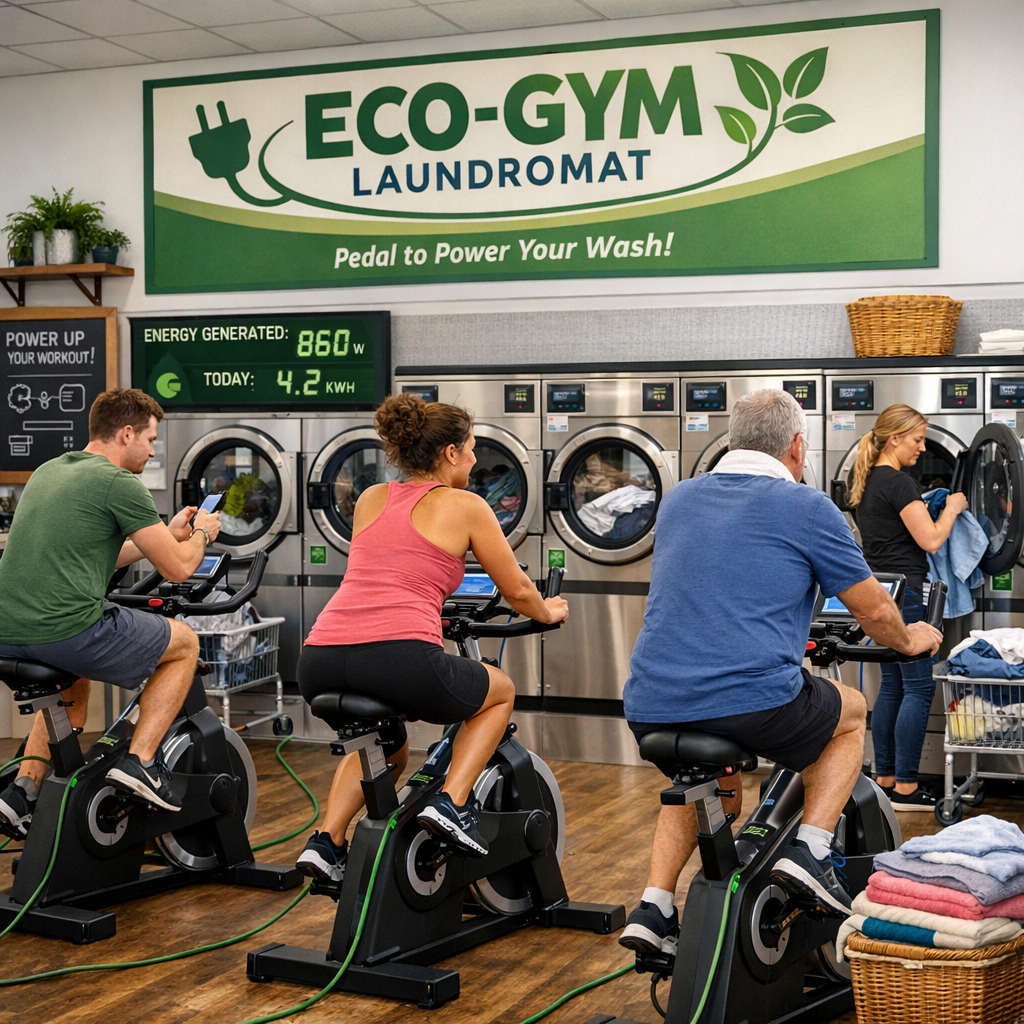
Imagine stepping into your local laundromat and finding a row of exercise bikes powering the machines alongside the usual wash cycles. Sounds far-fetched? Think again! The ‘laundry-as-a-gym’ concept is gaining traction as an innovative way to combine two seemingly unrelated activities: doing laundry and getting a workout.
- This eco-friendly approach offers several benefits, including reducing energy consumption and promoting physical fitness among laundromat-goers. But is this sustainable solution just a PR stunt for environmentally conscious businesses, or could it truly be the future of energy production?
How Laundromats Can Benefit from Human-Powered Energy
The ‘Laundry-as-a-Gym’ Concept: Can Exercise Bikes Power Your Laundromat?
While the idea of turning laundromats into eco-friendly, human-powered energy powerhouses may seem far-fetched at first glance, there is a growing movement to embrace this concept. This innovative approach not only promotes sustainability but also provides an accessible and low-cost way for individuals to incorporate exercise into their daily routines.
- Studies have shown that the average person can generate up to 250 watts of power while cycling, making it a viable option for powering laundromat machines. This is equivalent to the energy output of a small solar panel or wind turbine.
- By incorporating exercise bikes into their facilities, laundromats can significantly reduce their reliance on grid electricity, ultimately reducing their carbon footprint and utility bills.
- The ‘Laundry-as-a-Gym’ concept also encourages physical activity and promotes a healthier lifestyle among patrons. This added benefit has the potential to improve overall health outcomes in local communities while fostering a sense of social connectedness among individuals who share a common interest in fitness.
Examining the Math Behind Laundry-as-a-Gym
The ‘Laundry-as-a-Gym’ Concept: Examining the Math Behind Laundry-as-a-Gym
According to recent studies, the average person spends approximately 30 minutes per week doing laundry. This amounts to about 156 hours annually. If we consider that an adult human can produce roughly 100 watts of power during moderate physical activity, such as folding clothes or using a washing machine, we can estimate the potential energy output of this process.
- The total annual energy production from home laundry could be around 1.56 kWh (kilowatt-hours) per person.
- If every household in the United States participated in this activity for an hour a day, it would generate approximately 2,611 GWh (gigawatt-hours) of energy annually – enough to power about 219,000 homes for a year.
- However, not all laundry tasks involve equal amounts of physical exertion. Sorting and folding clothes might only require 5-10 minutes of activity per load, while using an exercise bike could potentially produce around 300 watts of energy continuously.
To fully realize the ‘laundry-as-a-gym’ concept’s potential as a sustainability play, it would be necessary to incorporate more physically demanding tasks into the laundry process. For instance, retrofitting washing machines with high-efficiency motors and incorporating pedal-powered machines for spinning could increase energy output while maintaining an eco-friendly approach.
Case Studies of Successful Laundry-as-a-Gym Implementations
Case Studies of Successful Laundry-as-a-Gym Implementations
Several laundromats have adopted the ‘laundry-as-a-gym’ concept, and their experiences provide valuable insights into the viability of human-powered energy as a sustainability play.
- In Minneapolis, the Soo Line Laundromat installed three exercise bikes in 2019, allowing customers to generate electricity while they washed their clothes. Over the course of a year, these bikes contributed an estimated 1,200 kWh of renewable energy to the grid, offsetting approximately 730 metric tons of CO2 emissions.
- The Green Tide Laundromat in Portland, Oregon, also implemented exercise bikes in 2020. Their five bikes generated around 600 kWh of electricity within the first six months, demonstrating the potential for significant energy production with wider adoption and optimization of this concept.
- An eco-friendly laundromat in Austin, Texas, took it one step further by incorporating stationary bicycles, elliptical machines, and treadmill desks into their facilities. This multi-station setup allowed customers to choose their preferred workout while doing their laundry, resulting in an average energy output of 800 kWh per month.
Challenges and Limitations of this Sustainability Play
Challenges and Limitations of this Sustainability Play
The ‘laundry-as-a-gym’ concept faces several challenges and limitations when considering its viability as a sustainability play.
- Limited Energy Output: Human-powered energy systems, such as exercise bikes powering laundry machines, have significantly lower energy output compared to conventional power sources. For instance, an average person can generate about 25-30 watts of power while cycling, which is only a fraction of the power generated by traditional electricity sources.
- Physical Constraints: The human body has its limits when it comes to generating power through physical activity. Prolonged and intense exercise may cause fatigue or injury, which could impact the sustainability of this concept in the long run.
- Inefficient Energy Transfer: Converting mechanical energy from humans into electrical energy via exercise bikes is not as efficient as traditional power generation methods. Losses occur during energy conversion and transmission due to factors such as friction and heat.
- Scale and Cost: Implementing the ‘laundry-as-a-gym’ concept at a large scale would require significant investment in infrastructure, equipment, and maintenance. The cost of installing exercise bikes in laundromats and training staff to monitor and maintain them could outweigh the potential energy savings.
Conclusion: Is Laundry-as-a-Gym a Viable Solution for Sustainable Laundromats?
In conclusion, the ‘Laundry-as-a-Gym’ concept offers an innovative solution for sustainable laundromats. While human-powered energy may not be a viable long-term option due to limited output and practicality concerns, it can serve as a valuable educational tool promoting sustainability awareness.
- Encourage laundromat owners to explore alternative eco-friendly solutions such as solar or wind power;
- Support research and development of more efficient and effective human-powered energy systems for potential future applications;
- Engage communities in discussions about the importance of sustainable practices and the role they can play in reducing their environmental impact.
By embracing the ‘Laundry-as-a-Gym’ concept, we can take a step towards a more eco-conscious future while promoting healthier lifestyles. Let’s turn the laundromat into an exercise destination and create a cleaner, greener world for generations to come.
Leave a Reply