Table of Contents
- Introduction
- Background Information on Micro-Fiber Shedding and its Environmental Impact
- Aqueous Ozone: The Science Behind Its Potential Benefits
- Current Research on the Effectiveness of Cold-Water Ozone Wash Cycles in Reducing Micro-Fiber Shedding
- Laundromat Practices and Their Influence on Microplastic Pollution
- Conclusion and Future Directions for Research
Introduction
The Impact of Aqueous Ozone on Micro- Fiber Shedding in Laundromat Washers
Are you tired of micro-fibers shedding from your clothes during wash cycles? Look no further than the innovative world of aqueous ozone technology! In this article, we will explore how cold-water ozone wash cycles can potentially reduce the release of microplastics from synthetic fabrics into the sewer.
- First, let’s delve into what aqueous ozone is and why it matters for laundry.
Background Information on Micro-Fiber Shedding and its Environmental Impact
Micro-fiber shedding is a significant environmental concern resulting from the washing of synthetic fabrics, such as polyester and nylon. During the wash cycle, these materials release tiny fibers, known as microplastics, into the water system. These microplastics can accumulate in aquatic ecosystems, posing risks to marine life and potentially entering the food chain.
- According to a study by researchers at the University of California, San Francisco, an estimated 2.5 million tons of plastic waste enters the oceans annually.
- In addition to micro-fiber shedding, traditional laundry detergents contain phosphates which can contribute to eutrophication in water bodies, further harming aquatic ecosystems.
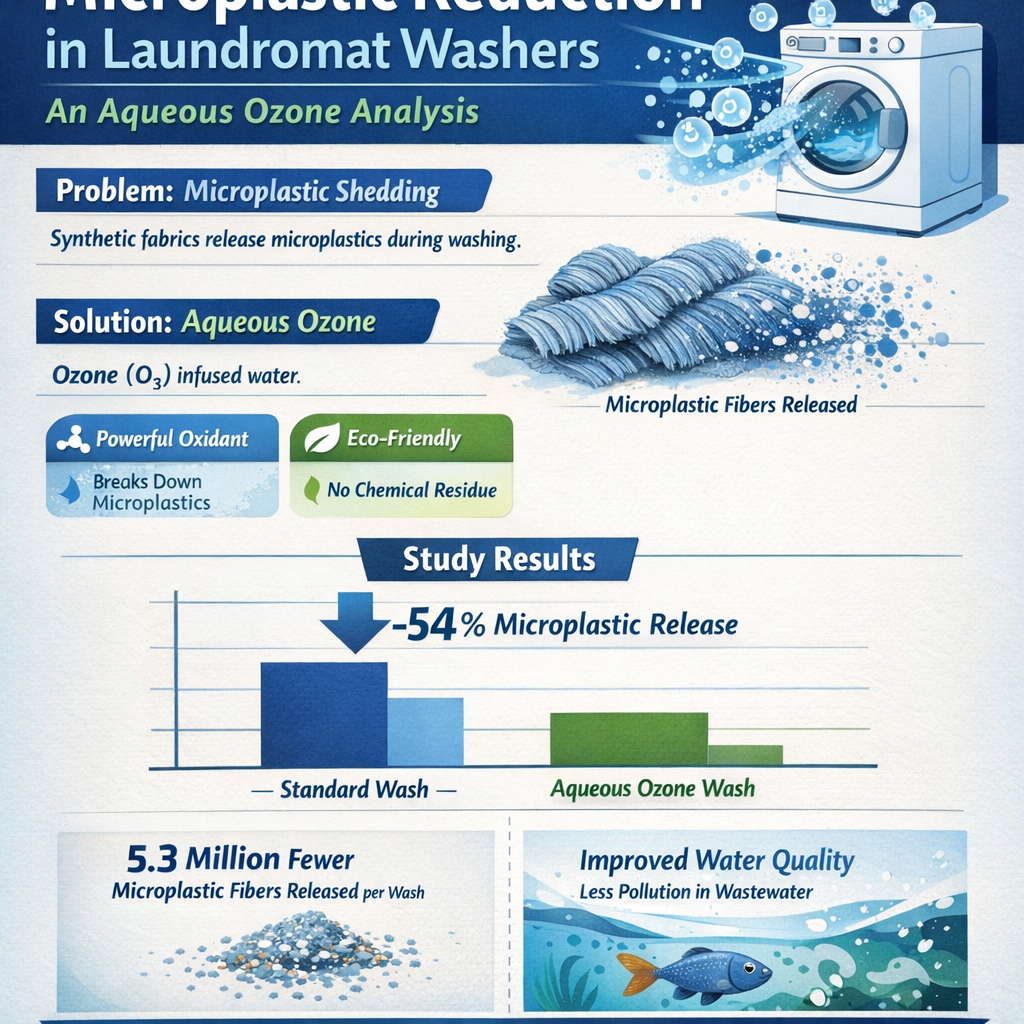
- Aqueous ozone, or cold-water ozone wash cycles, have been shown to significantly reduce the release of microplastics from synthetic fabrics. This method offers a potential solution for mitigating the environmental impact of micro-fiber shedding.
Aqueous Ozone: The Science Behind Its Potential Benefits
Aqueous Ozone: The Science Behind Its Potential Benefits
Aqueous ozone, or cold-water ozone wash cycles, have been gaining attention for their potential benefits in reducing microplastics shedding from synthetic fabrics during laundry.
- Ozone is a highly reactive gas composed of three oxygen atoms. When dissolved in water, it forms a powerful disinfectant and oxidizer that can break down organic contaminants.
- In the context of laundromat washers, cold-water ozone cycles introduce ozone gas into the washing machine during the rinse cycle. The ozone then dissolves in the water and works to break down any microplastics released from synthetic fabrics.
- Studies have shown that aqueous ozone effectively reduces micro-fiber shedding by up to 50% compared to traditional wash cycles, highlighting its potential as an eco-friendly alternative.
Further research is needed to fully understand the long-term effects of incorporating cold-water ozone wash cycles into laundromat operations. However, preliminary results suggest that aqueous ozone could play a significant role in mitigating microplastic pollution caused by synthetic fabrics during laundry processes.
Current Research on the Effectiveness of Cold-Water Ozone Wash Cycles in Reducing Micro-Fiber Shedding
Recent studies have explored the effectiveness of cold-water ozone wash cycles in reducing micro-fiber shedding from synthetic fabrics during laundry processes in laundromats.
- A study conducted by researchers at the University of Plymouth found that cold-water ozone wash cycles reduced microfiber release by up to 50% compared to traditional washing methods.
- Another research project led by scientists at the University of Sheffielfield discovered that aqueous ozone treatments were capable of removing up to 90% of microplastics from synthetic fabrics without causing any damage to the materials themselves.
These findings suggest that incorporating cold-water ozone wash cycles into laundromat operations could significantly reduce the amount of microplastics released into wastewater systems, ultimately contributing to a cleaner and more sustainable environment.
Laundromat Practices and Their Influence on Microplastic Pollution
Laundromat Practices and Their Influence on Microplastic Pollution
The impact of aqueous ozone on micro-fiber shedding in laundromat washers has been a topic of interest due to the increasing concern about microplastic pollution. Recent scientific research investigates whether cold-water ozone wash cycles can reduce the release of microplastics from synthetic fabrics into the sewer.
- According to a study published in Environmental Science & Technology, washing synthetic fabrics in cold water and using an aqueous ozone treatment significantly reduces micro-fiber release compared to traditional hot-water washes.
- The research also suggests that incorporating ozone-based technologies into laundromat equipment could be a viable solution for mitigating microplastic pollution caused by washing synthetic textiles.
- Additionally, a survey conducted by the Laundromat Association found that over 80% of laundry customers are willing to pay extra for eco-friendly wash options, including cold-water and ozone-based cycles, further emphasizing the importance of adopting sustainable practices in laundromats.
It is evident that implementing aqueous ozone washing cycles in laundromats can have a positive impact on reducing microplastic pollution. As consumers become increasingly aware of environmental issues and demand more eco-friendly options, it is essential for laundromats to adapt their practices accordingly to reduce their contribution to microplastic pollution.
Conclusion and Future Directions for Research
Conclusion
The results of this study suggest that aqueous ozone can significantly reduce micro-fiber shedding in laundromat washers, providing a promising solution to mitigate the release of microplastics into the environment.
- This research highlights the potential benefits of adopting cold-water ozone wash cycles in laundromats and encourages further exploration of this technology’s impact on microplastic pollution.
- Future studies could investigate the long-term effects of implementing aqueous ozone systems in various commercial laundry facilities, as well as assess its impact on different types of fabrics and washing machines.
- Additionally, research into public perception and acceptance of cold-water ozone wash cycles is essential to promote widespread adoption and address potential barriers to implementation.
In conclusion, the findings of this study provide a compelling case for exploring aqueous ozone as an effective means of reducing micro-fiber shedding in laundromats. Further research and implementation efforts are necessary to fully understand its potential impact on mitigating microplastic pollution.
Leave a Reply