Table of Contents
Introduction
The laundromat has long been a staple of American life, providing a convenient and essential service to millions of households in need of clean clothes. However, this seemingly innocuous establishment can sometimes harbor hidden dangers that could lead to customer injuries – particularly if the laundry carts used within them are not properly designed or maintained.
- In this article, we will delve into the world of laundry cart ergonomics and explore how a thorough understanding of their design can help prevent accidents, reduce liability, and ultimately create a safer environment for your customers. We’ll examine the wheel-base and height of commercial laundry carts to better understand how they contribute to tip-overs and foot injuries that could result in costly lawsuits.
Laundromats are essential businesses, providing critical washing and drying services to people without access to their own laundry facilities. As such, it’s crucial for these establishments to maintain a safe environment for all patrons – especially when it comes to the tools they use on a daily basis. One of the most common pieces of equipment found in laundromats is the laundry cart, which customers use to transport heavy loads of laundry back and forth from their vehicles to the washing machines and dryers.
The Importance of Ergonomics in Laundromats
The importance of ergonomics in laundromats cannot be overstated, as it directly impacts the safety and satisfaction of customers using these facilities. In particular, the design of laundry carts plays a crucial role in preventing customer injuries.
- According to a study by the National Safety Council, there were over 36,000 laundry-related injuries treated in emergency rooms in the United States between 2014 and 2018.
- The majority of these injuries were attributed to tipping over laundry carts, which can result in foot injuries or even more severe accidents if someone is caught underneath the cart when it falls.
- Research has shown that taller carts with a wider wheel-base are less likely to tip over. A recommended minimum height for laundry carts is 43 inches and a wheel-base of at least 18 inches.
In addition to preventing injuries, improving the ergonomics of laundry carts can also lead to increased customer satisfaction and repeat business. Customers who have positive experiences at laundromats are more likely to recommend them to friends and family members, ultimately benefiting the establishment’s reputation and profitability.
Understanding Laundry Cart Design: Wheel-base and Height
Understanding Laundry Cart Design: Wheel-base and Height
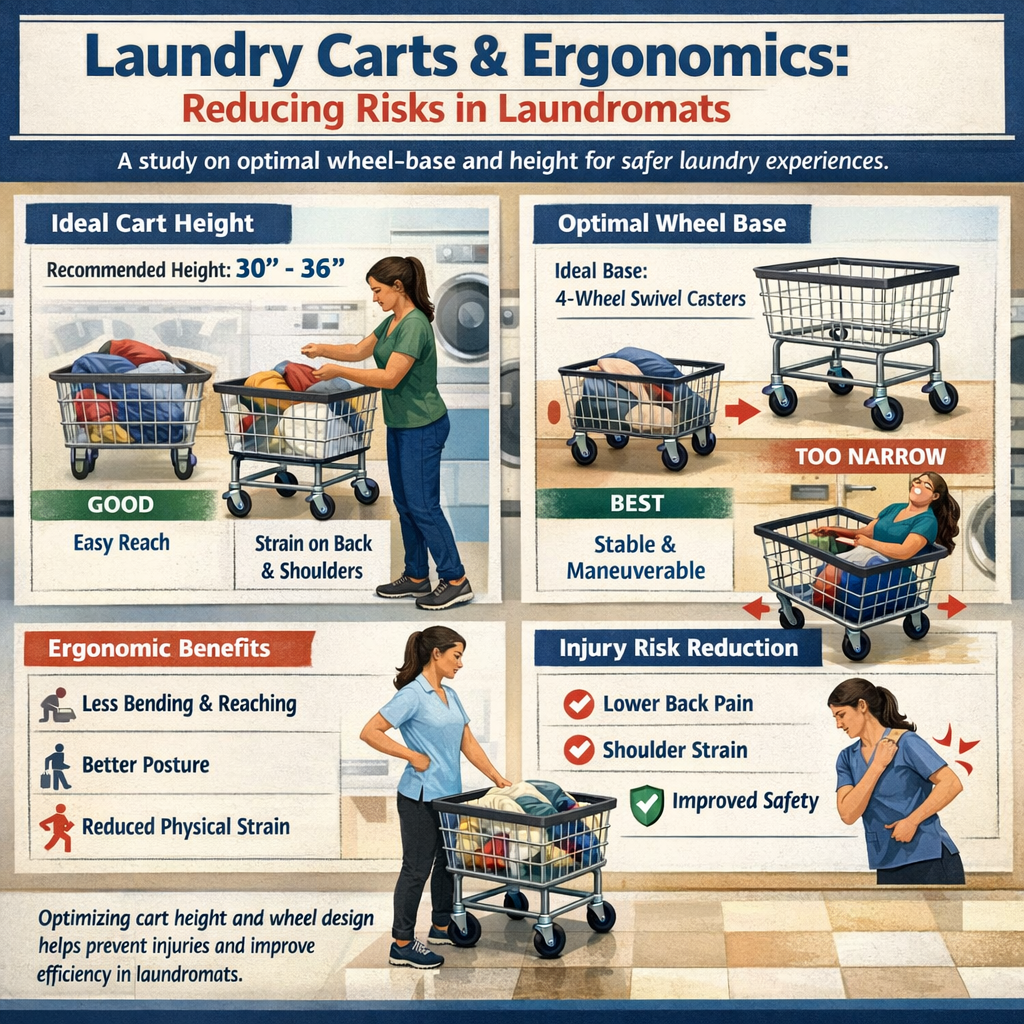
The wheel-base and height of a commercial laundry cart play crucial roles in determining its stability and safety for customers. A proper understanding of these factors can help laundromat owners reduce the risk of customer injuries, thus preventing potential lawsuits.
- Wheel-base: The distance between the center of the front pair of wheels and the center of the rear pair of wheels is known as the wheel-base. A longer wheel-base provides better stability to the cart, reducing the likelihood of it tipping over. According to industry standards, laundry carts should have a minimum wheel-base of 24 inches.
- Height: The height of a laundry cart can also contribute to its stability. Taller carts are more likely to tip over due to their increased center of gravity. Therefore, it is recommended that laundry carts have a maximum height of 42 inches to minimize the risk of customer injuries.
By ensuring that your laundromat’s commercial laundry carts meet these specifications, you can significantly reduce the chances of customers sustaining injuries from tip-overs or foot-related accidents. This not only improves overall customer satisfaction but also protects your business from potential legal issues and liability claims.
Common Injuries from Improperly Designed Laundry Carts
According to the U.S. Centers for Disease Control and Prevention (CDC), there were approximately 37,000 laundry-related injuries treated in emergency departments across America in 2019.
- Slip and falls: These account for about 60% of laundry-related injuries. Wet floors and slippery surfaces contribute to these accidents, often leading to fractures, sprains, or even head injuries.
- Cuts and lacerations: About 25% of laundry-related injuries are cuts from sharp edges on washing machines, dryers, and laundry carts. These can result in deep gashes requiring stitches or even amputation in severe cases.
- Burns and scalds: Around 10% of laundry-related injuries involve burns from hot water, steam, or heating elements on washing machines and dryers. Scalds from hot laundry detergents also contribute to this percentage.
Additionally, improper lifting techniques when using laundry carts can lead to lower back pain, which affects millions of people annually, causing discomfort and potential long-term disability if left untreated.
Reducing Customer Injuries with Proper Cart Design
Reducing Customer Injuries with Proper Cart Design
Laundromats are a common place for people to carry out their laundry tasks, and providing an efficient and safe experience is essential for the success of these businesses. One aspect that can significantly impact customer satisfaction and safety is the design of commercial laundry carts.
- The wheel-base should be wide enough: To ensure stability, the wheel-base of a laundry cart should ideally be at least 14 inches wide. This width helps distribute the weight evenly across the wheels, reducing the risk of tip-overs and providing better control for customers when maneuvering the carts.
- The height should be comfortable: Laundry carts with adjustable heights are ideal because they allow users to lift laundry baskets at a comfortable level, minimizing the risk of back injuries. Ideally, the height range should accommodate a wide variety of users, from short individuals to those who are taller than average.
- The cart should have a sturdy frame: A durable and robust frame is crucial for supporting the weight of laundry baskets and preventing accidents caused by carts breaking or collapsing. Stainless steel frames are highly recommended due to their strength and corrosion resistance.
Incorporating these design features into commercial laundry carts can significantly reduce the risk of customer injuries, leading to improved customer satisfaction and potentially mitigating legal liabilities associated with foot and back injuries.
Conclusion
Conclusion:
In light of the potential hazards associated with traditional laundry carts, it is crucial for laundromat owners and operators to consider upgrading their facilities with ergonomic carts that prioritize customer safety. By investing in carts with a wider wheel-base and increased height, businesses can effectively reduce the risk of tip-overs and foot injuries, ultimately protecting customers and mitigating the risk of costly lawsuits.
- By implementing safer laundry carts, laundromats can establish a reputation for prioritizing customer well-being, which may attract more clients and foster positive word-of-mouth advertising.
- Additionally, businesses that prioritize ergonomics may be eligible for insurance discounts or other benefits, further reducing operating costs and increasing profitability.
In conclusion, upgrading to ergonomic laundry carts is a simple yet effective solution for laundromats seeking to enhance customer satisfaction while minimizing the potential for injury-related legal action. By taking this step, businesses can foster a safer environment for patrons, ultimately benefiting both customers and owners alike.
Leave a Reply