Table of Contents
- Introduction: The Problem of ‘Red Water’ Iron Stains in Laundromats
- Understanding Iron in New England’s Laundromat Water: Sources and Concerns
- Introducing Sequestering Agents: How They Work to Combat Iron Stains
- Choosing the Right Chelator for Your Laundromat: Evaluating Options and Making a Selection
- Implementing a Successful Iron Removal Strategy: Steps and Best Practices
- Conclusion: Tackling the ‘Red Water’ Iron Problem with Sequestering Agents
Introduction: The Problem of ‘Red Water’ Iron Stains in Laundromats
Introduction: The Problem of ‘Red Water’ Iron Stains in Laundromats
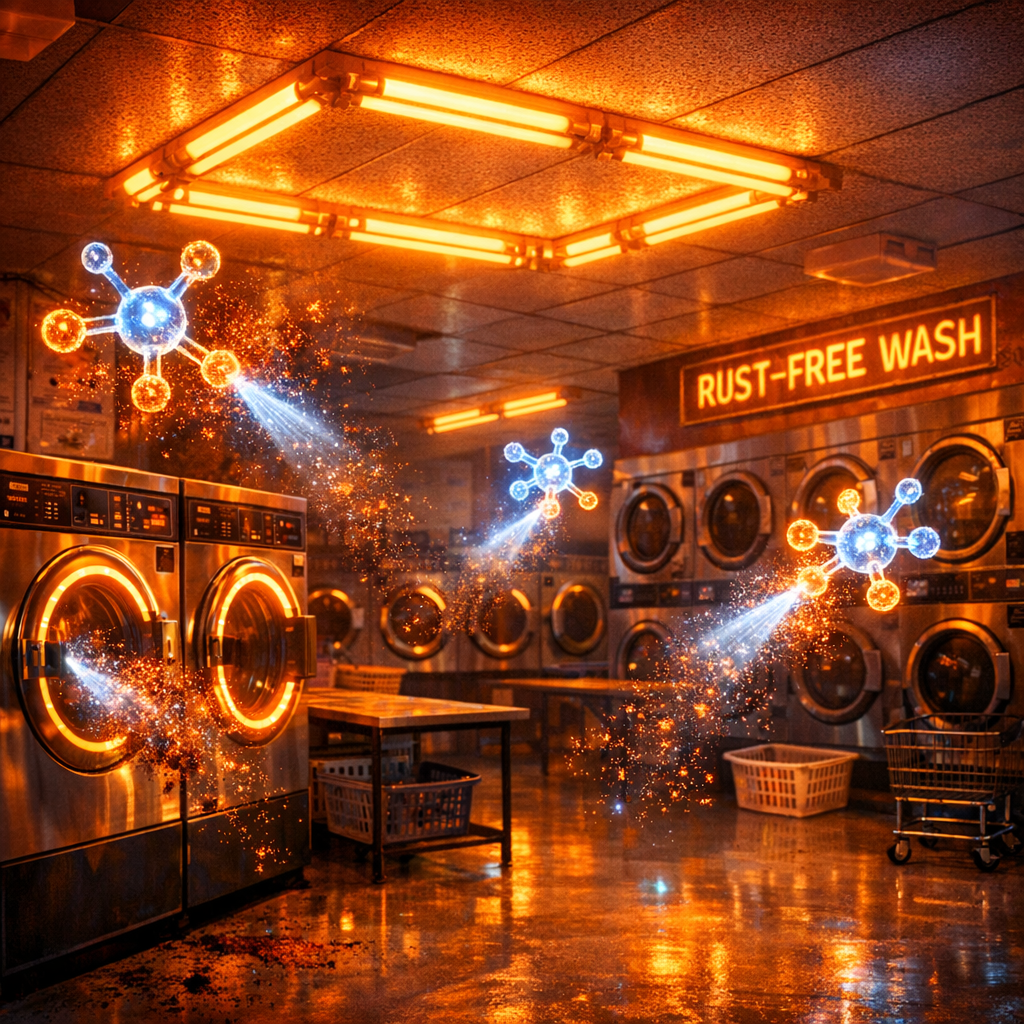
In New England laundromats, a persistent and unsightly issue plagues customers: red water or iron stains on their once-white clothes. This problem occurs due to the presence of dissolved iron in the water supply used by these businesses.
When laundry is washed with high levels of ferrous ions, these ions react with oxygen in the air and form rust particles that cling to clothing fibers. The result? A permanent rusty brown stain that even powerful detergents cannot remove.
- The severity of this issue varies by location: some areas have naturally low iron content in their water supply, while others struggle with high levels of dissolved iron.
Understanding Iron in New England’s Laundromat Water: Sources and Concerns
Iron in laundromat water is a prevalent issue affecting New England’s washing facilities, causing unsightly and damaging rust stains on white clothes. The primary sources of iron contamination are old plumbing systems and the natural presence of iron in groundwater. Iron levels can exceed acceptable limits during rainstorms or when the region experiences high humidity.
- Older homes and buildings may have outdated plumbing systems containing iron, which can leach into washing machines and contaminate the water supply.
- New England’s abundant granite bedrock contains high levels of iron, contributing to elevated iron concentrations in groundwater. In some areas, this natural source can lead to an increased risk of red water issues.
- Rainstorms and high humidity can exacerbate the problem by dissolving more iron from both plumbing systems and groundwater sources, increasing the likelihood of iron-contaminated laundry water.
Introducing Sequestering Agents: How They Work to Combat Iron Stains
Introducing Sequestering Agents: How They Work to Combat Iron Stains
Sequestering agents, also known as chelating agents or simply ‘chelators,’ are compounds that can bind with metal ions such as iron and prevent them from reacting with other substances. In the context of laundry problems, these chemical chelators play a crucial role in neutralizing the damaging effects of ferrous (Fe2+) and ferric (Fe3+) ions found in ‘red water’ or hard water sources.
- Chelating agents work by forming stable, soluble complexes with metal ions, effectively ‘grabbing’ the iron particles before they can cause staining or corrosion on laundry surfaces. This process is known as ‘chelation.’
- The most common chelator used in laundry applications is ethylenediaminetetraacetic acid (EDTA), which has a high affinity for metal ions and forms strong, stable complexes with them.
- When added to the wash cycle, sequestering agents bind with iron present in the water, preventing it from oxidizing or reacting with other minerals that could lead to rust formation on clothing. This ensures cleaner laundry, even in areas with high levels of iron contamination.
Choosing the Right Chelator for Your Laundromat: Evaluating Options and Making a Selection
Choosing the Right Chelator for Your Laundromat: Evaluating Options and Making a Selection
In this section, we will explore various chelators available on the market and how to select the best one for your New England laundromat.
- Firstly, consider the water hardness in your area. Chelators are most effective when used in areas with hard water, which is common in many parts of New England. If you’re unsure about local water hardness levels, consult with a water treatment expert or your local utility company.
- Next, evaluate the concentration of iron in the water supply. Higher concentrations may require stronger chelators to effectively bind and remove the iron.
- Research the different types of chelators available. Some common ones include ethylenediaminetetraacetic acid (EDTA), ethylenediamine-N,N-diacetic acid (EDDA), and diethylene triamine pentaacetic acid (DTPA). Each has its own unique properties, so it’s essential to understand the differences before making a decision.
- Consider any potential environmental impact of the chelator you choose. While many chelators are effective at removing iron from water, some may have negative consequences for aquatic life if they enter waterways. Choose a chelator that has minimal environmental impact if this is a concern for your business.
- Finally, consult with other laundromat owners in the area who have experience using chelators to treat their water supply. They can offer valuable insight into which products work best and provide advice on how to integrate them into your existing cleaning process.
Implementing a Successful Iron Removal Strategy: Steps and Best Practices
Implementing a Successful Iron Removal Strategy: Steps and Best Practices
To effectively combat the ‘red water’ issue in New England laundromats, it is crucial to implement a comprehensive iron removal strategy that involves the use of chemical chelators. Here are some key steps and best practices to consider:
- Choose the right chelator: Select a suitable chelating agent based on the water’s pH level and hardness. Commonly used chelators include EDTA, CDTA, and citric acid.
- Adjust the pH: Ensure that the water’s pH is within the optimal range for chelator performance (typically between 6.5 and 8.5).
- Mix the chelator: Dissolve the chosen chelator in a small amount of water before adding it to the washing machine’s rinse cycle.
- Monitor water hardness: Regularly test the water hardness levels to ensure that the desired iron removal is achieved and adjust the chelator dosage if necessary.
- Perform regular maintenance: Inspect and maintain your laundromat’s washing machines and plumbing systems regularly to prevent iron buildup in the first place.
Conclusion: Tackling the ‘Red Water’ Iron Problem with Sequestering Agents
Conclusion
The ‘red water’ iron problem has long plagued New England laundromats, leaving loads with a permanent rusty brown hue. However, the use of sequestering agents, or chemical chelators, provides a viable solution to this persistent issue.
- By binding with metal ions such as iron, these agents prevent them from reacting with laundry detergent and staining your whites.
- Various sequestering agents are available on the market, including EDTA, citric acid, and oxalic acid. Each has its unique properties and benefits, so it is essential to choose the right one for your laundromat’s specific needs.
We urge New England laundromat owners to consider implementing sequestering agents into their laundry process to tackle the ‘red water’ iron problem effectively. Not only will this preserve the vibrant whites of your patrons’ loads, but it also demonstrates a commitment to maintaining high-quality standards in your establishment.
Leave a Reply