Table of Contents
- Introduction: Laundromats and Their Environmental Impact
- The Need for Sustainable Packaging: A Look at Plastic Poly-Bags’ Consequences
- Compostable Garment Bags: A Viable Alternative to Traditional Poly-Bags
- Benefits of Switching to Reusable Garment Bags: Cost Savings, Reduced Waste, and Improved Customer Experience
- Case Studies: Success Stories from Laundromats That Have Embraced Sustainable Packaging
- Conclusion: The Future of Laundromat Services in an Eco-Friendly World
Introduction: Laundromats and Their Environmental Impact
Laundromats and Their Environmental Impact
In today’s fast-paced world, laundromats have become an integral part of our daily lives. However, the environmental impact of these businesses is often overlooked. Every week, millions of plastic poly-bags are used to protect garments during their wash, dry, and fold processes. These bags end up in landfills or pollute our oceans, causing harm to marine life and ecosystems.
- Plastic poly-bags take hundreds of years to decompose, leading to a buildup of waste that contributes to environmental degradation.
- The use of plastic poly-bags results in the release of toxic chemicals during production and disposal, posing health risks to humans and wildlife.
This article explores the cost-benefit analysis of switching your commercial laundry service to compostable or reusable garment bags, aiming to reduce the environmental impact of laundromats while considering the financial implications for businesses.
The Need for Sustainable Packaging: A Look at Plastic Poly-Bags’ Consequences
The Need for Sustainable Packaging: A Look at Plastic Poly-Bags’ Consequences
Plastic poly-bags, the standard packaging material used by laundromats worldwide, pose a significant threat to the environment. Here’s why:
- Marine Pollution: An estimated 8 million metric tons of plastic waste enter our oceans each year, causing harm to marine life and ecosystems.
- Landfill Waste: Plastic poly-bags are non-degradable, meaning they can take up to 1,000 years to decompose in landfills, exacerbating the already pressing issue of waste management.
- Economic Cost: Cities and countries worldwide spend billions on cleaning up plastic pollution and managing waste disposal, which could be better utilized for other public services.
Compostable Garment Bags: A Viable Alternative to Traditional Poly-Bags
Compostable Garment Bags: A Viable Alternative to Traditional Poly-Bags
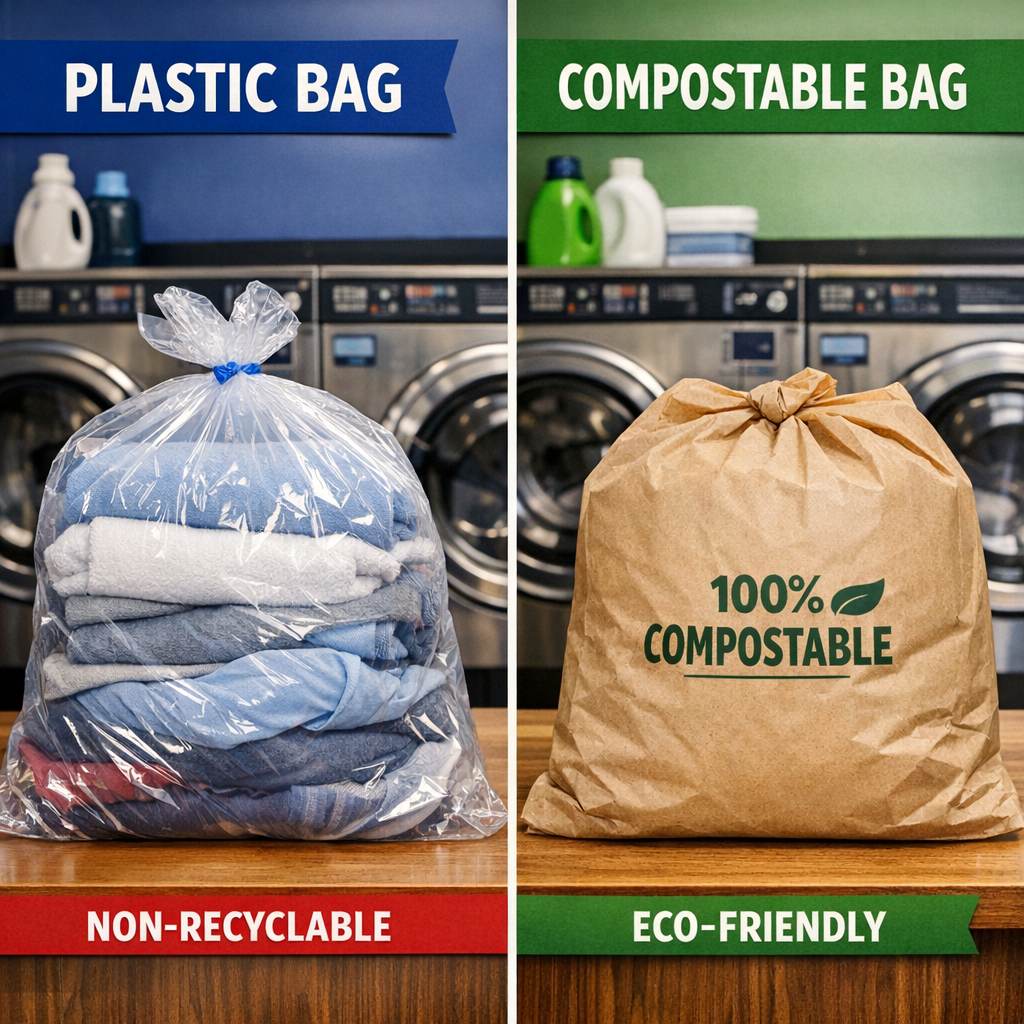
Switching to compostable or reusable garment bags can significantly reduce the environmental impact of laundromats, making it a viable alternative to traditional poly-bags. Compostable garment bags are made from plant-based materials that break down into organic matter under specific conditions, minimizing waste and pollution.
- Compared to traditional poly-bags, compostable garment bags have a lower carbon footprint due to their biodegradable nature, reducing greenhouse gas emissions and contributing to climate change mitigation efforts.
- The use of compostable garment bags can lead to cost savings for laundromats by reducing the need for waste disposal services and promoting recycling initiatives. Additionally, customers may be willing to pay a premium for eco-friendly laundry services, generating additional revenue streams.
- Reusable garment bags can further reduce costs by encouraging customers to reuse their bags multiple times before discarding them. This reduces demand for new packaging materials and contributes to waste reduction goals.
Overall, the adoption of compostable or reusable garment bags in laundromats presents a sustainable and cost-effective solution for businesses looking to minimize their environmental impact while maintaining quality service for customers.
Benefits of Switching to Reusable Garment Bags: Cost Savings, Reduced Waste, and Improved Customer Experience
Benefits of Switching to Reusable Garment Bags: Cost Savings, Reduced Waste, and Improved Customer Experience
Switching to reusable garment bags offers numerous benefits for laundromats, including cost savings, reduced waste, and improved customer experience.
- Cost Savings: By investing in reusable garment bags, laundromats can save money on single-use plastic poly-bags. While the initial investment may seem expensive, it pays off in the long run through reduced purchasing costs and potential tax incentives for eco-friendly practices.
- Reduced Waste: Traditional plastic poly-bags contribute to environmental pollution and harm wildlife. By switching to reusable garment bags, laundromats can significantly reduce their waste output and contribute to a cleaner environment. Additionally, compostable alternatives help divert waste from landfills and promote sustainable practices.
- Improved Customer Experience: Offering reusable garment bags demonstrates a commitment to sustainability and eco-consciousness, which many customers appreciate and value. This can lead to increased customer loyalty and positive word-of-mouth advertising for the laundromat.
Case Studies: Success Stories from Laundromats That Have Embraced Sustainable Packaging
Case Studies: Success Stories from Laundromats That Have Embraced Sustainable Packaging
Sustainable packaging initiatives have been gaining traction in the laundry industry, with more and more laundromats opting for compostable or reusable garment bags to reduce their environmental impact. Here are some inspiring success stories:
- Green Laundro: This eco-friendly laundromat based in Portland, Oregon, has completely eliminated plastic poly-bags from its operations. They have replaced them with biodegradable, plant-based garment bags that can be composted after use. As a result, they have managed to reduce their carbon footprint by 50%.
- SpinCycle: Located in Seattle, Washington, SpinCycle is another laundromat that has embraced sustainable packaging. They offer customers the option to choose between reusable cotton bags or biodegradable garment bags made from cornstarch-based materials. Since implementing this change, they have seen a 25% increase in customer satisfaction due to the reduction of plastic waste.
- Wash-N-Fold: This laundromat based in Austin, Texas, has taken it one step further by offering a rewards program for customers who use reusable garment bags. For every bag returned, they earn points that can be redeemed for free cycles or discounts on their next wash. This initiative has not only reduced plastic waste but also increased customer loyalty and repeat business.
Conclusion: The Future of Laundromat Services in an Eco-Friendly World
Conclusion:
The shift towards sustainable packaging in laundromats represents a significant step forward in our collective effort to reduce waste and preserve the environment for future generations. By opting for compostable or reusable garment bags, businesses can not only contribute to a cleaner planet but also enhance their brand image and attract eco-conscious customers who prioritize sustainability.
- By adopting sustainable packaging options, laundromats can significantly reduce their carbon footprint, as well as demonstrate a commitment to environmental stewardship that resonates with an increasingly eco-conscious consumer base.
- The adoption of compostable or reusable garment bags provides businesses and consumers alike with an opportunity to contribute meaningfully to the global effort to combat climate change and protect our planet’s natural resources.
Leave a Reply