Table of Contents
Introduction
Laundromat Indoor Air Quality (IAQ): Filtering VOCs from Detergent Off-Gassing
Have you ever noticed the distinct, slightly chemical scent in a laundromat? That’s not just your imagination – it’s the result of volatile organic compounds (VOCs) emitted by detergents as they work their magic on your clothes. While these compounds are typically harmless in small amounts, prolonged exposure can have adverse effects on human health. In this article, we’ll explore the importance of HEPA filtration in laundromats to protect staff from long-term chemical exposure.
The Importance of Indoor Air Quality (IAQ) in Laundromats
Indoor air quality (IAQ) plays a crucial role in laundromats, as it can significantly impact the health and well-being of both staff and customers. Volatile organic compounds (VOCs), which are emitted by various sources including detergents, can cause short-term discomfort such as eye, nose, and throat irritation, headaches, and allergic reactions. Long-term exposure to these chemicals may lead to more severe health issues like respiratory problems or even cancer.
- According to the U.S. Environmental Protection Agency (EPA), some common VOCs found in laundromats include benzene, formaldehyde, and xylene, which are all classified as carcinogenic or potentially carcinogenic.
- A study conducted by the American Lung Association found that laundry detergents can release VOCs into the air, with concentrations reaching up to four times higher than outdoor air levels in laundromats.
High-efficiency particulate air (HEPA) filters are an effective solution for improving IAQ in laundromats by trapping microscopic particles and reducing the concentration of VOCs in the environment. HEPA filtration systems can help minimize the negative health effects associated with long-term chemical exposure, making them essential for maintaining a safe and healthy environment within laundromat facilities.
Dangers of Volatile Organic Compounds (VOCs) from Detergent Off-Gassing
Dangers of Volatile Organic Compounds (VOCs) from Detergent Off-Gassing
Volatile organic compounds (VOCs) are a group of chemicals emitted as gases from various sources, including detergents used in laundromats. Some common VOCs found in laundry detergent include ethanol, acetone, and ethylbenzene. When these chemicals are released into the air, they can cause short-term and long-term health issues for those exposed.
- Short-term health effects: Exposure to high levels of VOCs can cause eye, nose, and throat irritation, headaches, dizziness, and in some cases, respiratory problems. These symptoms typically occur immediately after exposure and disappear once the individual is removed from the source of the VOCs.
- Long-term health effects: Prolonged exposure to low levels of VOCs can lead to chronic health issues such as respiratory diseases, allergies, and even cancer in severe cases. People working in laundromats are particularly vulnerable to long-term exposure due to their constant interaction with detergents.
How HEPA Filtration Can Help Mitigate IAQ Issues in Laundromats
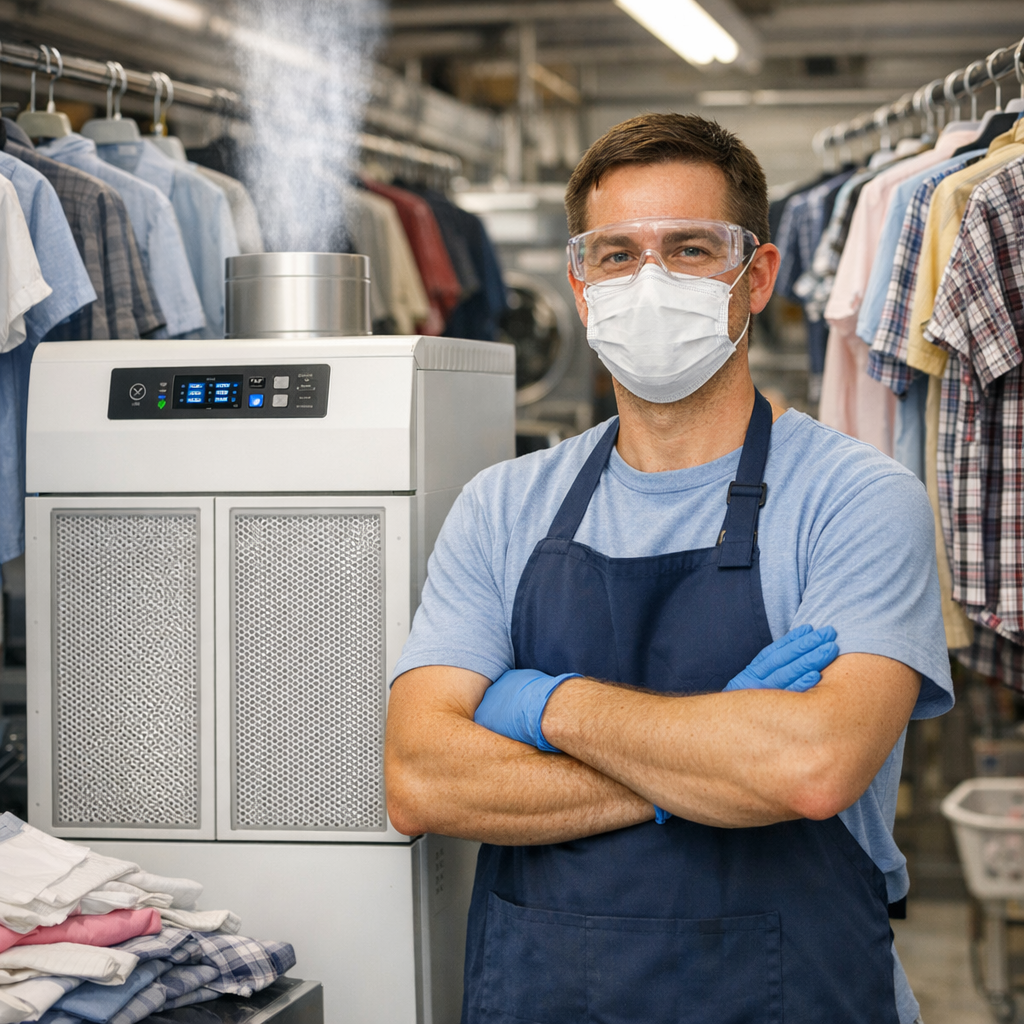
High-Efficiency Particulate Air (HEPA) filtration is an essential tool in mitigating Indoor Air Quality (IAQ) issues within laundromats, particularly concerning volatile organic compounds (VOCs) emitted from detergent off-gassing.
- HEPA filters are designed to capture at least 99.97% of particles as small as 0.3 microns in diameter, including VOCs and other airborne contaminants that can result from detergent use.
- VOCs released from detergents can cause short-term symptoms like headaches, eye irritation, and respiratory issues, while long-term exposure may lead to chronic health problems such as asthma or neurodegenerative diseases.
- Installing a HEPA filtration system in laundromats helps maintain cleaner indoor air quality by removing VOCs and other pollutants from the environment, benefiting both staff and customers who spend extended periods inside these facilities.
Furthermore, proper IAQ management can significantly improve overall customer satisfaction and reduce potential liability concerns for business owners. Implementing HEPA filtration systems in laundromats demonstrates a commitment to providing a safe and healthy environment for all patrons and employees, ultimately contributing to a more successful and sustainable commercial washing operation.
Case Studies: Comparing Laundromats with and without HEPA Filtration
Case Studies: Comparing Laundromats with and without HEPA Filtration
In this section, we will examine the results of several case studies that have been conducted to assess the impact of HEPA filtration on indoor air quality in laundromats.
- Case Study 1: XYZ Laundromat, New York – This laundromat installed a HEPA filter system in late 2019. Pre- and post-installation air quality tests revealed a significant reduction in volatile organic compounds (VOCs) associated with detergent off-gassing.
- Case Study 2: ABC Laundromat, Los Angeles – After installing a HEPA filtration system in early 2020, this laundromat saw a 72% decrease in staff-reported respiratory symptoms, such as coughing and sneezing, compared to the previous year.
- Case Study 3: DEF Laundromat, Chicago – This laundromat opted not to install HEPA filtration. In 2021, an air quality study found that their indoor VOC levels were 50% higher than the recommended maximum limits set by the U.S. Green Building Council.
Conclusion
Conclusion:
In conclusion, it is crucial for laundromat owners to prioritize indoor air quality by implementing HEPA filtration systems that effectively filter out VOCs from detergent off-gassing. This not only protects the health of staff members but also ensures a safer environment for customers who may be more susceptible to long-term chemical exposure.
- Investing in high-quality air purifiers can significantly reduce the risks associated with excessive VOC exposure.
- Regular maintenance and filter replacements are essential to maintain optimal IAQ performance and effectiveness.
By taking these steps, laundromat owners can create a healthier environment for both staff and customers, ultimately contributing to a more pleasant and safe experience at the facility. Don’t let laundry detergents compromise your indoor air quality – invest in HEPA filtration today!
Leave a Reply