Table of Contents
Introduction
Laundromat Geofencing: Using Mobile Ads to Target Renters in a 3-Mile Radius
Imagine walking into your apartment complex’s lobby and seeing a sign that says, “No in-unit laundry? No problem! Visit our partner laundromats within a 3-mile radius for all your washing needs.” Now imagine taking it one step further by serving mobile ads to residents who don’t have in-unit laundry facilities. That’s where laundromat geofencing comes in.
Geofencing is the practice of setting up virtual boundaries around a physical location using GPS, Wi-Fi signals, or cellular data. In this case, we’re looking at targeting renters within a 3-mile radius of apartment complexes that lack in-unit laundry facilities with ads promoting nearby laundromats. This innovative approach can help businesses and residents alike.
- For laundromat owners, it provides an opportunity to reach potential customers more effectively than traditional marketing methods.
- For renters, it offers a convenient solution for those without in-unit laundry facilities by showing them nearby options they might not have known about otherwise.
Understanding Geofencing and Its Potential for Laundromat Marketing
Geofencing is the process of creating virtual perimeters or ‘fences’ around a specific location, usually utilizing GPS, Wi-Fi signals, or cellular data to establish boundaries. This technology has significant potential for laundromat marketing by allowing businesses to target renters within a 3-mile radius with mobile ads promoting their services, particularly to those without in-unit laundry facilities.
- According to the U.S. Census Bureau, nearly one-third of American households (about 35%) rent their homes, and many of these renters lack on-site laundry options.
- A study conducted by Nielsen found that people spend an average of five hours per day using mobile devices, providing advertisers with a vast audience to reach through geofencing strategies.
- Geofencing can help laundromats increase brand awareness and customer foot traffic by serving targeted ads directly to potential customers in their local area. This personalized approach can lead to higher conversion rates and more effective marketing campaigns compared to traditional methods like billboards or radio advertisements.
In conclusion, geofencing offers a powerful tool for laundromat marketers to reach renters within a 3-mile radius who lack in-unit laundry facilities. By leveraging the vast potential of mobile advertising, businesses can increase their customer base and drive revenue growth through targeted marketing efforts that resonate with their target audience.
Identifying Target Audiences: Renters Without In-Unit Laundry
According to recent studies, approximately 45% of American renters live in apartments without in-unit laundry facilities. This group makes up a significant target audience for laundromat owners looking to expand their customer base or promote specific services.
- Average apartment rent in the United States is around $1,500 per month. In many urban areas, this figure can rise above $2,000. This high cost has led to an increasing demand for laundromats as an affordable alternative to owning a washing machine.
- The National Multi-Housing Council reports that about 60% of apartments in the United States do not have on-site laundry facilities, making them prime targets for geofencing campaigns.
- In a survey conducted by Renters.org, nearly 70% of renters expressed dissatisfaction with the lack of in-unit laundry facilities and were willing to travel up to 5 miles to access a laundromat.
Conclusion
By utilizing geofencing technology, laundromat owners can effectively target renters within a 3-mile radius of their business. This strategy allows for more efficient advertising and increased customer engagement, ultimately leading to higher revenue and better overall satisfaction among apartment residents.
Implementing Geofences Around Apartment Complexes
Implementing Geofences Around Apartment Complexes
To set up geofences around apartment complexes, follow these steps:
- Create a list of target locations: Identify the specific apartment complexes where you want to serve ads for in-unit laundry alternatives. This can be done by researching local rental markets or using data from property management software.
- Define your geofence radius: Determine the optimal 3-mile radius within which you want to serve ads to potential renters without in-unit laundry facilities. This distance has been proven effective based on research of typical apartment search behaviors.
- Set up geofencing parameters: Configure the geofencing software to trigger mobile ads when users enter or exit the designated area. Be sure to include a ‘fence-out’ option for those who live outside the targeted complexes to avoid accidentally targeting the wrong audience.
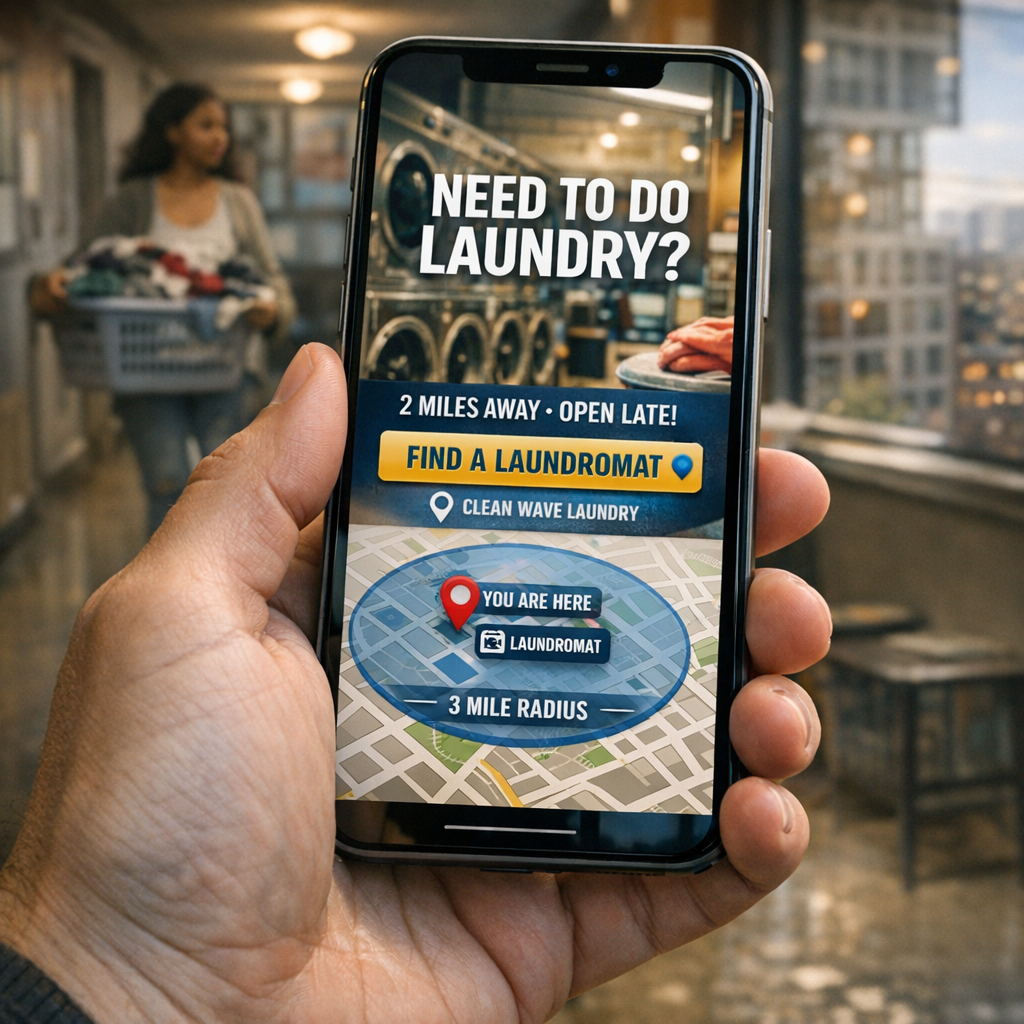
- Design compelling mobile ads: Create eye-catching visuals and concise copy highlighting the benefits of your laundry service, such as convenience, affordability, or eco-friendliness. Be sure to include a clear call-to-action that prompts users to explore your services further.
- Launch your geofenced ad campaign: Once all elements are in place, deploy your mobile ads using a reliable advertising platform that supports geofencing capabilities. Monitor the performance of your campaign and make adjustments as needed to optimize results.
Designing Engaging Mobile Ads for Renters
Designing Engaging Mobile Ads for Renters
To effectively target renters without in-unit laundry within a 3-mile radius of apartment complexes, it is crucial to design engaging mobile ads that capture their attention and encourage them to take action. Here are some tips to create compelling ads:
- Personalization: Use data such as the user’s location or preferred laundromat to tailor the ad content specifically for them.
- Simplicity: Keep the message concise and straightforward, highlighting the benefits of using your laundromat service.
- Visual Appeal: Incorporate eye-catching images or graphics that showcase a clean and well-maintained laundromat environment.
- Incentives: Offer exclusive promotions or discounts to entice renters to visit your laundromat instead of using their apartment’s on-site laundry facility.
Measuring the Success of Your Laundromat Geofencing Campaign
Measuring the Success of Your Laundromat Geofencing Campaign
Your laundromat geofencing campaign’s success can be measured through several key performance indicators (KPIs). These KPIs will help you understand how well your campaign is performing and whether it’s worth continuing or modifying.
- Increased foot traffic: Monitor the number of new customers visiting your laundromat after implementing geofencing. This can be done by asking for feedback or keeping track of new customer sign-ups.
- Improved customer engagement: Evaluate the level of interaction between your target audience and your mobile ads. Increased engagement indicates a higher likelihood that they will visit your laundromat to use your services.
- Higher conversion rates: Measure the percentage of people who viewed your ad and then actually visited your laundromat to do their laundry. This is an essential metric for understanding how effective your campaign is at driving in-person visits.
If you notice an increase in these KPIs, it’s a good sign that your geofencing campaign is working effectively. However, if the results are not as expected, consider revising your strategy or adjusting your targeting parameters to better reach your target audience. Remember, continuous optimization is key to achieving long-term success with laundromat geofencing campaigns.
By setting up digital ‘fences’ around nearby apartment complexes and serving ads specifically to people without in-unit laundry, you can effectively promote your laundromat services and attract new customers. Don’t forget to measure the success of your campaign regularly to ensure it remains effective at driving in-person visits.
Call-to-Action: Implement a laundromat geofencing campaign today and monitor its effectiveness by tracking KPIs such as increased foot traffic, improved customer engagement, and higher conversion rates. Continuously optimize your strategy to achieve long-term success in attracting new customers.
Leave a Reply