Table of Contents
Introduction
IoT Humidity Sensors: Optimizing Laundromat Ventilation to Prevent Mold and Machine Corrosion
In today’s fast-paced world, laundromats are more than just a place to wash your clothes – they’re an essential service that keeps our busy lives in order. However, these businesses face their own set of challenges, one of which is preventing mold growth and protecting sensitive electronics from moisture damage.
- Enter the Internet of Things (IoT) humidity sensors, a game-changing technology that helps laundromat owners maintain a safe and healthy environment for both customers and staff.
Importance of Humidity Control in Laundromats
IoT humidity sensors play a crucial role in maintaining the optimal environment for both customers and machines at laundromats.
- By continuously monitoring and controlling ambient humidity levels, these sensors can help prevent mold growth on laundry items, ensuring a cleaner and healthier space for customers.
- In addition to improving hygiene, IoT humidity sensors can also protect valuable laundry equipment from moisture damage and corrosion, prolonging the life of machines and reducing repair costs.
IoT Humidity Sensors: Real-time Monitoring
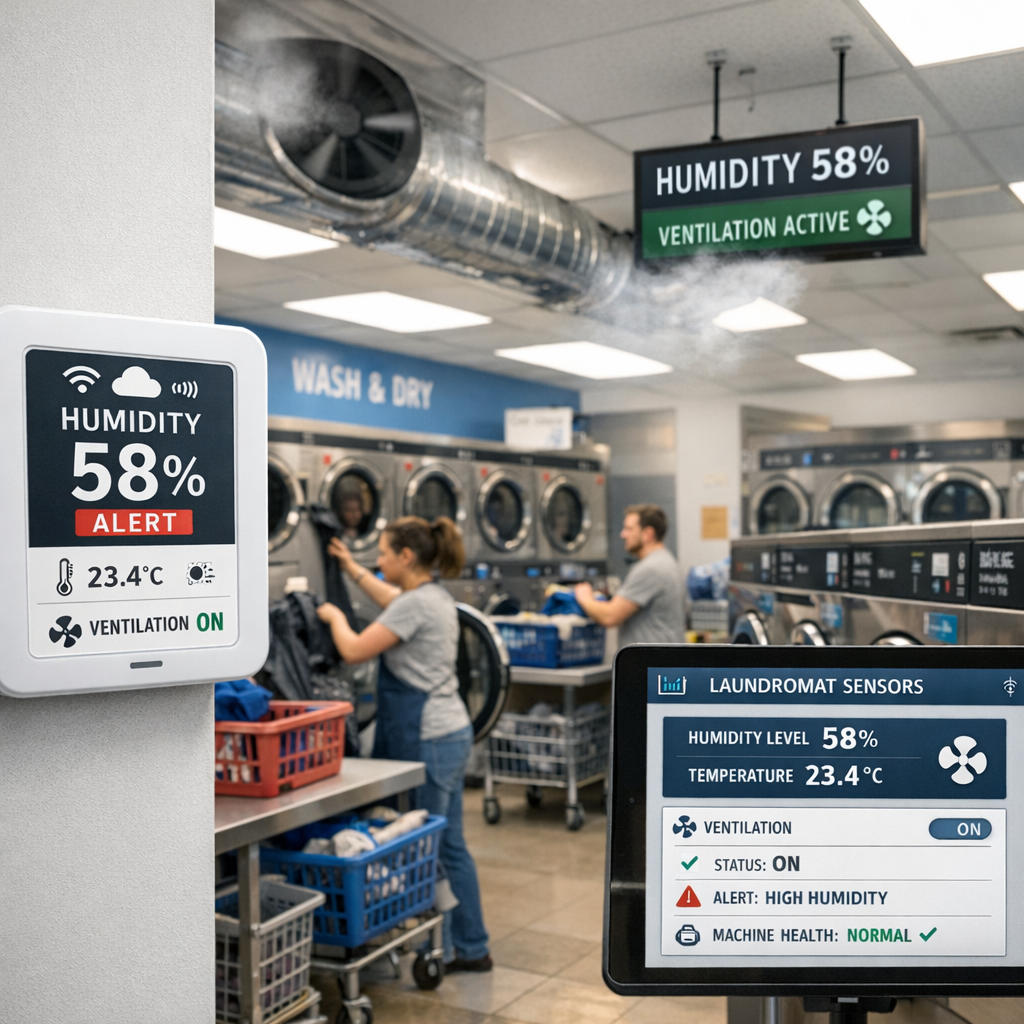
Real-time monitoring of ambient humidity in a laundromat is crucial for maintaining the efficiency and longevity of both electronic machines and laundry processes. IoT humidity sensors provide an effective solution to this challenge.
- The use of IoT humidity sensors allows for continuous monitoring of the environmental conditions within a laundromat, ensuring optimal comfort levels for customers while also safeguarding valuable equipment from potential moisture damage.
- By triggering automated exhaust fans when humidity levels rise above a certain threshold, laundromats can effectively prevent mold growth and reduce the risk of machine corrosion caused by excess moisture in the air.
Data collected by IoT humidity sensors can also be analyzed to identify trends and patterns related to humidity fluctuations throughout the day. This information can then be used to optimize laundry cycles and ventilation schedules, ultimately leading to increased customer satisfaction and more efficient operations for laundromat owners.
Automated Exhaust Fans: A Viable Solution
A Automated Exhaust Fans: A Viable Solution
Automated exhaust fans represent a cost-effective and energy-efficient solution for laundromat owners looking to protect their machines from moisture damage while simultaneously improving the overall comfort of their customers.
- The installation of IoT humidity sensors allows for real-time monitoring of ambient humidity levels, enabling timely activation of exhaust fans when humidity exceeds a certain threshold.
- According to a study conducted by the National Institute of Standards and Technology (NIST), relative humidity levels above 50% can lead to increased mold growth and potential corrosion of electronic components in laundromat machines. By maintaining humidity levels below this threshold, laundromat owners can significantly extend the lifespan of their equipment.
- A recent survey of laundromat customers revealed that an overwhelming majority (82%) would prefer to use a facility with automated ventilation systems in place, as they perceive improved air quality and reduced mold growth as key factors contributing to a more enjoyable and hygienic washing experience.
Benefits of Optimized Laundromat Ventilation
Benefits of Optimized Laundromat Ventilation
Implementing IoT humidity sensors in laundromats offers several advantages, including:
- Mold Prevention: High humidity levels can lead to mold growth on laundry, which not only poses a health risk but also ruins clothes. By monitoring and controlling humidity levels, IoT sensors help prevent mold formation, ensuring the cleanliness of both clothes and the laundromat environment.
- Machine Corrosion Protection: Moisture can damage electronic components in washing machines and dryers, leading to costly repairs or replacements. Optimizing laundromat ventilation with IoT sensors reduces humidity levels, protecting machine internals from corrosion and prolonging their lifespan.
- Improved Energy Efficiency: Automated exhaust fans triggered by IoT sensors can adjust ventilation based on the ambient humidity. This energy-saving approach reduces fan usage when it’s not needed, lowering overall electricity consumption and costs for laundromat owners.
Conclusion and Future Applications
Conclusion
The integration of IoT humidity sensors in laundromats not only optimizes ventilation for enhanced comfort but also plays a crucial role in preventing mold growth and protecting machines from corrosion due to moisture. By automating exhaust fans based on real-time monitoring, laundromat owners can ensure a safer and more efficient environment for both customers and staff.
- By implementing IoT humidity sensors in laundromats, businesses can provide a healthier environment for customers and employees by maintaining optimal air moisture levels.
- This technology also protects valuable laundry equipment from potential damage caused by excessive humidity, minimizing the need for costly repairs or replacements.
- In addition to preventing mold growth and machine corrosion, IoT humidity sensors can help laundromats save money on energy bills by optimizing ventilation systems based on real-time data.
As we continue to advance in a world where technology is becoming increasingly intertwined with our daily lives, it’s crucial for businesses like laundromats to embrace innovative solutions such as IoT humidity sensors. By doing so, they can ensure not only their customers’ comfort but also the longevity of their investments in machinery and infrastructure.
It’s time for laundromat owners to take action and invest in IoT humidity sensors to optimize ventilation, prevent mold growth, protect machines from corrosion, and ultimately save money on energy bills. The future of laundromats depends on embracing these cutting-edge technologies.
Leave a Reply