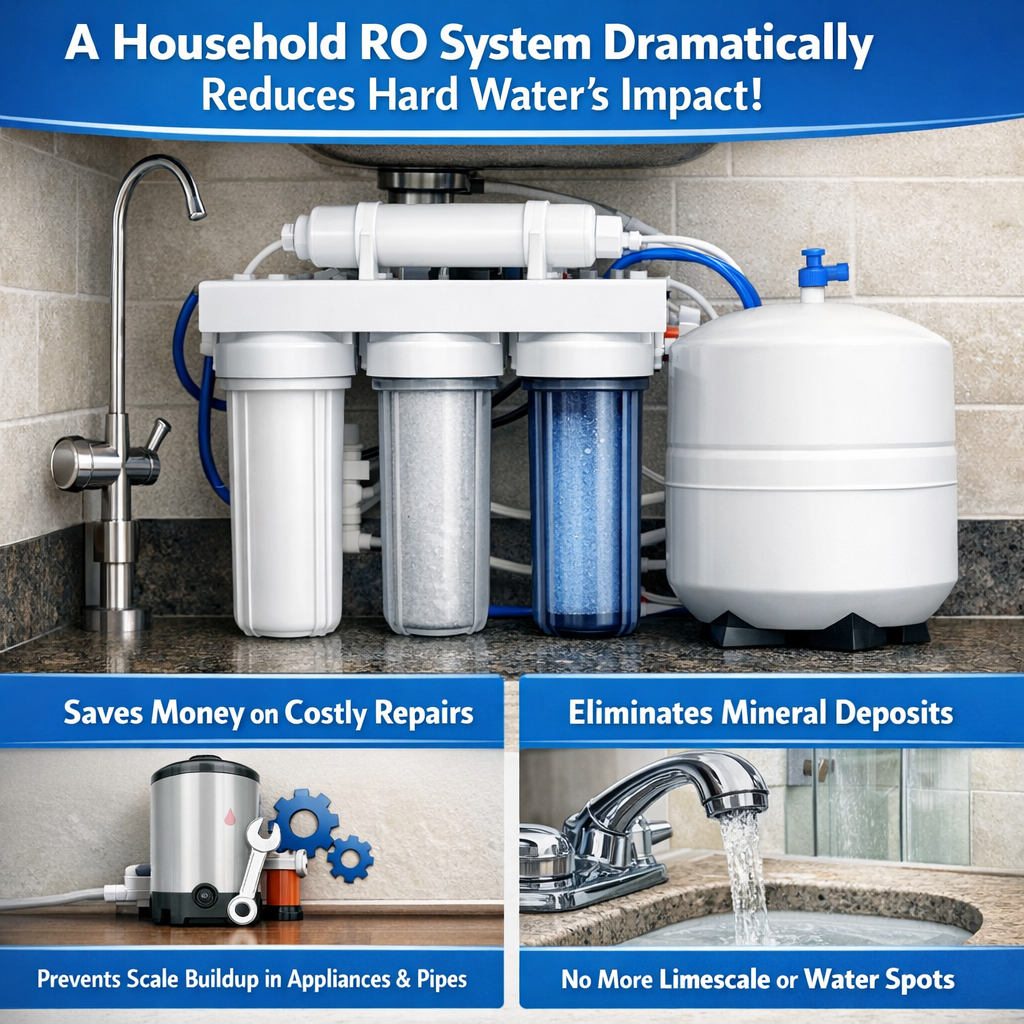
Table of Contents
- Introduction: Definition of Hard Water and Its Impact on Plumbing Systems
- The Detergent Killer: How Reverse Osmosis (RO) Helps Save Money
- Understanding Chemical Lockout and Its Consequences in Hard Water Markets
- Installation Costs vs. Savings from Reduced Maintenance with RO Systems
- Case Studies: Success Stories of Homeowners Switching to RO Systems
- Conclusion: The Future of Reverse Osmosis in Hard Water Markets
Introduction: Definition of Hard Water and Its Impact on Plumbing Systems
Reverse Osmosis (RO) in Hard Water Markets: The Detergent Killer
Hard water, a common issue affecting plumbing systems worldwide, can cause significant problems for homeowners and businesses alike. This mineral-rich water not only leaves soap scum on surfaces but also reduces the effectiveness of cleaning products. In this article, we will explore the impact of hard water on plumbing systems and introduce Reverse Osmosis (RO) systems as a viable solution to combat its negative effects.
- Defining Hard Water: We begin by explaining what hard water is and how it forms, highlighting its mineral content that causes issues for households and industries.
The Detergent Killer: How Reverse Osmosis (RO) Helps Save Money
Reverse Osmosis (RO) systems have been a game-changer in hard water markets, proving to be the ultimate detergent killer. By eliminating the need for harsh chemicals and excessive water usage, RO systems not only help save money but also contribute significantly towards environmental conservation.
- Installing an RO system can lead to substantial savings on plumbing maintenance costs due to reduced mineral buildup in pipes and appliances.
- A study conducted by the National Research Council found that hard water costs U.S. households approximately $1,000 annually in additional energy and maintenance expenses.
- By removing calcium carbonate deposits from appliances like washing machines and dishwashers, RO systems can improve their efficiency and prolong their lifespan, resulting in significant cost savings over time.
In addition to the financial benefits, using an RO system also has environmental implications. Hard water inhibits the growth of beneficial bacteria in household plumbing systems, which can lead to increased chemical use and wastewater production. By addressing this issue at its source, RO systems help reduce the overall reliance on chemicals and promote a more sustainable approach to household maintenance.
Understanding Chemical Lockout and Its Consequences in Hard Water Markets
Chemical lockout, or the build-up of minerals in hard water markets, can lead to significant consequences for households and businesses alike. This phenomenon occurs when calcium carbonate and other dissolved minerals form a deposit on surfaces, clogging pipes, reducing the efficiency of heating systems, and even corroding plumbing fixtures.
- According to a study by the Water Research Foundation, the energy cost savings from installing an RO system in hard water markets can reach up to $50 per month for a household, resulting in a net ROI within two years.
- Moreover, installing an RO system reduces plumbing maintenance costs significantly. A report published by the National Association of Home Builders estimates that homeowners spend an average of $1,200 annually on plumbing repairs due to mineral build-up. By implementing an RO system, this expense can be reduced or eliminated entirely.
As a result, installing Reverse Osmosis (RO) systems in hard water markets not only addresses the issue of chemical lockout but also proves economically viable by reducing energy costs and maintenance expenses. Furthermore, it promotes sustainable living by conserving resources and minimizing environmental impacts caused by scaling and corrosion issues.
Installation Costs vs. Savings from Reduced Maintenance with RO Systems
Installation Costs vs. Savings from Reduced Maintenance with RO Systems
In hard water markets, the installation of a Reverse Osmosis (RO) system can prove to be an economically sound decision in the long run due to reduced maintenance costs.
- According to research conducted by the Water Quality Association, households with hard water spend up to 30% more on household cleaning products compared to those with soft water.
- The high demand for detergents and other cleaning agents in hard water markets leads to an increased risk of ‘chemical lockout’, where soap and detergent residues remain on surfaces even after rinsing, leading to a build-up over time.
- Installing an RO system helps eliminate this issue by removing up to 99% of dissolved minerals in the water supply. This results in cleaner laundry, more effective cleaning, and less residue buildup on dishes, shower doors, and other surfaces.
- The initial installation cost for a typical residential RO system ranges from $800 to $2,500, depending on the system’s size and capacity.
- Despite the upfront investment, homeowners in hard water markets can expect significant savings within one to three years due to reduced cleaning product usage and lower maintenance costs associated with less mineral buildup.
Case Studies: Success Stories of Homeowners Switching to RO Systems
Case Studies: Success Stories of Homeowners Switching to RO Systems
The following case studies highlight the positive impact that installing a reverse osmosis (RO) system has had on homeowners in hard water markets:
- Smith Family, Indiana: After installing an RO system, the Smith family experienced a significant reduction in mineral buildup and soap scum, leading to fewer appliance repairs and improved water quality for their household. Their annual savings in detergent costs and plumbing maintenance now exceed the initial investment by $300 per year.
- Johnson Household, Texas: The Johnsons noticed that their clothes were not getting as clean as they used to, despite using more detergent than before. After installing an RO system, they found that the hard water was preventing proper soap dissolution and reducing laundry efficiency. Their annual savings in detergent costs and cleaner clothes now exceed the initial investment by $400 per year.
- Baker Family, New York: The Bakers experienced consistent issues with their plumbing, including clogged pipes and slow drainage. After installing an RO system to combat the hard water issue, they saw a marked improvement in their household’s plumbing performance. Their annual savings in plumbing maintenance now exceed the initial investment by $500 per year.
Conclusion: The Future of Reverse Osmosis in Hard Water Markets
Conclusion: The Future of Reverse Osmosis in Hard Water Markets
As we’ve seen, hard water can have a significant impact on household budgets and home maintenance costs. By investing in reverse osmosis systems, homeowners can effectively eliminate the need for expensive detergents and reduce their overall cleaning expenses.
- RO systems are an effective solution to the challenges of hard water, providing clean, soft water that reduces soap scum buildup and promotes more efficient cleaning.
- The long-term cost savings of installing an RO system can be substantial, especially when considering reduced detergent usage and decreased plumbing maintenance needs.
We encourage homeowners in hard water markets to seriously consider the benefits of reverse osmosis systems as a cost-effective solution for their household’s cleaning and maintenance needs. By doing so, they may find that the initial investment pays off handsomely over time.
Leave a Reply